Jak naprawdę wygląda spotkanie z mistrzami tkactwa Doliny Fergańskiej
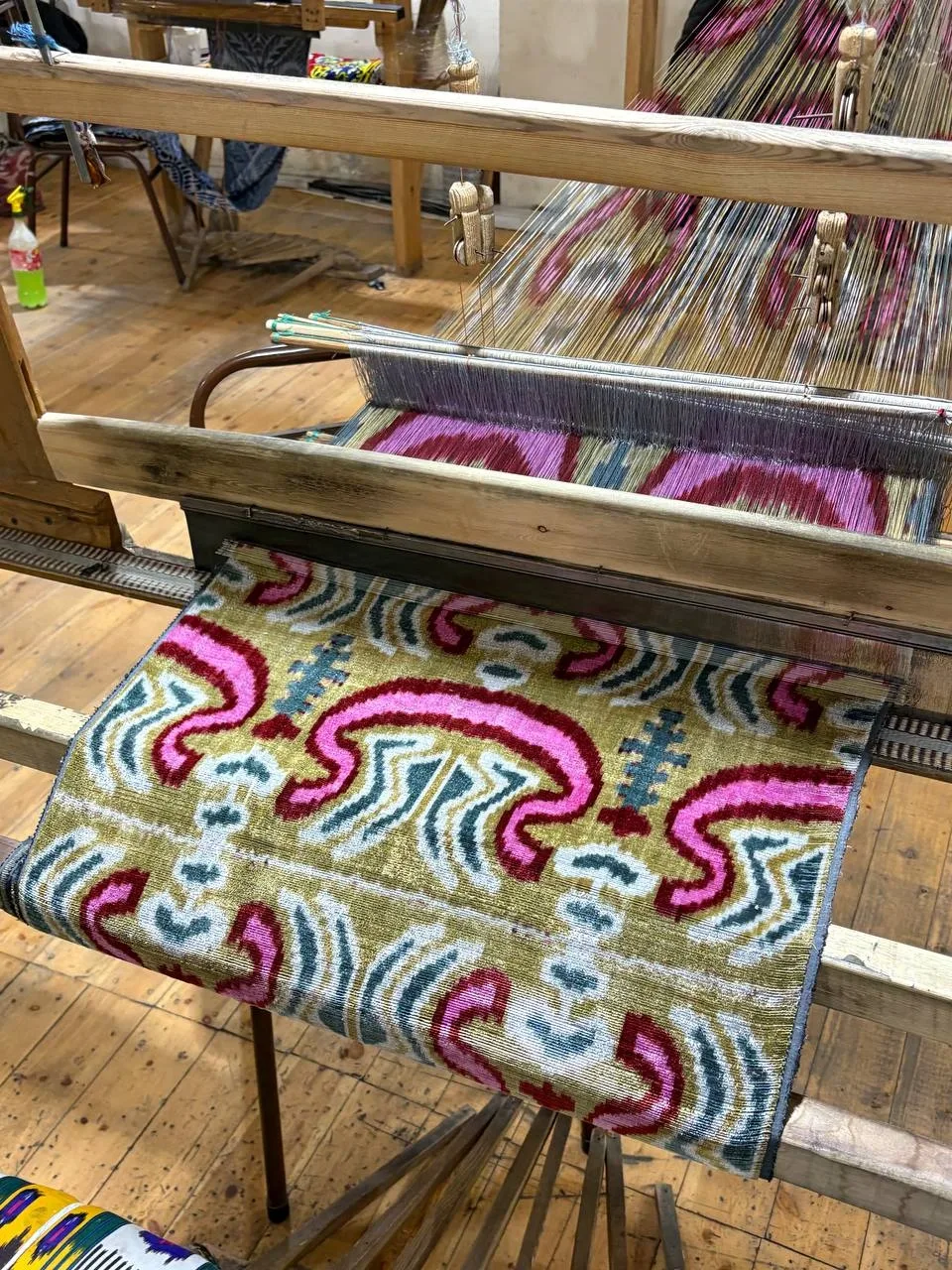
Krosno hałasowało bardziej, niż się spodziewałam — nie było to buczenie, tylko stukot, drewno o drewno przy każdym przejściu czółenka. Stałam w drzwiach rodzinnej pracowni pod Margilanem przez całą minutę, zanim ktokolwiek mnie zauważył, bo mężczyzna przy krośnie nie zamierzał przerywać rzędu, żeby się przywitać. Czółenka nie zatrzymuje się w połowie. Zrozumiałam to w ciągu pierwszych dziesięciu sekund.
To nie było jedno rzemiosło na jedno popołudnie. To był cały dzień poświęcony spotkaniom z ferganskimi tkaczami i rzemieślnikami tekstylnymi — farbiarzem stosującym technikę rezerwową, tkaczem i hafciarką — w trzech działających gospodarstwach domowych, nie na inscenizowanych pokazach. CraftNCulture uprzedziło nas wcześniej: nikt nie będzie dla nas występował. Jeśli partia barwnika potrzebowała jeszcze dwudziestu minut w kadzi, czekaliśmy dwadzieścia minut. Tak właśnie było i to była najlepsza część dnia.
Jak tu trafiłam
Dołączyłam do sześcioosobowej grupy piątego dnia dłuższej podróży po Uzbekistanie — Taszkent, potem na wschód mijając Kokand, w głąb doliny. Większość tras jedwabnego szlaku traktuje Ferganę jako przejazd tranzytowy: przystanek na zdjęcie na bazarze, może pracownia ceramiki w Riszdanie, i z powrotem w drogę do Samarkandy. Tu było inaczej. Spędziliśmy cały dzień wśród ferganskich tkaczy, którzy nie przygotowują się na autokary turystyczne, bo autokary zwykle tu nie docierają.
Czytałam wcześniej o ikacie — technice farbowania rezerwowego, w której nić wiąże się i barwi we wzory zanim w ogóle trafi na krosno, więc wzór ujawnia się dopiero, gdy krosno układa nici w całość. Czytanie o tym i stanie nad kadzią z barwnikiem, obserwując jak wzór, który teoretycznie jeszcze nie istnieje, powoli staje się czytelny — to dwie różne rzeczy. Ta druga jest lepsza.
Wewnątrz pracowni
Pierwszym przystankiem był dom farbiarski — niski sufit, ściany zabarwione kolorem wszystkich partii, jakie kiedykolwiek tu mieszano. Oczilbek, który prowadzi go z dwoma synami, pokazał nam najpierw wiązanie: bawełnianą lub jedwabną nić owija się odcinkami woskowanym sznurkiem, żeby barwnik nie dotarł do związanych fragmentów. Zawiążesz źle albo za luźno — cały wzór się rozmyje. Pozwolił każdemu z nas związać jeden mały odcinek nici. Mój wyszedł nierówny — odcinki miały różną szerokość, co zauważył bez oceniania, po prostu jako fakt, jak krzywy gwóźdź.
Potem kadź. Naturalne barwniki nadal pochodzą tu z korzenia marzanny, skórki granatu i łupiny orzecha włoskiego, a kolor nie ustala się od razu — nić wychodzi z kadzi w jednym odcieniu, a po kilku minutach utleniania na powietrzu staje się innym. Patrzenie na tę zmianę na żywo, stojąc na tyle blisko, by czuć zapach orzecha, było momentem, w którym podróż przestała być zwiedzaniem.
Samo tkanie odbywało się dwa domy dalej, na innym krośnie, należącym do gospodarstwa kuzyna — tak właśnie rzemiosło tekstylne wciąż przemieszcza się po dolinie: rozproszone między spokrewnionymi rodzinami, a nie skupione w jednej pracowni. Tkacz pozwolił mi usiąść przy krośnie na jakieś cztery minuty. Cztery przejścia czółenka, nierówno dobite, wyraźnie luźniejsze niż sąsiednie rzędy. Nie poprawił ich. Po prostu tkał dalej, żeby gotowy materiał zachował ślad tego, kto tu siedział.
Jak to naprawdę było
Chcę być szczera: jedno popołudnie nie czyni z ciebie fachowca. Nie wyjedziesz stąd, umiejąc związać wzór rezerwowy czy równo dobijać wątek. Wyjedziesz z rzeczywistym zrozumieniem, ile pracy kryje się pod odcinkiem jedwabiu ikat, obok którego można po prostu przejść na bazarze — wiązanie, kilka kąpieli barwiących dla wielokolorowego wzoru, czas przy krośnie, czasem tygodnie pracy nad skomplikowanym wyrobem.
Był też wolniejszy rytm dnia, na który nie byłam przygotowana. Nikt się nie spieszył między pracowniami. Siedzieliśmy na poduszkach, piliśmy herbatę zaparzoną przez czyjąś matkę, a przerwy między zajęciami okazały się równie ważne co same zajęcia — właśnie wtedy, przez tłumacza, toczyła się prawdziwa rozmowa o tym, dlaczego obaj synowie Oczilbeka zdecydowali się zostać w rzemiośle, gdy wielu ich rówieśników odeszło.
Dlaczego mała grupa miała znaczenie
Sześć osób, trzy gospodarstwa domowe w ciągu jednego dnia — pracownie mogły nas przyjąć, nie zmieniając swojego zwykłego rytmu pracy. Synowie Oczilbeka nadal farbowali kolejne partie, kiedy patrzyliśmy — nie byliśmy jedyną rzeczą, która działa się w tym pomieszczeniu. W grupie wielkości autokaru byłoby to niemożliwe: gospodarstwo musiałoby albo wstrzymać normalną pracę dla gości, albo pokazać skróconą, wygładzoną wersję dla liczby osób. Małe grupy dostają prawdziwą, trwającą wersję rzemiosła. Wszyscy inni dostają skrót z najlepszych momentów.
Co zabrałam ze sobą
Krótki odcinek ręcznie związanego jedwabiu ikat, już barwionego, ale jeszcze nie utkanego w tkaninę — Oczilbek nalegał, bym zatrzymała właśnie ten kawałek, który sama związałam, z nierównymi odcinkami i całą resztą. Nie ma z niego żadnego pożytku. Nie mam dla niego planu. Mimo to go trzymam, bo to jedyna pamiątka, jaką posiadam, która odzwierciedla prawdziwy, choć nieudolny wysiłek, a nie transakcję.
CraftNCulture włącza ten dzień z ferganskimi rzemieślnikami do swojej szerszej 7-dniowej podróży rzemieślniczej po Uzbekistanie, obok złotego haftu w Bucharze i ceramiki w Samarkandzie — tylko małe grupy, maksymalnie ośmiu gości, żeby domy pozostawały domami, a nie miejscami pokazów. 1850 dolarów od osoby za cały program.
Zobacz 7-dniowy program na craftnculture.uz →
CraftNCulture organizuje niewielkie grupowe podróże kulturowo-rzemieślnicze po Uzbekistanie. Najbliższe terminy: wrzesień–październik 2026.
About the author
CraftnCulture
The CraftnCulture editorial team — Tashkent-based cultural tourism specialists covering Uzbekistan travel, artisan crafts, and Silk Road heritage.