Igła była cięższa, niż się spodziewałam.
Nie taka jak z zestawu do szycia — ta miała prawdziwy ciężar, a nić, którą niosła, wcale nie była nicią. To był płaski złoty sznurek, niemal wstążka, uchwycony między czubkiem a tkaniną w sposób, który od razu podpowiedział mi, że coś zrobię źle. Kilka razy. I tak było.
Siedziałam w warsztacie w starym mieście Buchary, w pomieszczeniu o tak niskim suficie i tak zawalonym gotowymi panelami, że złoto zdawało się wyrastać z każdej powierzchni. Dilnoza gestem wskazała mi miejsce naprzeciwko siebie, poprawiła ramę między nami i bez ceremonii wcisnęła mi igłę w dłoń. Nie mówiła dobrze po angielsku. Nie musiała.
Jak tu trafiłam
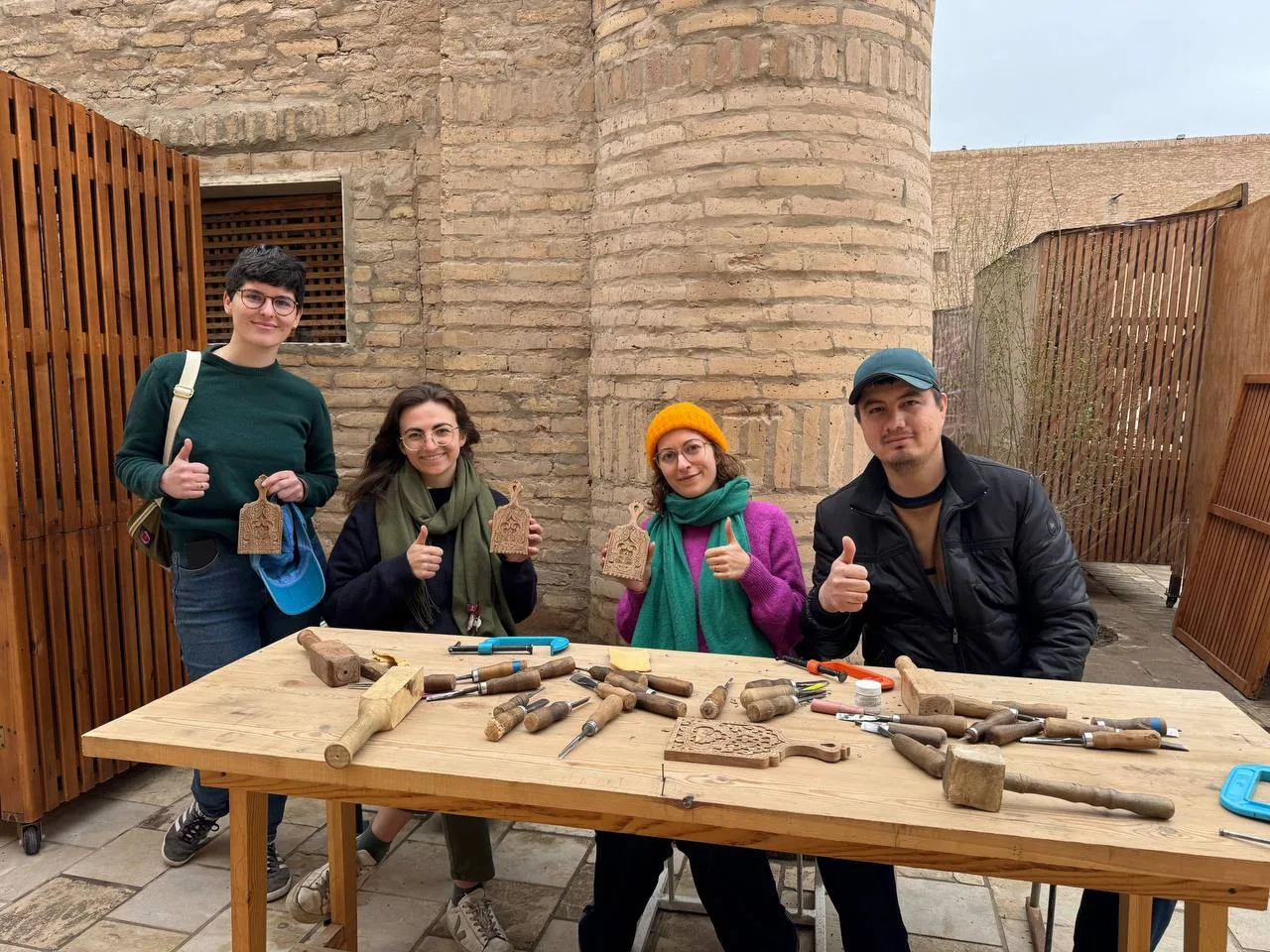
Do Buchary dotarłam czwartego dnia wycieczki kulturowej po Uzbekistanie w małej grupie — było nas ośmioro, podróżowaliśmy z CraftNCulture z Taszkentu przez Samarkandę. Mała grupa to nie przypadek, tylko celowy wybór. Nie da się robić tego, co my robiliśmy — siedzieć w działającej pracowni, zabierać czas mistrzyni, naprawdę dotykać materiałów — jeśli jest was dwudziestu. Ośmioro to liczba, przy której mistrzyni może obserwować dłonie każdego. Przy której można zadać głupie pytanie. Przy której to nie wygląda jak pokaz.
Zapisałam się, bo chciałam czegoś więcej niż zabytki. Każdy artykuł podróżniczy o Uzbekistanie poświęca trzy akapity Registanowi — który jest niezwykły, tak — ale nie poleciałam do Azji Środkowej, by fotografować coś, co widziałam już na setkach cudzych zdjęć. Przyjechałam, żeby zrozumieć, jak to miejsce tworzy rzeczy. Jak to jest być w pomieszczeniach, gdzie piękno naprawdę powstaje.
Haft złotem — zardozlik po uzbecku — nie był czymś, o czym wiedziałam, że muszę zobaczyć, dopóki tego nie zobaczyłam.
Samo rzemiosło
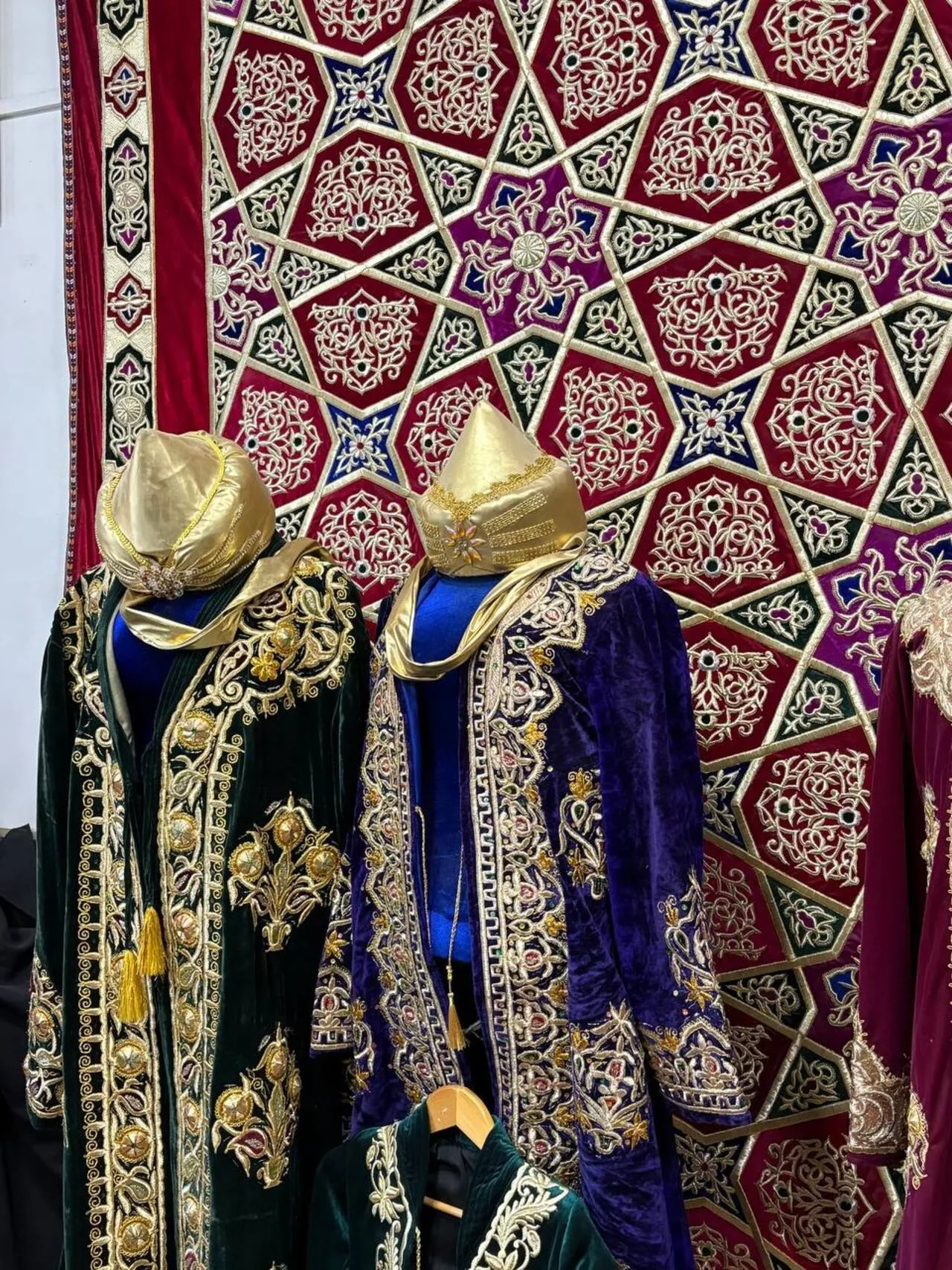
Buchara od wieków jest centrum haftu złotem na Jedwabnym Szlaku. Technika polega na układaniu metalicznej nici — płaskiej, skręcanej lub sznurkowej, złotej lub srebrnej — na aksamicie lub jedwabiu za pomocą maleńkich, niemal niewidocznych ściegów. Złotej nici się nie przeciąga przez tkaninę. Kładzie się ją na powierzchni i mocuje, milimetr po milimetrze, drugą nicią od spodu. Efekt to wypukła, niemal trójwymiarowa faktura, która inaczej łapie światło w zależności od kąta. Widzieliście to na królewskich szatach i ceremonialnych tkaninach w muzeach, nie znając nazwy techniki.
Dilnoza robi to od nastoletnich lat. Tempo jej pracy było lekko upokarzające do oglądania.
Kiedy przyszła moja kolej, od razu zrozumiałam, że to, co z zewnątrz wygląda na cierpliwość, jest w rzeczywistości precyzją. Nie ma tu improwizacji — kąt igły, naprężenie nici mocującej, sposób, w jaki złoty sznurek musi leżeć płasko, bo inaczej się marszczy. W czasie, gdy ona kończyła pełną palmetę wielkości mojej dłoni, ja zrobiłam około czterech centymetrów prostego, wijącego się motywu. Moje cztery centymetry były nierówne. Jeden fragment się pomarszczył. Złoty sznurek na końcu lekko się zawinął, co najwyraźniej oznacza, że za mocno napinałam nić w nadgarstku.
Dilnoza sięgnęła, nic nie powiedziała i pokazała mi, kładąc dłoń na mojej. Poprawka była natychmiastowa, fizyczna i zupełnie niemożliwa do przekazania w inny sposób. To jest właśnie coś, na co żaden film instruktażowy cię nie przygotuje: wiedza mieszka w mięśniach, nie w instrukcji.
Jak to naprawdę wyglądało
Będę szczera: w dwie godziny nie zrobisz niczego dobrego. Nie o to tu chodzi. Zamiast tego nagle i całkowicie zaczniesz szanować każdy haftowany złotem przedmiot, jaki kiedykolwiek widziałaś — w muzeum, w sklepie z pamiątkami, złożony pod szkłem. Przestaniesz widzieć „dekoracyjny tekstyl”, a zaczniesz widzieć lata czyjejś pracy rąk.
Na ścianie za Dilnozą wisiał panel zamówiony na wesele. Miał mniej więcej metr kwadratowy, a ona pracowała nad nim już trzy tygodnie. Po dwudziestu minutach z igłą w dłoni patrzyłam na niego zupełnie inaczej.
Czego się nie spodziewałam — to spowalnia w sposób pożyteczny. Za oknem szumiało stare miasto — niebieskie kopuły, kopuły handlowe, zapach suszonych owoców gdzieś zza rogu. W środku tylko dźwięk nici i ramy oraz sporadyczne ciche wskazówki. Jest w tym coś medytacyjnego, co mogę opisać tylko jako przeciwieństwo turystyki.
Dlaczego wielkość małej grupy ma znaczenie
Tego popołudnia uczyło się nas siedmioro. Para Amerykanów porównujących swoje postępy, jakby to był konkurs. Samotna podróżniczka z Japonii, która ledwo podnosiła wzrok, gdy się wciągnęła. I ja. Każde z nas miało własną ramę, własne materiały, własną wersję Dilnozy obserwującej nasze dłonie.
W grupie dwudziestoosobowej ona by tylko pokazywała. W grupie ośmioosobowej, w wycieczce stworzonej dokładnie po to, ona uczyła.
Ta różnica to wszystko.
Co zabrałam ze sobą
Mały haftowany fragment, na tyle niedoskonały, by być wyraźnie mój, zawinięty w papier. Wiedzę, że zardozlik to nie dekoracja — to dokument. Motywy niosą znaczenie: granaty oznaczają płodność, winorośle — więź, ptaki — wolność. I cichą pewność, że chcę tu wrócić, spędzić tydzień i w końcu przestać marszczyć tkaninę.
7-dniowa podróż CraftNCulture po Uzbekistanie obejmuje tę sesję w Bucharze obok ceramiki, tkactwa dywanów, malarstwa miniaturowego i innych — zawsze z działającymi rzemieślnikami, nigdy więcej niż ośmiu gości. 1850 USD od osoby.
To nie jest wycieczka pakietowa. To edukacja.
CraftNCulture organizuje wycieczki kulturowe po Uzbekistanie w małych grupach. Najbliższe terminy: wrzesień–październik 2026.
About the author
CraftnCulture
The CraftnCulture editorial team — Tashkent-based cultural tourism specialists covering Uzbekistan travel, artisan crafts, and Silk Road heritage.