Od stuleci suzani rozkwita na bawełnie i jedwabiu w dziedzińcach Uzbekistanu. Dziś te same ściegi, które niegdyś zdobiły posag panny młodej, przyciągają wzrok projektantów w Paryżu, właścicieli galerii w Brooklynie i kolekcjonerów od Tokio po Berlin. Droga od wiejskiego krosna do światowego rynku jest starsza, niż się wydaje — uzbeckie dziedzictwo tekstylne od zawsze powstawało z myślą o handlu — a zrozumienie tej drogi to różnica między kupnem pamiątki a kupnem kawałka żywej historii.
Ścieg, który podróżuje
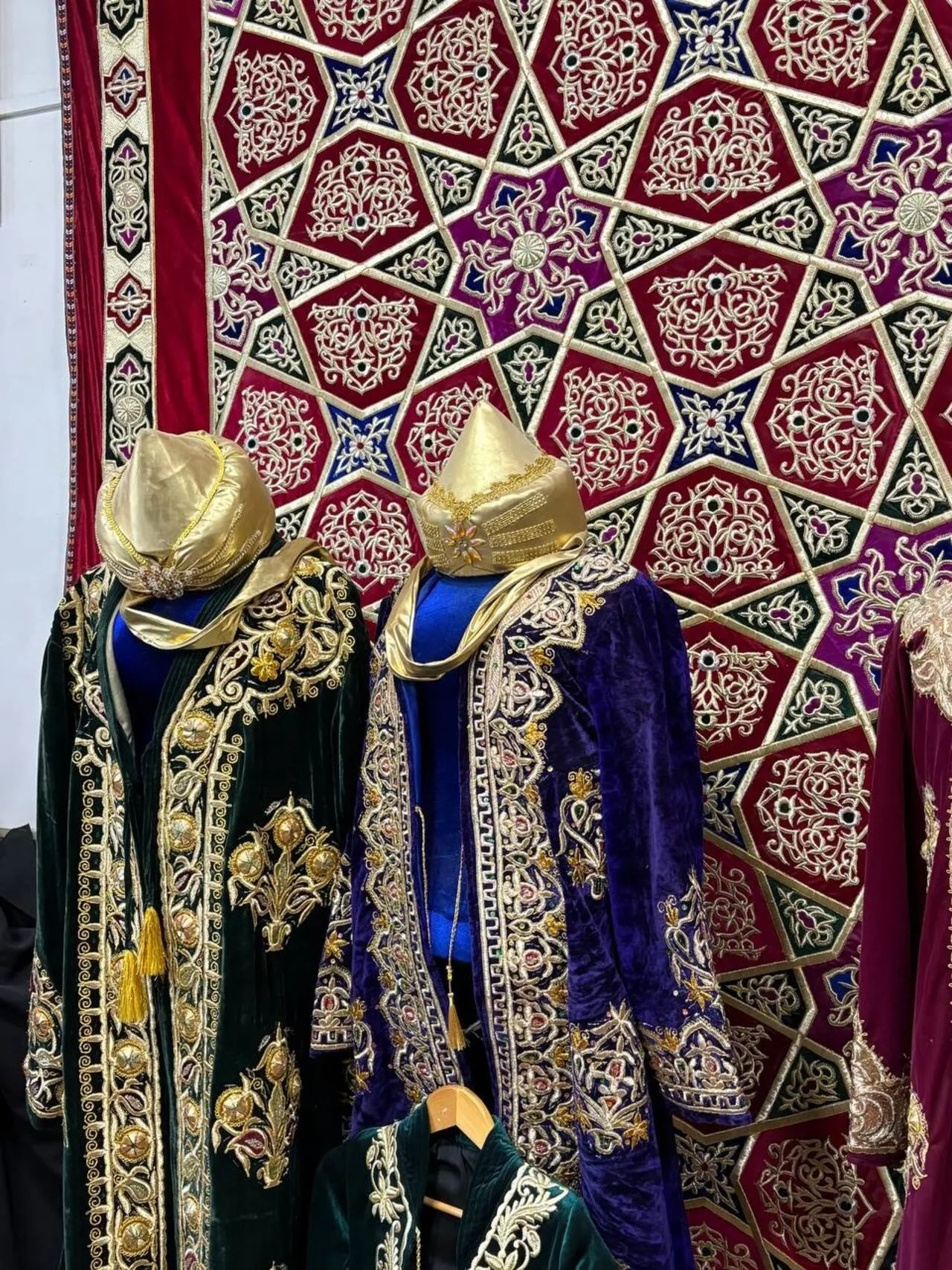
Słowo suzani pochodzi z perskiego „igła", a tradycja sięga co najmniej XVIII wieku, choć wiele jej motywów — granaty jako symbol płodności, słońca chroniące, tulipany odradzające — jest dużo starszych. Wsie wokół Samarkandy, Buchary, Nuraty i Szachrisabzu wypracowały własne języki wizualne, rozpoznawalne dla każdego, kto choć chwilę spędził w tekstylnych rzędach bazaru. Bucharskie suzani lubi stonowane palety i ciasne rozety. Z Nuraty pochodzą prace z misternym centralnym medalionem otoczonym drobnymi kwiatami. Szachrisabz preferuje śmiałe, duże motywy w intensywnych czerwieniach i indygach.
Te regionalne sygnatury są ważne, bo to po nich kupujący, handlarze i kuratorzy muzealni rozpoznają pochodzenie pracy. Opowieść jest wartością.
Wewnątrz wiejskiej pracowni
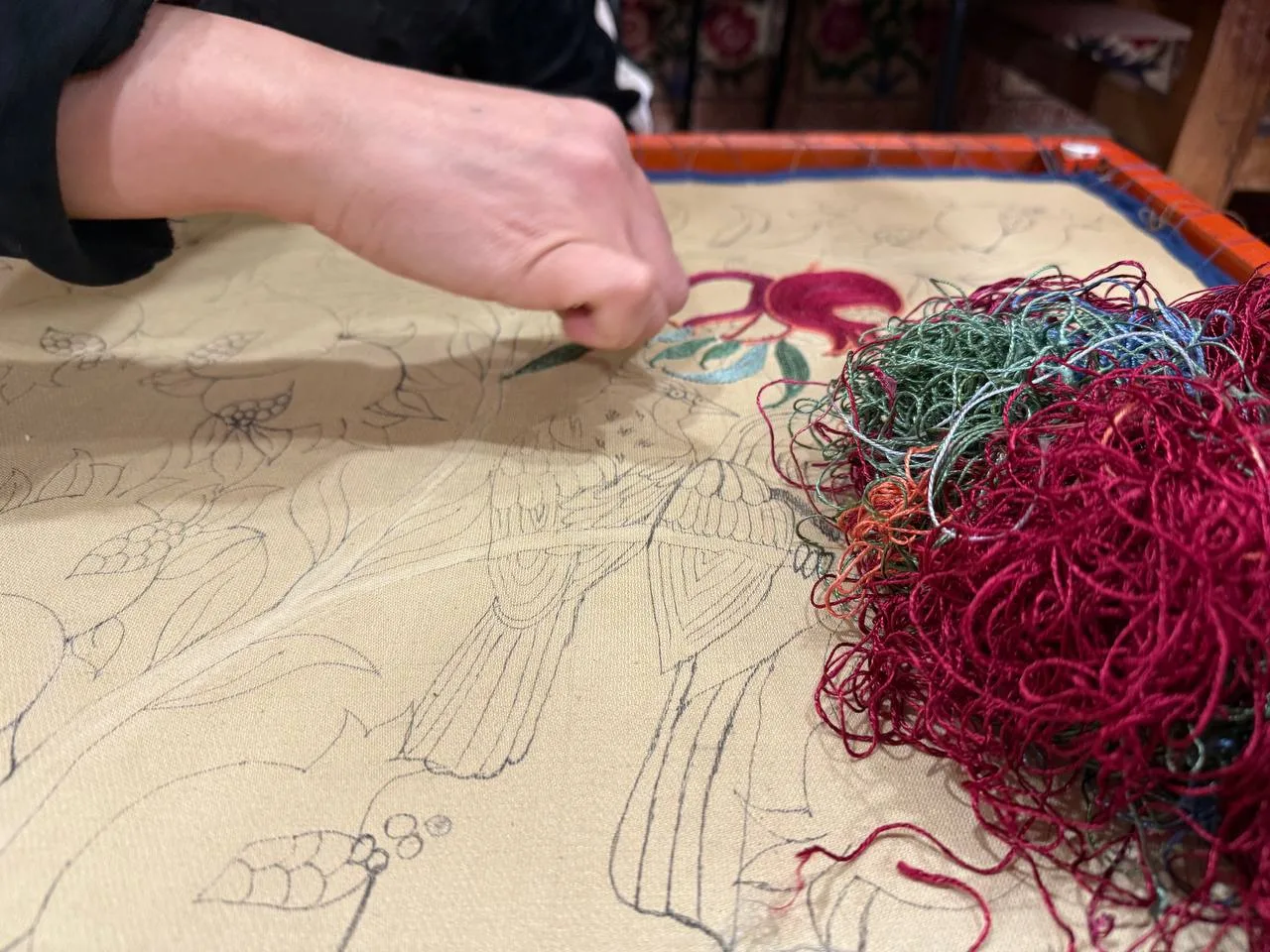
Większość suzani nadal powstaje tak jak od pokoleń: w niewielkich domowych pracowniach prowadzonych przez kobiety, często w kilku gospodarstwach jednocześnie. Starsza hafciarka rysuje wzór prosto na długim odcinku bawełny lub jedwabiu cienkim trzcinowym piórem i naturalnym tuszem. Materiał jest następnie cięty na długie pasy, rozdawany dwóm, trzem lub czterem hafciarkom i na końcu ponownie zszywany — i właśnie dlatego prawdziwe ręcznie szyte suzani mają drobne, świadome przesunięcia w miejscach łączenia. Maszynowe imitacje są nieskazitelne. Prawdziwe — nie.
Kto haftuje
W większości wsi sztuka suzani jest wiedzą przekazywaną w linii kobiecej. Babki uczą matki, matki córki, a pracownia jest też instytucją społeczną — miejscem, gdzie planuje się wesela, wymienia rady i gdzie cicho płynie dochód do wiejskich domów, w których formalna praca bywa rzadkością. W ostatnich latach spółdzielnie w Samarkandzie i Dolinie Fergańskiej zaczęły umieszczać nazwiska poszczególnych hafciarek na odwrocie każdej pracy. Ta jedna metka — imię, wieś, data — zrobiła dla sprawiedliwych cen więcej niż jakakolwiek polityka eksportowa.
Z pracowni na rynek
Łańcuch dostaw od dziedzińca w Nuracie do projektanta wnętrz w Nowym Jorku jest krótszy, niż myślisz. Typowa droga dzisiaj wygląda tak:
- Wiejska spółdzielnia kończy suzani w ciągu sześciu do osiemnastu miesięcy, w zależności od rozmiaru i gęstości haftu.
- Praca zostaje sfotografowana, opisana nazwiskami autorek i wystawiona na rzemieślniczej platformie lub sprzedana przez partnerską galerię w Taszkencie albo Bucharze.
- Kupcy z Europy, Ameryki Północnej i Azji Wschodniej kupują bezpośrednio, często odwiedzając kraj osobiście w sezonach wiosennym i jesiennym.
- Praca wysyłana jest z certyfikatem eksportowym, ponieważ uzbeckie prawo o antykach reguluje tkaniny starsze niż pięćdziesiąt lat.
- Coraz większa część sprzedaży odbywa się online, a platformy weryfikują pracownie, by maszynowe podróbki nie rozcieńczały rynku.
To mała rewolucja. Dwadzieścia lat temu to samo suzani mogło przejść przez czterech lub pięciu pośredników, zanim trafiło do kupującego. Dziś hafciarka często wie, dokąd pojechała jej praca.
Jak czytać suzani: na co patrzą kupujący
Jakość ocenia się po kilku szczegółach. Gęstość ściegu powinna być równa, ale nie mechaniczna. Naturalne barwniki — marzanna na czerwień, indygo na błękit, skórka granatu na żółć — starzeją się bardziej elegancko niż syntetyczne i z czasem nabierają głębi, a nie blakną. Odwrocie prawdziwego suzani jest niemal tak schludne jak strona przednia; niedbała podszewka to znak ostrzegawczy. Dobra praca jest zaskakująco ciężka jak na swój rozmiar, bo jedwabna nić jest układana ścieg po ściegu, a nie tylko prześlizguje się po powierzchni.
Cena to wszystko odzwierciedla. Mała nuracka tafla może kosztować kilkaset dolarów; duże antyczne szachrisabzkie suzani na aukcji może osiągnąć kwoty pięciocyfrowe.
Dlaczego pochodzenie ma dziś znaczenie
Gdy suzani wkracza do globalnych wnętrz i kolekcji wybiegów, rośnie też ryzyko anonimowych maszynowych podróbek. Każdy autentyczny zakup utrzymuje pracownię w ruchu i ścieg przy życiu. Pytanie, kto i gdzie wykonał daną pracę, nie jest luksusem. To jest właśnie pytanie kluczowe.
Jeśli chcesz zobaczyć działającą pracownię suzani, przejdź się bocznymi uliczkami za Registanem w Samarkandzie albo zajrzyj do małych pracowni schowanych w starych karawanserajach Buchary. Jeszcze lepiej — zaplanuj wizytę na piątkowy targ w Nuracie. Trasy rzemieślnicze i wyselekcjonowany marketplace CraftnCulture łączą Cię bezpośrednio z rodzinami stojącymi za igłą, dzięki czemu opowieść może podróżować dalej — a kolejne pokolenie hafciarek ma powód, by sięgnąć po nić.
Źródła
About the author
CraftnCulture
The CraftnCulture editorial team — Tashkent-based cultural tourism specialists covering Uzbekistan travel, artisan crafts, and Silk Road heritage.