Wejdź do Chiwy — a stulecia zaczną zwijać się wokół ciebie. To pustynne miasto w Uzbekistanie, położone głęboko w regionie Chorezmu, skrywa coś rzadkiego: w pełni zachowane miasto-twierdzę, w którym każde drzwi, każda kopuła i każdy minaret opowiadają historię rzeźbioną przez tysiąc lat. Większość podróżnych odwiedza najpierw Samarkand albo Bukhara — ale ci, którzy docierają do Chiwy, często szepczą, że to właśnie ona była najbardziej magicznym przystankiem całego Jedwabnego Szlaku. Powodem jest Ichan-Kala, wewnętrzna twierdza, i niepowtarzalny rytm chorezmijskiej architektury, który wypełnia każdy jej zakątek.
Dlaczego Ichan-Kala jest inna
Ichan-Kala to otoczone murami serce starej Chiwy, wpisane na Listę Światowego Dziedzictwa UNESCO w 1990 roku — pierwszy obiekt w Uzbekistanie, który otrzymał to wyróżnienie. Około 26 hektarów zamknięto wewnątrz zwieńczonych blankami murów z surowej cegły, wysokich na osiem metrów i długich na dwa kilometry. W ich obrębie stoi ponad 50 zabytków i 250 tradycyjnych domów, ułożonych tak gęsto, że cały kompleks można obejść w jedno popołudnie. Ale właśnie ta gęstość ma znaczenie: nigdzie indziej w Azji Środkowej nie da się tak kompletnie prześledzić ewolucji islamskiego miasta.
Chiwę wyróżnia cisza. Tam gdzie Samarkand olśniewa, a Bukhara tętni, Ichan-Kala wstrzymuje oddech. Mury w kolorze miodu lśnią o zachodzie słońca, piasek leniwie sunie po brukowanych uliczkach, a wezwanie do modlitwy wciąż unosi się z minaretów starszych niż większość europejskich katedr.
Krótka historia Chorezmu
Cywilizacja Chorezmu jest starsza niż sama Chiwa — wzmianki pojawiają się w tekstach zoroastryjskich i inskrypcjach z czasów Achemenidów sprzed około 2500 lat. Chiwa była skromnym oazowym przystankiem na karawanowym szlaku przez pustynię, aż w 1592 roku stała się stolicą Chanatu Chiwy, kiedy rzeka Amu-Daria zmieniła swój bieg. Od XVII do XIX wieku Chiwa była targiem niewolników, ośrodkiem nauki i upartym bastionem niezależności — by w 1873 roku znaleźć się w rosyjskiej strefie wpływów.
Architektura, którą widzisz dzisiaj, ukształtowała się właśnie w epoce chanatu: surowy, geometryczny styl, który odrzuca bogate mozaiki Tymurydów z Samarkandu na rzecz zdyscyplinowanej turkusowej ceramiki, rzeźbionego alabastru i misternie toczonych drewnianych kolumn.
Pięć zabytków, których nie możesz pominąć
Zanim ruszysz na bezcelowy spacer (do czego Chiwa zachęca), zakotwicz wizytę w tych miejscach:
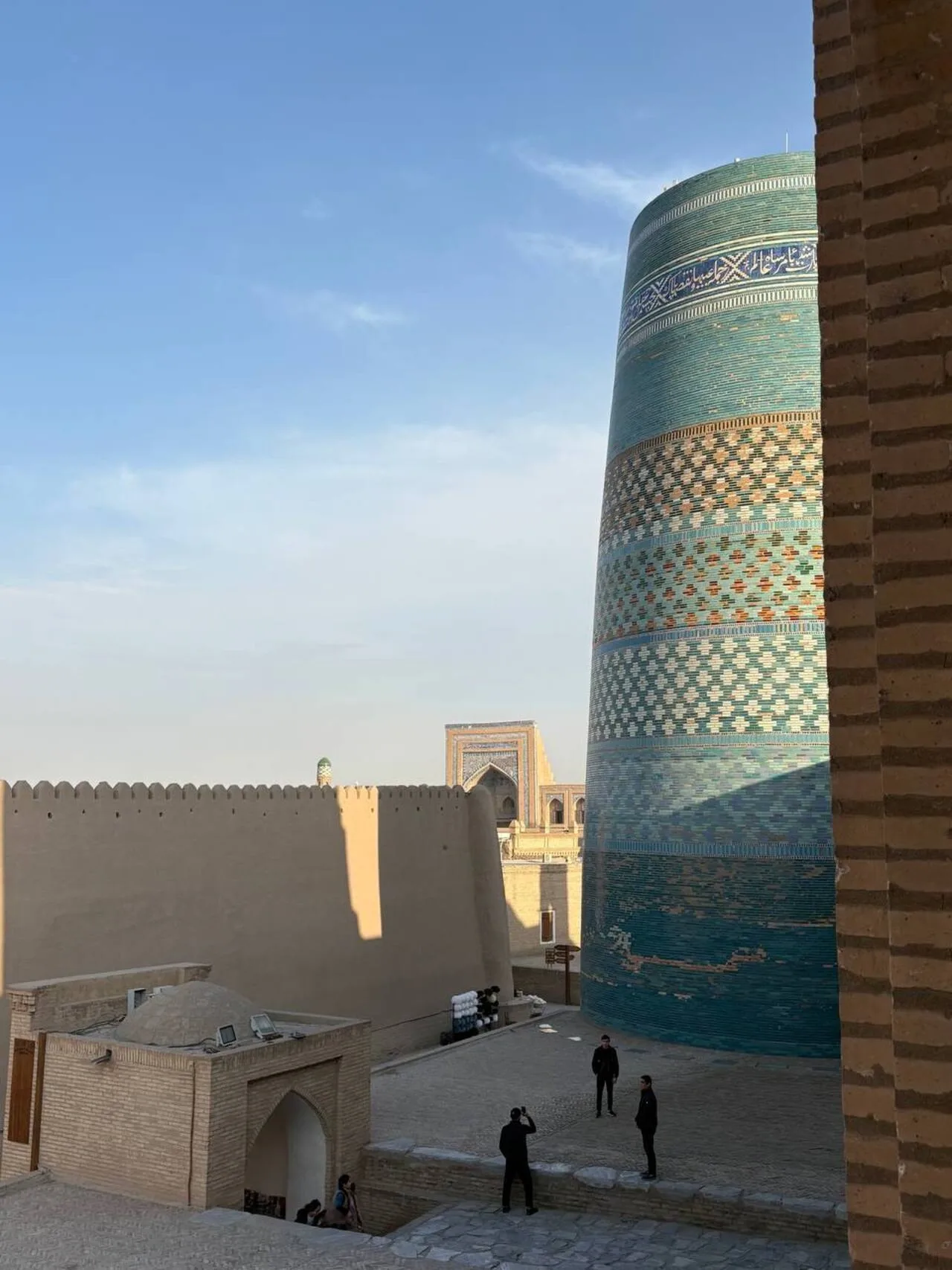
- Minaret Kalta Minor — niedokończona, gruba, błękitna wieża, która miała być najwyższym minaretem świata islamu, porzucona na 29 metrach w 1855 roku
- Meczet Dżuma — 218 rzeźbionych drewnianych kolumn, każda inna, niektóre sięgają X wieku
- Kunia Ark — twierdza chana z letnim meczetem, którego ceramika dorównuje najlepszym w Uzbekistanie
- Pałac Tasz Hauli — 163 pomieszczenia wokół trzech dziedzińców, sam sufit haremu wart jest biletu wstępu
- Minaret Islam Chodża — wejdź po 118 wąskich stopniach po widok, który zdefiniował każdą fotografię Chiwy
Słowo o ceramice
Chorezmijscy mistrzowie ceramiki pracowali niemal wyłącznie w kobalcie, turkusie i bieli. Wzory są matematyczne — ośmioramienne gwiazdy, sześciokąty, roślinne arabeski — lecz z bliska nigdy się nie powtarzają. Poproś lokalnego przewodnika, by pokazał ci celowe „błędy" wprowadzane do geometrycznych paneli: tradycja przypominająca rzemieślnikom, że tylko Allah tworzy doskonałość.
Jak czytać chiwijski budynek
Większość zwiedzających robi zdjęcie i idzie dalej. Wolniejsze oko widzi więcej. Szukaj rzeźbionych alabastrowych paneli ganch wokół mihrabów — są rzeźbione, nie tłoczone. Zauważ, że wejścia do meczetów są lekko przesunięte względem osi dziedzińca — chorezmijska osobliwość mająca zmylić złe duchy. Jeśli masz cierpliwość, policz drewniane kolumny w meczecie Dżuma: miejscowi mówią, że żadne dwie nie są takie same, i mają rację. Niektóre pochodzą z meczetów sprzed mongolskiego najazdu z 1220 roku.
Wchodząc do madrasy, zajrzyj do cel. Studenci, którzy mieszkali w tych maleńkich pokojach — czasem przez dziesięć lat — stworzyli manuskrypty rozproszone dziś po bibliotekach Tashkentu, Petersburga i Stambułu.
Planowanie wizyty
Chiwa najlepsza jest od kwietnia do maja albo od września do października, kiedy pustynny upał słabnie, a niebo pozostaje czyste. Dwie noce w obrębie Ichan-Kali biją wycieczkę jednodniową z Urgencza: gdy autobusy turystyczne odjeżdżają o zachodzie, miasto staje się twoje. Jeśli to możliwe, zatrzymaj się w hotelu w przebudowanej madrasie — pokoje są skromne, ale obudzić się w XVIII-wiecznej celi o świcie to wspomnienie, które przeżyje każdą fotografię.
Jeśli chcesz pójść głębiej, CraftnCulture organizuje spacery architektoniczne prowadzone przez lokalnych historyków, a także wizyty w warsztatach rzeźby w drewnie i ceramiki tuż za murami — miejscach, gdzie te same techniki, które widzisz w Tasz Hauli, wciąż są praktykowane ręcznie. Czy spędzisz w Ichan-Kale dwa dni, czy wpiszesz ją w dłuższą podróż Jedwabnym Szlakiem — Chiwa wynagradza tych, którzy zwalniają i patrzą uważnie.
Źródła
About the author
CraftnCulture
The CraftnCulture editorial team — Tashkent-based cultural tourism specialists covering Uzbekistan travel, artisan crafts, and Silk Road heritage.