Как на самом деле проходит встреча с мастерами текстиля Ферганской долины
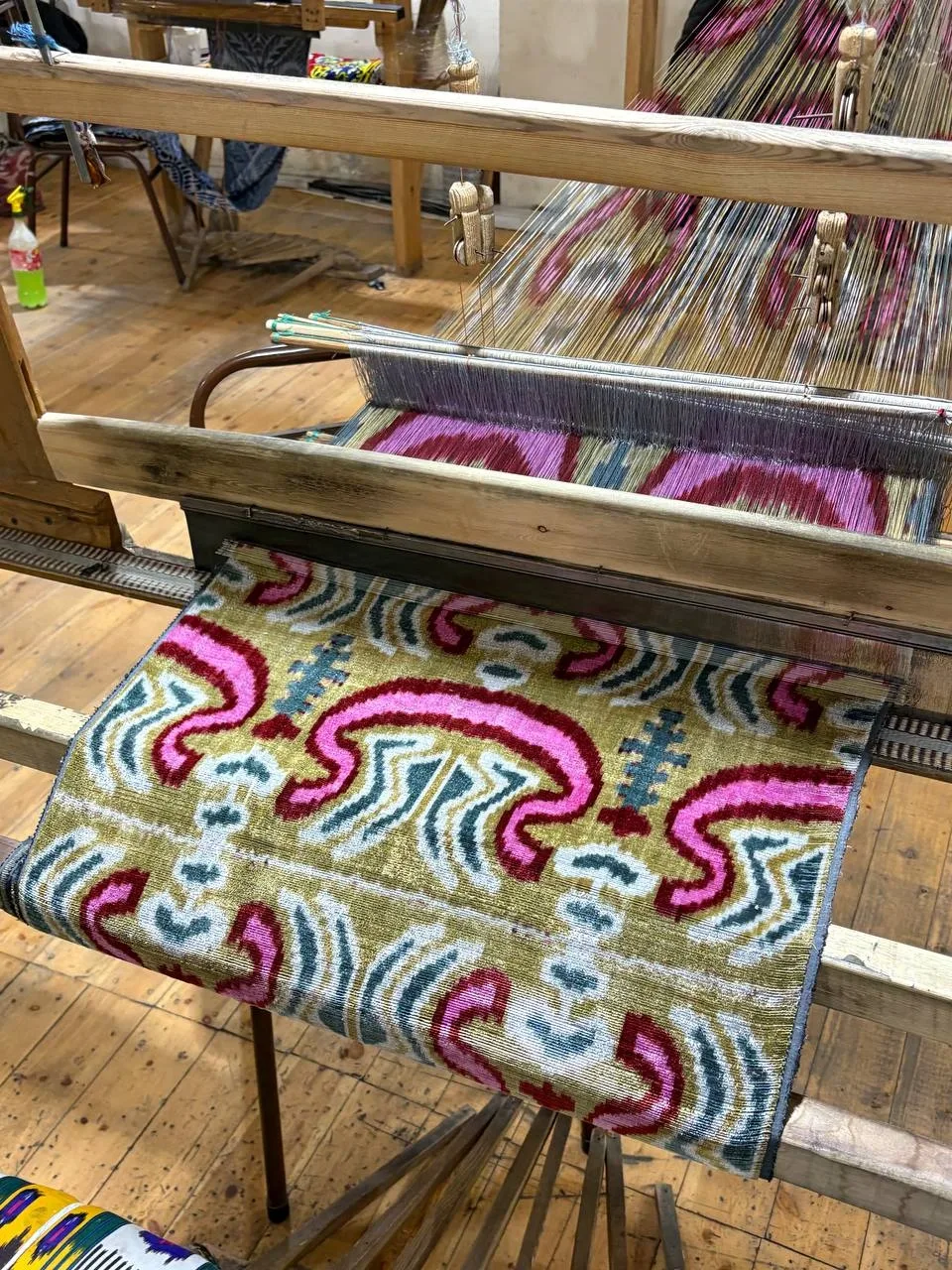
Ткацкий станок шумел сильнее, чем я ожидала — не гул, а стук, дерево о дерево при каждом проходе челнока. Я простояла в дверях семейной мастерской под Маргиланом целую минуту, прежде чем меня заметили, потому что мужчина за станком не собирался прерывать ряд ради приветствия. Челнок не останавливают на полпути. Это я поняла в первые десять секунд.
Это был не один ремесленный урок на день, а целая последовательность встреч с текстильными мастерами Ферганской долины — красильщиком, ткачом и вышивальщицей — в трёх работающих домохозяйствах, а не в постановочных демонстрациях. CraftNCulture предупредили заранее: никто не будет выступать перед нами. Если партии красителя нужно ещё двадцать минут в чане — мы ждём двадцать минут. Так и оказалось, и это было лучшей частью дня.
Как я сюда попала
Я присоединилась к группе из шести человек на пятый день поездки по Узбекистану — Ташкент, затем на восток мимо Коканда, вглубь долины. В большинстве маршрутов по Шёлковому пути Фергану проезжают транзитом: фото-остановка на базаре, может быть, керамическая мастерская в Риштане, и снова в путь к Самарканду. Здесь всё было иначе. Мы провели целый день среди текстильных мастеров Ферганы, которые не готовятся к приезду туристических автобусов, потому что автобусы сюда обычно не заезжают.
Об икате я читала и раньше — технике резервного крашения, при которой нить завязывают и красят узорами до того, как она попадёт на станок, так что рисунок проявляется только когда станок сводит нити воедино. Читать об этом и стоять над чаном с краской, наблюдая, как несуществующий пока узор постепенно становится различимым — разные вещи. Второе лучше.
Внутри мастерской
Первой остановкой был красильный дом — низкий потолок, стены, окрашенные в цвет всех партий, что здесь когда-либо смешивали. Очилбек, управляющий мастерской с двумя сыновьями, сначала показал нам процесс завязывания: хлопковую или шёлковую нить перевязывают участками вощёным шнуром, чтобы краситель не проник в перевязанные места. Завяжешь неправильно или слишком слабо — весь узор смажется. Он позволил каждому из нас завязать один небольшой участок нити. Мой получился неровным — участки вышли разной ширины, что он отметил без осуждения, просто как факт, вроде кривого гвоздя.
Потом чан. Натуральные красители здесь до сих пор делают из корня марены, кожуры граната и скорлупы грецкого ореха, и цвет окончательно проявляется не сразу — нить выходит из чана одним оттенком, а после нескольких минут окисления на воздухе становится другим. Наблюдать за этой переменой вживую, стоя достаточно близко, чтобы чувствовать запах ореха — вот момент, когда поездка перестала быть просто осмотром достопримечательностей.
Само ткачество происходило через два дома, на другом станке, принадлежащем домохозяйству двоюродного брата — так текстильное ремесло до сих пор перемещается по долине: распределено между родственными семьями, а не сосредоточено в одной мастерской. Ткач позволил мне посидеть за станком минуты четыре. Четыре прохода челнока, неровно прибитых, заметно более рыхлых, чем соседние ряды. Он их не исправил. Просто продолжил ткать дальше, чтобы готовое полотно хранило память о том, кто здесь сидел.
Каково это было на самом деле
Хочу быть честной: один день не сделает вас мастером. Вы не уедете, умея завязывать резервный узор или ровно прибивать уток. Вы уедете с реальным пониманием того, сколько труда скрыто под отрезом икатового шёлка, мимо которого можно просто пройти на базаре — завязывание, несколько красильных ванн для многоцветного узора, время на станке, иногда недели работы над сложным изделием.
Был и более медленный ритм дня, к которому я не была готова. Никто никуда не торопился между мастерскими. Мы сидели на подушках и пили чай, который заварила чья-то мать, и паузы между занятиями оказались не менее важны, чем сами занятия — именно тогда, через переводчика, шёл настоящий разговор о том, почему оба сына Очилбека решили остаться в ремесле, когда многие их сверстники ушли.
Почему важна небольшая группа
Шесть человек, три домохозяйства за один день — мастерские могли принимать нас, не меняя привычного распорядка. Сыновья Очилбека продолжали красить другие партии, пока мы наблюдали — мы не были единственным, что происходило в этой комнате. В группе размером с автобус это было бы невозможно: домохозяйству пришлось бы либо останавливать обычную работу ради гостей, либо показывать сжатую, приглаженную версию ради количества. Небольшие группы получают настоящую, продолжающуюся жизнь ремесла. Все остальные — только нарезку лучших моментов.
Что я увезла с собой
Короткий отрез шёлка, завязанного вручную для иката, но ещё не сотканного в ткань — Очилбек настоял, чтобы я оставила себе именно тот кусок, что завязывала сама, с неровными участками и всем прочим. От него никакой пользы. Я не знаю, что с ним делать. Но храню его, потому что это единственный сувенир, отражающий настоящую, пусть и не идеальную, попытку, а не покупку.
CraftNCulture включает этот день с ферганскими мастерами в свой более широкий 7-дневный тур по ремёслам Узбекистана, вместе с золотым шитьём в Бухаре и керамикой в Самарканде — только небольшие группы, не более восьми гостей, чтобы дома оставались домами, а не площадками. 1850 долларов с человека за весь маршрут.
Смотрите 7-дневный маршрут на craftnculture.uz →
CraftNCulture проводит небольшие групповые культурные туры по ремёслам Узбекистана. Ближайшие даты: сентябрь–октябрь 2026.
About the author
CraftnCulture
The CraftnCulture editorial team — Tashkent-based cultural tourism specialists covering Uzbekistan travel, artisan crafts, and Silk Road heritage.