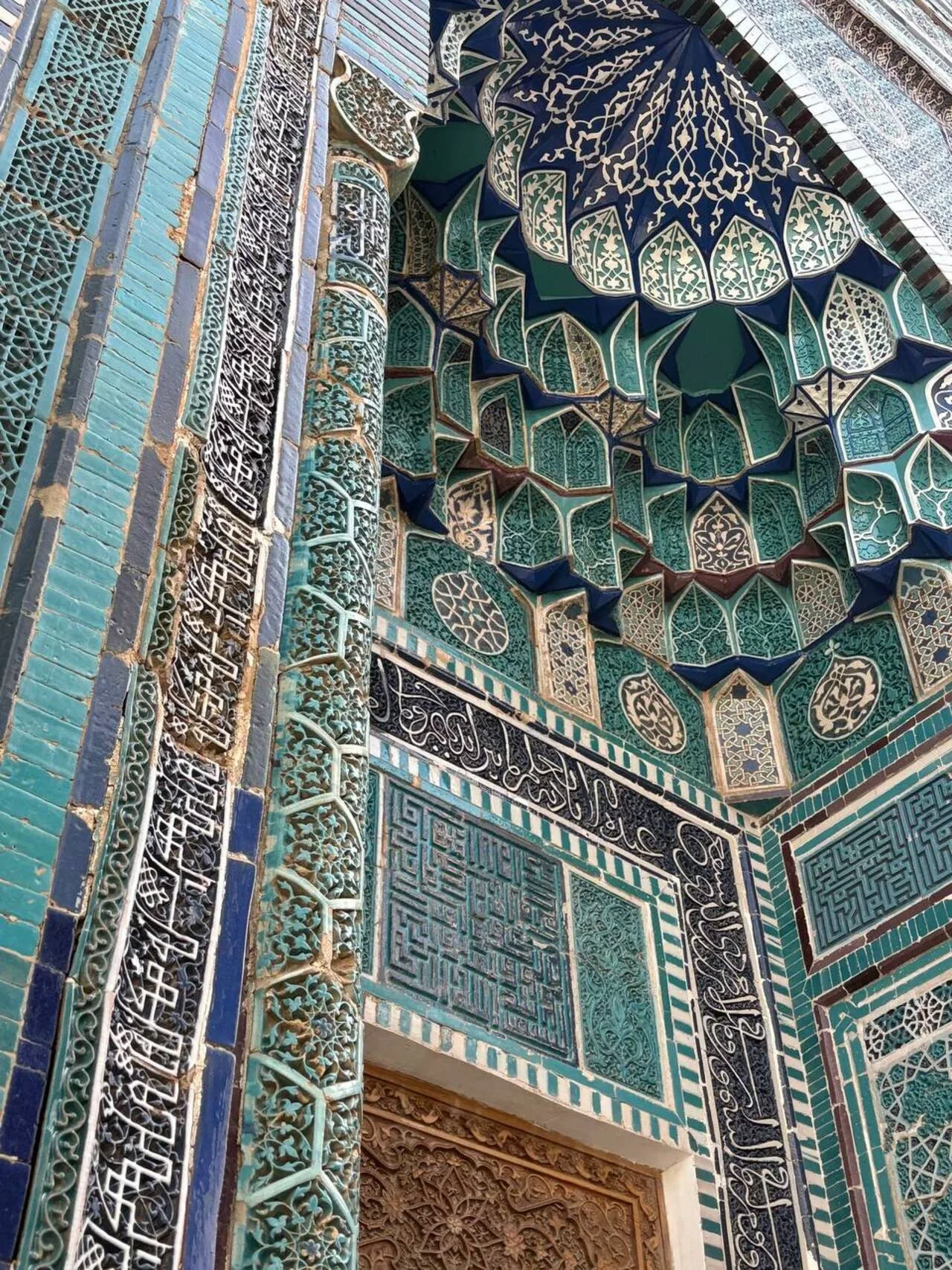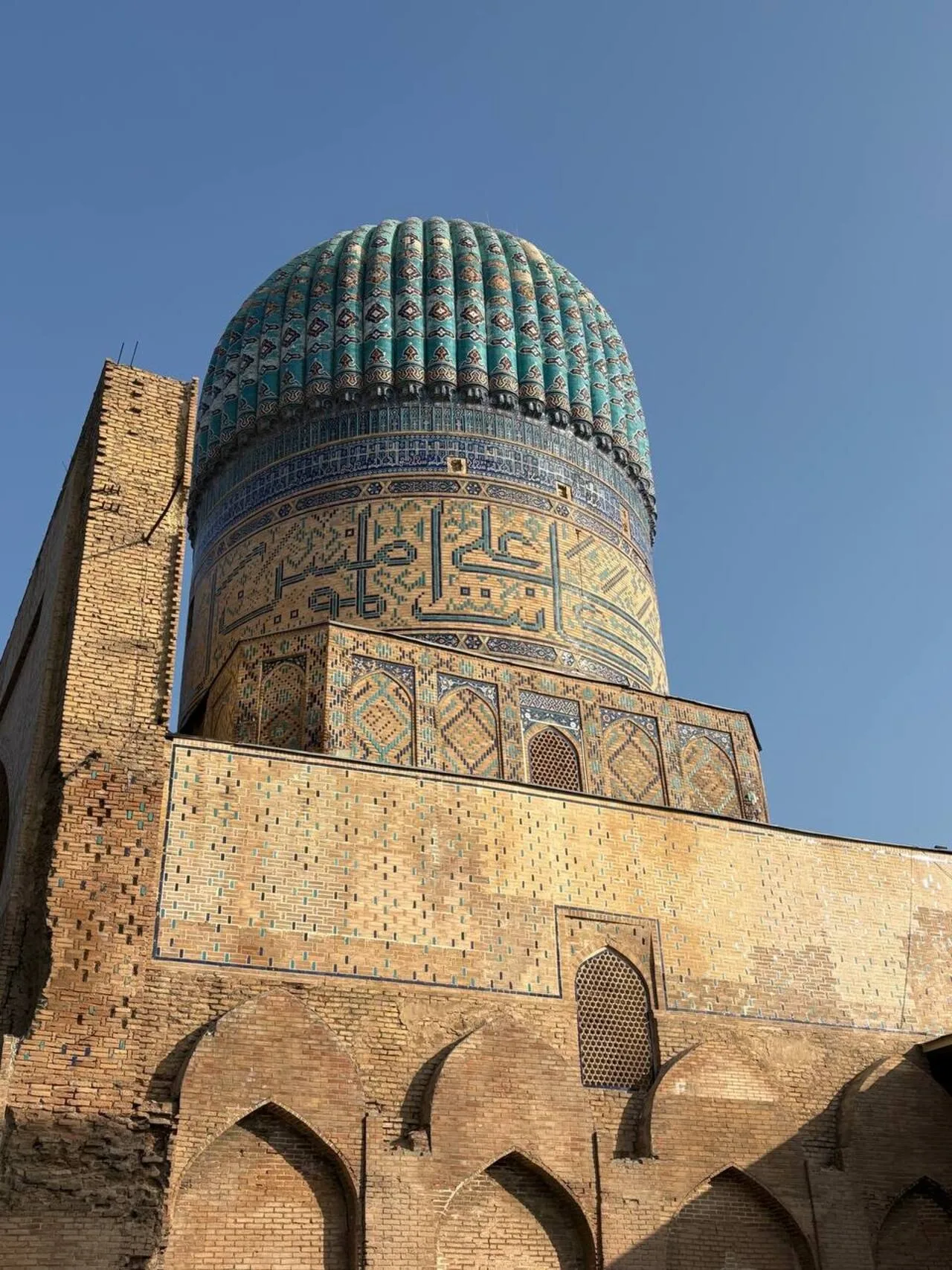
Why does a modern walking tour spend an hour inside a building where teenagers are still memorizing verses out loud? That was my first question to the guide, standing in the Mir-i-Arab courtyard while a dozen students recited in a room off to the left, unbothered by the tourists filing past their open door.
I had assumed, wrongly, that the madrasahs on Bukhara's tourist circuit were museums with good acoustics — beautiful shells emptied of their original purpose, repurposed for photographs. Some are. Mir-i-Arab is not. It has trained imams continuously since the 16th century, with one interruption during the Soviet period, and it is training them now.
How I Got Here
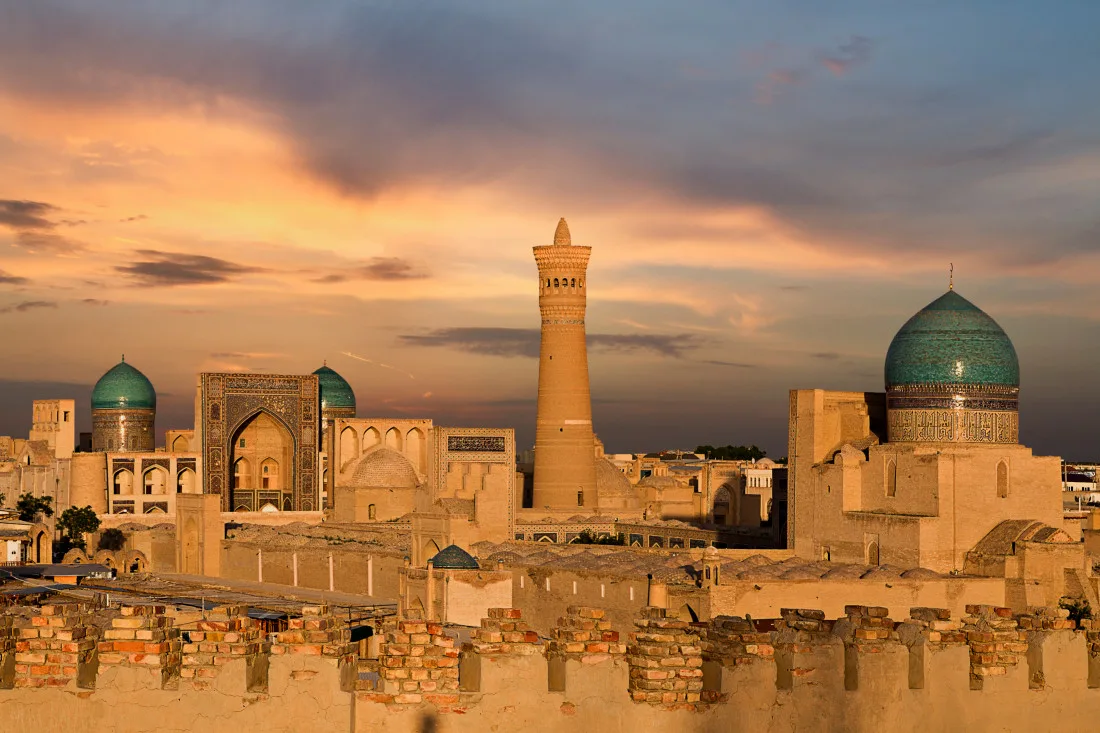
I signed up for CraftNCulture's Bukhara Monuments, Madrasahs & Market Streets Walking Tour expecting an architecture lesson — tilework, proportions, the usual vocabulary of iwans and muqarnas. What I got instead, in a small group of six, was closer to a conversation about how an institution keeps functioning across five centuries of regime change, occupation, and reopening. The tour is built around Bukhara's cluster of historic madrasahs and market streets, and it doesn't pretend the religious-education side of that history stopped when the last Timurid patron died.
Our guide, a Bukhara native who studied history before guiding, kept drawing a line between two things I'd been treating as one: the buildings, which are old, and the institutions inside them, some of which are not old at all. Mir-i-Arab reopened its doors to students in 1946 — the only functioning madrasah permitted in the entire Soviet Union at the time — and several of the current teaching staff trace their own training back through that narrow surviving thread rather than an unbroken medieval lineage.
What Actually Happens Inside
The learning itself is not romantic to watch. A class of maybe fifteen students sat cross-legged in rows, a teacher walking the aisle correcting pronunciation, a boy near the back mouthing a line silently before committing to saying it aloud. Nobody performed for us. Nobody looked up when our group paused at the doorway — we were told in advance that photography inside active classrooms wasn't permitted, and the guide didn't push it.
What struck me was the ordinariness of the discipline. Memorization here isn't a spiritual flourish added on top of study; it's the study itself, repeated daily for years before a student moves to interpretation and jurisprudence. Our guide compared it — not unkindly — to learning an instrument by scales before anyone lets you near a piece of music. You don't get to interpret a text you haven't first held completely in your memory.
I asked how students end up here specifically. The answer was a network, not a pipeline: regional imams recommend promising students to Bukhara, Tashkent's Mir-i-Arab counterpart institutions maintain informal exchange with madrasahs in Kazakhstan and Kyrgyzstan, and a smaller but growing number arrive from diaspora communities abroad who want their children trained in a specifically Central Asian tradition rather than one imported wholesale from elsewhere. None of this showed up in any guidebook I'd read before the trip.
Why the Small Group Size Mattered Here Specifically
This is the section of the tour where six people is a meaningfully different experience than twenty. Active madrasahs are working institutions, not exhibits, and the access we were given — a courtyard visit, a hallway conversation with a second-year student who spoke passable English, a few minutes near an open classroom door — depends entirely on not disrupting the place. A large tour group standing in a courtyard for twenty minutes changes the character of that courtyard. Six people standing quietly for five minutes barely register.
Our guide told us, without much drama, that larger operators sometimes get turned away entirely, or are restricted to the exterior courtyards only. Smaller groups get let further in, closer to the actual daily rhythm of the place, because the institution can absorb them without the visit becoming a spectacle.
What I Left With
I didn't come away from this tour with a craft object, the way I have from CraftNCulture's embroidery or ceramics workshops. What I left with was a correction to an assumption I hadn't noticed I was carrying — that "historic madrasah" meant "former madrasah." Most of the ones on Bukhara's tourist map are exactly that, restored shells now selling handicrafts in their old student cells, and there's nothing wrong with that; it's a reasonable way to keep a five-hundred-year-old building standing. But at least one still does the job it was built for, and walking past that door mattered more to me than any of the tilework did.
The tour runs as part of CraftNCulture's Bukhara Monuments, Madrasahs & Market Streets Walking Tour, roughly eight hours, capped at a small group size, priced around $80–90 per person depending on season. It also threads through the Old City's market streets and several of the now-museum madrasahs, so you get both readings — restored and living — in the same afternoon, which is honestly the more honest way to understand what's actually still happening here.
About the author
CraftnCulture
The CraftnCulture editorial team — Tashkent-based cultural tourism specialists covering Uzbekistan travel, artisan crafts, and Silk Road heritage.