CraftnCulture
首页旅游线路工作坊巴扎集市相册博客Book Now
首页旅游线路工作坊巴扎集市相册博客Book Now我的账户
Language:

保持联系

订阅我们的新闻通讯,获取工作坊更新、文化见解和独家优惠。

CraftnCulture

通过亲身实践的工作坊和沉浸式多日游,探索正宗的中亚工艺。在乌兹别克斯坦与工艺大师建立联系。

探索

  • 工作坊
  • 乌兹别克斯坦旅游线路
  • 巴扎集市
  • 相册
  • 成为合作伙伴

资源

  • 旅行博客
  • 关于我们
  • 常见问题解答
  • 订单追踪
  • 联系我们

联系我们

  • Emailinfo@craftnculture.uz
  • Phone+998 90 272 01 13
  • WhatsApp+998 90 272 01 13
  • Studio乌兹别克斯坦塔什干
© 2026 CraftnCulture 版权所有隐私政策条款与条件
Home/Blog/Destinations/Karakalpakstan Travel: Aral Sea Desert Beyond the Tourist Trail
Destinations

Karakalpakstan Travel: Aral Sea Desert Beyond the Tourist Trail

Discover Karakalpakstan tourism beyond Uzbekistan's tourist trail: Aral Sea ghost ships, Nukus art treasures, and authentic off-beat travel adventures.

CraftnCulture EditorialJune 9, 20264 分钟阅读
Karakalpakstan Travel: Aral Sea Desert Beyond the Tourist Trail
本页内容▾
  1. Why Karakalpakstan Belongs on Your Itinerary
  2. The Aral Sea Region: Witnessing an Ecological Frontier
  3. Getting to Moynaq and the Sea
  4. Nukus and the Savitsky Museum
  5. When to Visit and How to Travel Responsibly
  6. Plan Your Karakalpak Journey
  7. References

本页内容

  1. Why Karakalpakstan Belongs on Your Itinerary
  2. The Aral Sea Region: Witnessing an Ecological Frontier
  3. Getting to Moynaq and the Sea
  4. Nukus and the Savitsky Museum
  5. When to Visit and How to Travel Responsibly
  6. Plan Your Karakalpak Journey
  7. References

Most travelers to Uzbekistan plan a tidy loop through Samarkand, Bukhara, and Khiva — and then fly home. But two hours northwest of Khiva, an entirely different country begins. Karakalpakstan, the autonomous republic that occupies Uzbekistan's vast northwestern third, is a region of receding seas, ghost ports, Soviet avant-garde art, and a Turkic-speaking people whose language is closer to Kazakh than Uzbek. For eco-conscious travelers and anyone tired of the standard Silk Road itinerary, Karakalpakstan tourism is one of the last truly off-beat travel experiences left in Central Asia.

Why Karakalpakstan Belongs on Your Itinerary

Karakalpakstan covers nearly 40% of Uzbekistan's landmass but holds less than 6% of its population. The region sits at the crossroads of an ecological catastrophe — the slow death of the Aral Sea — and an unlikely cultural rebirth. Nukus, the capital, is a low-rise Soviet grid town that hides one of the world's most surprising art collections. The surrounding desert holds Zoroastrian-era fortresses, fishing boats stranded in sand, and salt flats so vast they curve with the horizon. Visitors here travel slowly, sleep in yurt camps, and meet a Karakalpak community working to keep its language and crafts alive after decades of environmental and economic upheaval.

The Aral Sea Region: Witnessing an Ecological Frontier

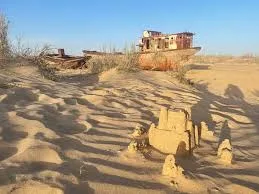
The Aral Sea was once the world's fourth-largest inland body of water. Today it is roughly a tenth of its former size, and the dry seabed has become the Aralkum, a new desert that did not exist a generation ago. Visiting the Aral Sea region is sobering but essential — it is one of the only places on earth where the scale of human environmental impact is visible from horizon to horizon. Most journeys start in Moynaq, the former fishing port now famous for its ship graveyard: rusting trawlers half-buried in sand, miles from the nearest water.

Getting to Moynaq and the Sea

Reaching the receding shoreline is a full-day affair. From Nukus it is about a four-hour drive to Moynaq, and from there another four to five hours over washboard track to reach the current waterline. Reliable operators run two- and three-day 4x4 expeditions with overnight yurt stays near Sudochye Lake, where flocks of flamingos still gather. Independent travel is possible but slow; most visitors hire a driver-guide who knows the unmarked desert routes.

Nukus and the Savitsky Museum

Nukus itself rewards a longer stay than most guidebooks suggest. The Igor Savitsky State Museum of Arts holds the second-largest collection of Russian avant-garde painting in the world — works hidden from Soviet censors in the 1960s by a single tenacious curator. The collection includes thousands of canvases by artists who would otherwise have been erased. Alongside it sits a quietly excellent display of Karakalpak folk art: silver jewelry, embroidered wedding robes, and the carved wooden saddles of the steppe.

A short walk away, the local bazaar is a working market rather than a tourist site, and small workshops still produce traditional Karakalpak textiles. A few highlights worth building into your visit:

  • The ship graveyard at Moynaq and its small Aral Sea museum
  • Ayaz Kala and Toprak Kala, Zoroastrian-era desert fortresses near the Amu Darya
  • Sudochye Lake for birdwatching and yurt-camp overnights
  • The Savitsky Museum's avant-garde and Karakalpak wings
  • Master workshops in Nukus producing felt rugs and silver work

When to Visit and How to Travel Responsibly

Spring (April-May) and autumn (September-October) are the most forgiving months; summers exceed 40°C and winters drop well below freezing. Distances are immense, fuel stations are infrequent, and dust storms are common — plan for longer transit times than Google Maps suggests. Because tourism infrastructure is still light, the choices travelers make here matter: stay in family-run guesthouses, hire local Karakalpak guides, buy directly from artisan workshops, and pack out everything you bring into the desert. The communities of Moynaq and Nukus benefit most when visitors spend nights, not just hours.

Plan Your Karakalpak Journey

Karakalpakstan is not a destination for travelers in a hurry. It rewards patience with landscapes and stories you simply will not find elsewhere in Uzbekistan. If you would like help threading the Aral Sea region into a wider itinerary — pairing Nukus with Khiva, Bukhara, or a craft-focused route through the Fergana Valley — explore CraftnCulture's regional guides and small-group tours, or reach out to our editorial team for a tailored route across Uzbekistan's quieter west.

References

  • UNESCO: Aralkum, the Newest Desert in the World
  • Lonely Planet: Karakalpakstan Travel Guide
  • State Committee for Tourism Development of Uzbekistan
  • BBC Travel
  • Savitsky State Museum of Arts of Karakalpakstan
karakalpakstanaral-seaoff-beat-travelnukusdesert-travel

About the author

CraftnCulture Editorial

CraftnCulture Editorial contributes to the CraftnCulture journal, covering Uzbekistan's living craft traditions and Silk Road heritage.

本地贴士

日出后一小时再到访 —— 商贩更热情,光线更柔和,人群也尚未聚集。

相关故事

Samarkand Hidden Gems: Beyond the Famous Registan
Destinations

Samarkand Hidden Gems: Beyond the Famous Registan

June 9, 2026
3 分钟阅读
Inside Ichan-Kala: Khiva's Khorezm Architectural Legacy
Destinations

Inside Ichan-Kala: Khiva's Khorezm Architectural Legacy

June 9, 2026
4 分钟阅读
Fergana Valley Travel: 5-Day Independent Itinerary
Destinations

Fergana Valley Travel: 5-Day Independent Itinerary

June 9, 2026
5 分钟阅读

亲身体验匠心工艺

加入我们在塔什干、撒马尔罕、布哈拉、希瓦及更多地区的精选行程与工作坊。

浏览行程

保持灵感

订阅我们的杂志,获取来自中亚的全新故事、旅行贴士与工艺师专访。

无垃圾邮件,随时可取消订阅。