CraftnCulture
首页旅游线路工作坊巴扎集市相册博客Book Now
首页旅游线路工作坊巴扎集市相册博客Book Now我的账户
Language:

保持联系

订阅我们的新闻通讯,获取工作坊更新、文化见解和独家优惠。

CraftnCulture

通过亲身实践的工作坊和沉浸式多日游,探索正宗的中亚工艺。在乌兹别克斯坦与工艺大师建立联系。

探索

  • 工作坊
  • 乌兹别克斯坦旅游线路
  • 巴扎集市
  • 相册
  • 成为合作伙伴

资源

  • 旅行博客
  • 关于我们
  • 常见问题解答
  • 订单追踪
  • 联系我们

联系我们

  • Emailinfo@craftnculture.uz
  • Phone+998 94 421 01 13
  • WhatsApp+998 94 421 01 13
  • Studio乌兹别克斯坦塔什干
© 2026 CraftnCulture 版权所有隐私政策条款与条件
Home/Blog/Destinations/Plov Politics: What Uzbekistan's National Dish Actually Reveals About Regional Identity
Destinations

Plov Politics: What Uzbekistan's National Dish Actually Reveals About Regional Identity

A wedding argument over whose plov is right reveals what Uzbekistan's national dish says about regional identity — from CraftNCulture's small-group tours.

CraftnCulture EditorialJuly 27, 20265 分钟阅读
Plov Politics: What Uzbekistan's National Dish Actually Reveals About Regional Identity

Plov Politics: What Uzbekistan's National Dish Actually Reveals About Regional Identity

SEO target: plov, national identity, cultural symbolism | ~1,000 words


The argument started over rice.

Not about how to cook it — about whose version was correct. I was at a wedding celebration outside Samarkand, holding a plate that could have fed three people, when a man in his sixties leaned toward me and said, in careful English, that what I was eating "was not real plov." He meant no offense to our hosts. He meant it the way someone from Naples might say something about pizza made in Rome.

I hadn't expected a rice dish to have politics. I was wrong about that within about a day.

How I Got Here

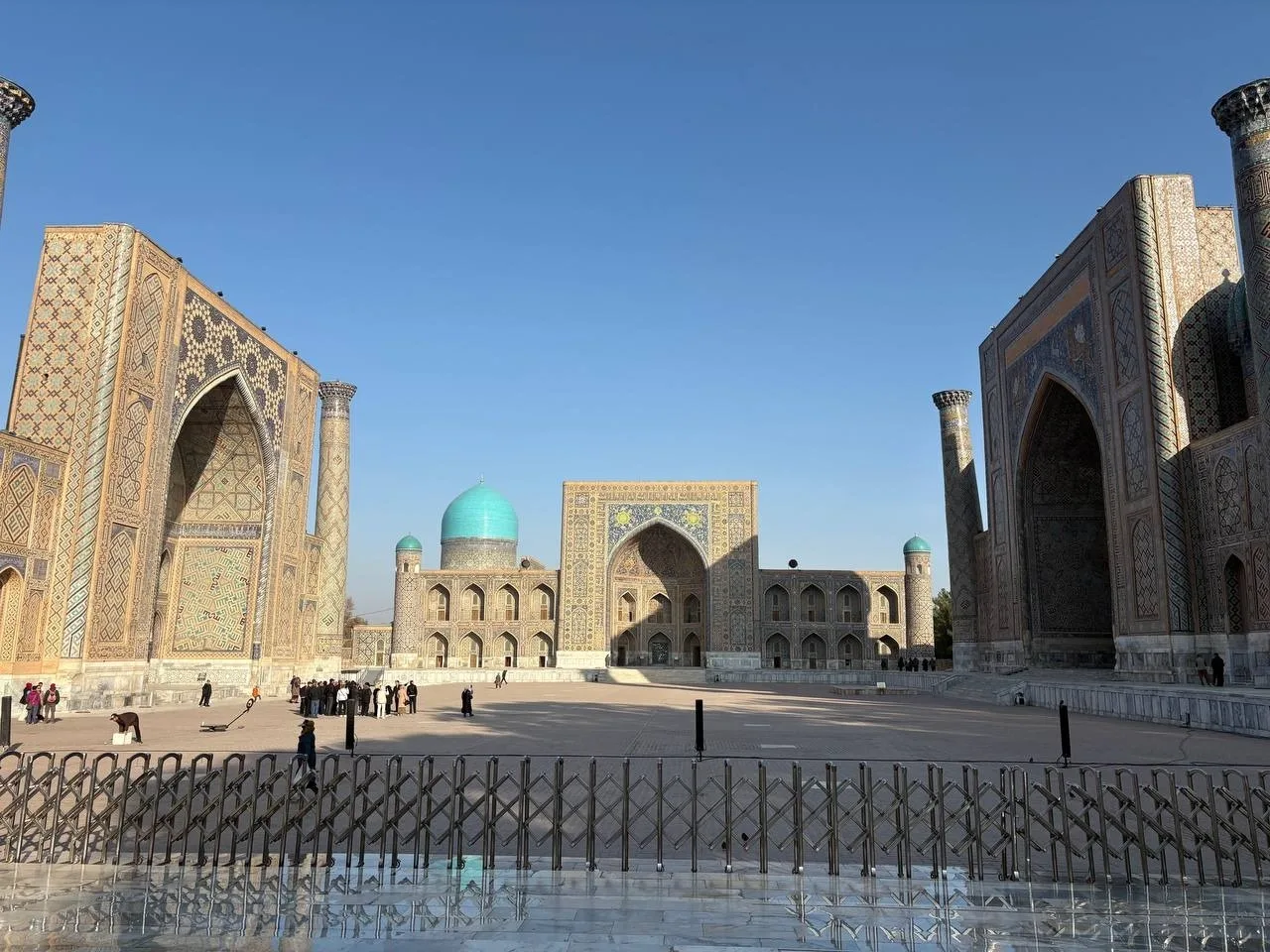
I'd joined a small-group cultural tour with CraftNCulture that moved through Tashkent, Samarkand, and Bukhara, and somewhere in the itinerary I noticed the same word kept coming up in different tones. Plov in Tashkent was described with a kind of civic pride, almost bureaucratic — this was the capital's dish, cooked in enormous cauldrons at dedicated plov centers that open before sunrise and sell out by ten. Plov in Samarkand came with a shrug and a claim of superiority, usually something about the rice-to-meat ratio being more honest. By the time we reached Bukhara, a cook told me flatly that both cities were "cooking it for tourists now" and that real plov happened in homes, not restaurants.

I went in thinking I was signing up to eat well. I ended up in the middle of a low-grade regional rivalry that nobody bothered explaining to me in advance, because for Uzbeks it doesn't need explaining. Everyone already knows plov is not neutral.

Why a Rice Dish Carries This Much Weight

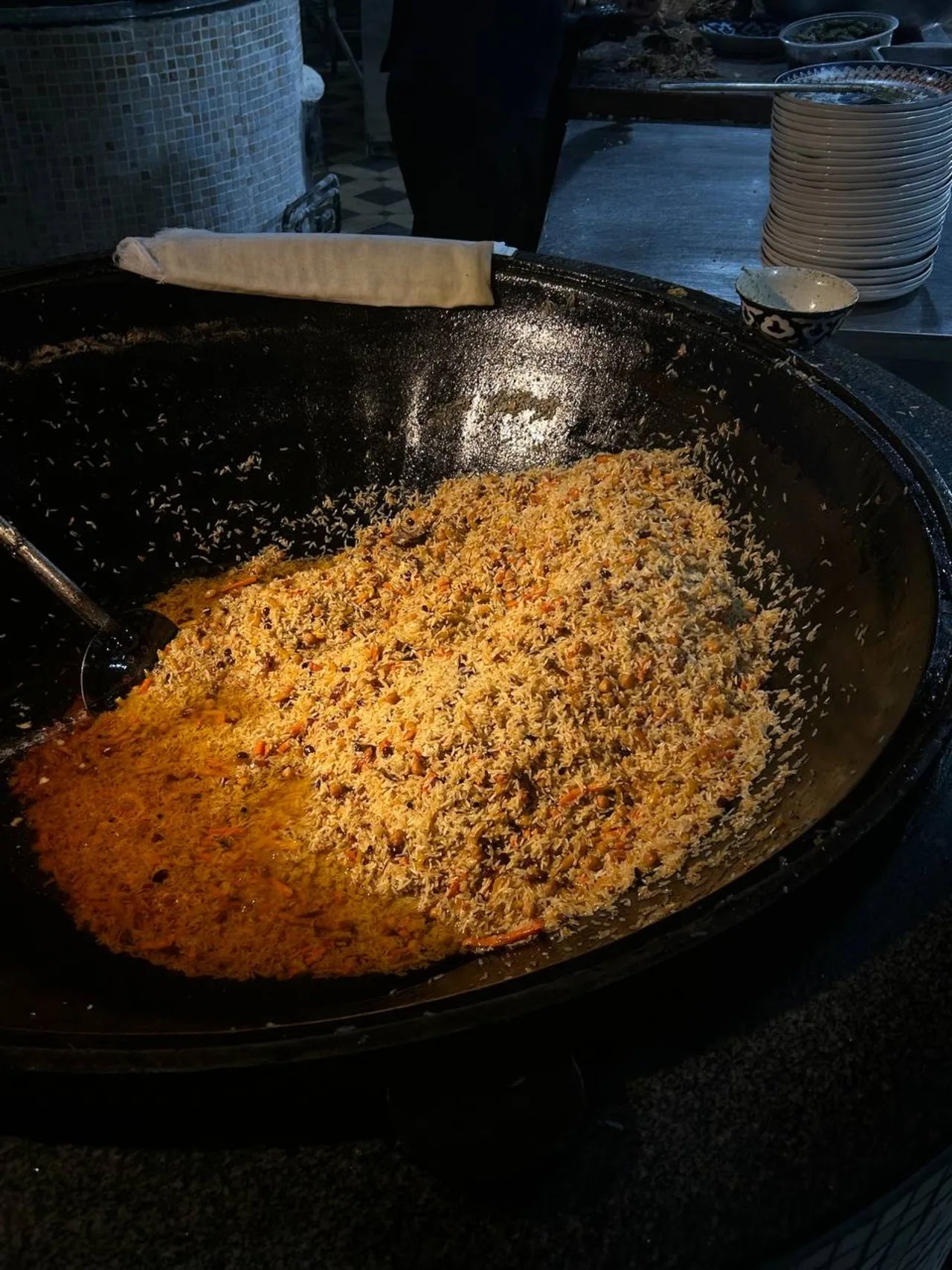
Plov's ingredients barely change from region to region — rice, meat, carrots, onion, oil, sometimes chickpeas or raisins or quince depending on the season and the cook's family. What changes is method, ratio, and occasion, and those small differences carry an outsized amount of cultural symbolism. Tashkent plov tends toward yellow carrots and a lighter oil hand. Samarkand plov is often built in layers, rice steamed separately from the meat and vegetables rather than cooked together, and served upside down so the meat sits on top. Bukhara claims its own version with more oil and a heavier hand on cumin.

None of this is written down anywhere official. It's argued about, the way people argue about barbecue regions or which city makes the "correct" version of a dish everyone's grandmother also made differently. The dish functions as a kind of edible census — cook someone plov and you're telling them, whether you mean to or not, which region you're from and which traditions you were raised inside.

There's also the civic layer. Plov is served at weddings, funerals, circumcision ceremonies, and Friday communal meals where a neighborhood's men take turns cooking a cauldron for everyone. It's not restaurant food first. It's obligation food, the dish you make when a community needs feeding at scale, and the recipe you inherit tells people where you belong before you've said a word.

What It Actually Felt Like to Sit Inside That Argument

I'll admit I found the rivalry a little tedious by day three. Every cook had a theory, and every theory contradicted the last one with total confidence. I asked our guide, a Tashkent native, which version was actually best, expecting diplomacy. He said Samarkand's, immediately, then looked slightly guilty about it, like he'd broken an unspoken rule about civic loyalty.

What changed my mind wasn't a single meal — it was watching an older woman in a Bukhara household portion out plov by hand, giving the largest, fattiest piece of meat to the oldest guest at the table without being asked, a gesture everyone else clocked and I initially missed entirely. Regional pride, it turned out, was the least interesting layer. The interesting layer was watching how the dish enforces social order in real time — who gets served first, who gets the best cut, who cooked and who didn't have to.

I still can't confidently rank the three versions. I'm not sure Uzbeks expect a foreigner to be able to.

Why Doing This in a Small Group Mattered

We were seven travelers total, which meant we were eating in homes and small family-run kitchens rather than banquet halls built for fifty. In a larger tour group, you get the tourist plov — competent, consistent, stripped of the argument. In a group small enough to sit at someone's actual table, you get pulled into the argument whether you want to be or not, because the people serving you have opinions and enough room at the table to share them.

That distinction matters more here than with most crafts. Plov isn't hidden in a workshop the way ceramics or embroidery is — you can order it anywhere. What you can't order is the context, and that only shows up when there's room at the table for a real conversation instead of a scripted one.

What I Left With

Not a recipe, honestly — I asked for one and got three contradictory answers from three cooks in three cities, which felt like the correct outcome. What I left with was an understanding that a country's most ordinary dish can carry more identity than its monuments do, and that regional pride here isn't performed for visitors. It's argued about at home, at weddings, over cauldrons that have nothing to do with tourism at all.

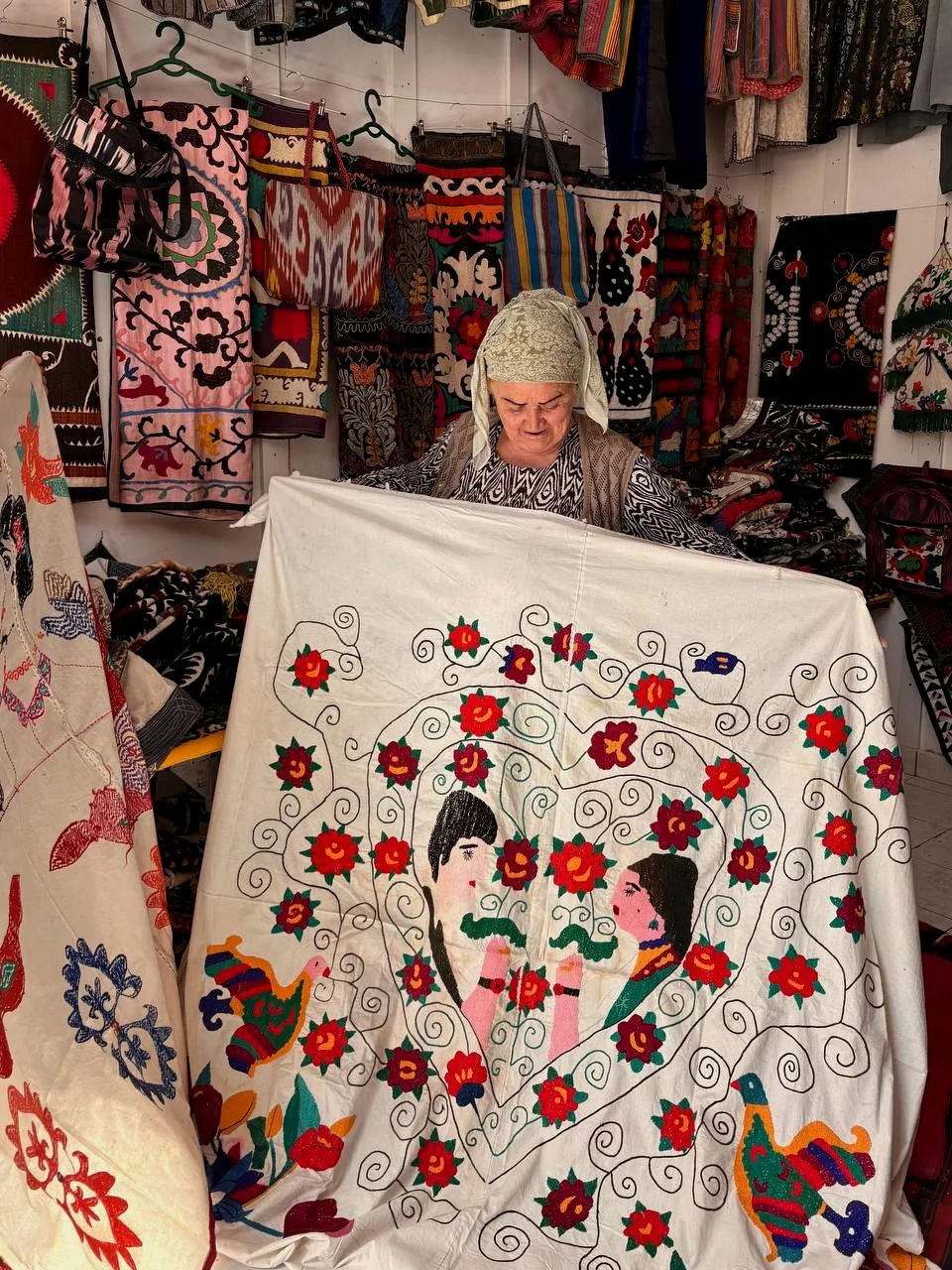
CraftNCulture's small-group cultural tours through Tashkent, Samarkand, and Bukhara include plov in exactly this context — home kitchens and community cauldrons, not staged demonstrations, alongside sessions with ceramicists, embroiderers, and other working artisans. Groups stay under ten people on purpose.

See the current small-group itineraries at craftnculture.uz →

CraftNCulture runs small-group cultural craft tours across Uzbekistan.

plovnational identitycultural symbolismregional pride

About the author

CraftnCulture Editorial

CraftnCulture Editorial contributes to the CraftnCulture journal, covering Uzbekistan's living craft traditions and Silk Road heritage.

Crafted in Uzbekistan: A 7-Day Journey Into Living Traditions of the Silk Road
与我们同行

Crafted in Uzbekistan: A 7-Day Journey Into Living Traditions of the Silk Road

From $1850 per person

立即预订
本地贴士

日出后一小时再到访 —— 商贩更热情,光线更柔和,人群也尚未聚集。

相关故事

The Cotton Fields No One Tells You About
Destinations

The Cotton Fields No One Tells You About

July 27, 2026
5 分钟阅读
Amirsoy Beyond Skiing: What's Actually There in Summer
Destinations

Amirsoy Beyond Skiing: What's Actually There in Summer

July 27, 2026
5 分钟阅读
Samarkand Hidden Gems: Beyond the Famous Registan
Destinations

Samarkand Hidden Gems: Beyond the Famous Registan

June 9, 2026
3 分钟阅读

亲身体验匠心工艺

加入我们在塔什干、撒马尔罕、布哈拉、希瓦及更多地区的精选行程与工作坊。

浏览行程

保持灵感

订阅我们的杂志,获取来自中亚的全新故事、旅行贴士与工艺师专访。

无垃圾邮件,随时可取消订阅。