Amirsoy in Summer: What's Actually There When the Snow Is Gone
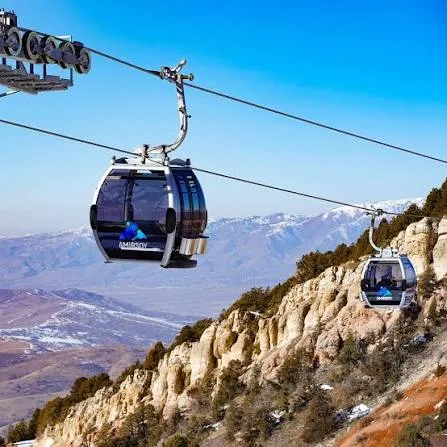
The gondola cabin swayed a little more than I expected, empty enough in July that I had it to myself. No queue. No rented boots clomping across metal grating. Just the cable clicking overhead and a valley of scrub pine sliding by underneath, green where I'd only ever pictured it white.
How I Got Here
I'd added Amirsoy onto the end of a longer Uzbekistan trip almost as an afterthought — a day out from Tashkent, tacked onto a week that was otherwise built around embroidery and ceramics workshops in Bukhara and Samarkand. Everything I'd read about the resort was ski content: piste maps, lift-ticket prices, powder reports from a season I wasn't visiting in. I wanted to know if Amirsoy summer mountain adventures were an actual thing, or just marketing filler between November and March when the lifts are mostly idle.
It's a real question worth asking before you book. A ski resort in July can be a ghost town with a chairlift, or it can have figured out a second life. Amirsoy, to its credit, has done real work on the second option — not by inventing an "experience," but by opening up terrain that was always there under the snow.
What There Actually Is When the Lifts Keep Running
The gondola runs through summer, which is the whole point — without it, the upper mountain simply isn't reachable in a day. From the mid-station, marked hiking trails fan out across ridgelines that in winter are covered runs; in summer they're loose scree and low juniper, with views back down toward the Chimgan range that don't need a filter.
There's a mountain-bike trail network cut into the lower slopes, an alpine coaster that's more fairground thrill than "adventure activity" (I'll be honest about that one — it's fun for four minutes and forgettable after), and a handful of via ferrata-style routes bolted into rock faces for people who want more exposure than a marked trail gives them. None of it is dressed up as extreme. A lift attendant told me flatly that the coaster is "for kids and for people who don't want to hike," which is about as unvarnished as marketing copy gets in this country.
The real four-season case Amirsoy is making isn't any single attraction — it's elevation. At 2,300 meters the July air was noticeably cooler and thinner than Tashkent's 40-degree lowland heat, and that alone is a legitimate reason to come up: not for an "adventure," but for six hours where you're not sweating through your shirt.
What It Actually Felt Like
I hiked one of the ridge trails for about two hours before the afternoon cloud came in low and fast, the way it does at altitude, and turned the whole ridge white in about fifteen minutes. I hadn't planned for that and my jacket wasn't warm enough — a small, useful reminder that "summer" at 2,300 meters is not summer the way Tashkent understands the word. The guide who'd come up with me, a man who'd grown up in Chimgan village at the base of the range, didn't seem bothered. He pointed out where the old Soviet-era ski infrastructure had been before Amirsoy's newer lift network went in, half-buried concrete pylons now just part of the landscape, and talked about summers up here as a kid herding animals on slopes that are pistes six months later.
That's the part guidebooks don't cover — the mountain has a life that predates the resort by generations, and the resort is a recent, thin layer over it. Riding the gondola back down at dusk, watching Tashkent's haze come into view below the ridgeline, I understood the four-season pitch better than any brochure had managed: it's not that Amirsoy invented summer activities, it's that the infrastructure built for skiing happens to also get you somewhere worth being when there's no snow at all.
Why a Small Group Made the Day Work
We were four people on the trail that afternoon, not forty. When the cloud came in, our guide made a fast, unhurried call to turn back before the trail got slick — the kind of decision that's easy with four people checking in with each other and much harder to make cleanly with a bus-sized group split across three speeds. In a crowd that size, someone at the back always argues to keep going. With four of us, everyone could see the same weather and agree at the same time.
It also meant the guide talked like a person, not a tour script. The half-buried pylons, the herding stories, the honest "the coaster is for kids" — none of that survives being repeated to a group of thirty on a schedule.
What You Leave With
I didn't come down with a souvenir. What I came down with was a genuinely useful piece of information: Amirsoy in summer is a legitimate half-day or full-day trip out of Tashkent, worth doing for the elevation and the trail network alone, not worth overselling as an adventure park. The gondola, the cooler air, and two hours of real hiking were enough. The alpine coaster was a novelty I was glad I tried once and don't need to try again.
If you're building out a Tashkent itinerary around CraftNCulture's craft workshops in Bukhara and Samarkand, a day trip up to Amirsoy is a sensible way to spend a rest day between cities — mountain air, a change of pace from workshop benches, and a genuinely different side of the country than the old-city medinas. It pairs oddly well, in fact, with the eco-tourism angle covered in CraftNCulture's Nuratau Mountains yurt camping guide — different range, same instinct that Uzbekistan's mountains are worth a day of anyone's itinerary, not just skiers'.
Trip type: Day trip from Tashkent, small group (4–6 people) Best season for this angle: May–September, when the gondola runs for hikers rather than skiers Elevation: Base ~1,700m, mid-station gondola access to ~2,300m+
About the author
CraftnCulture Editorial
CraftnCulture Editorial contributes to the CraftnCulture journal, covering Uzbekistan's living craft traditions and Silk Road heritage.