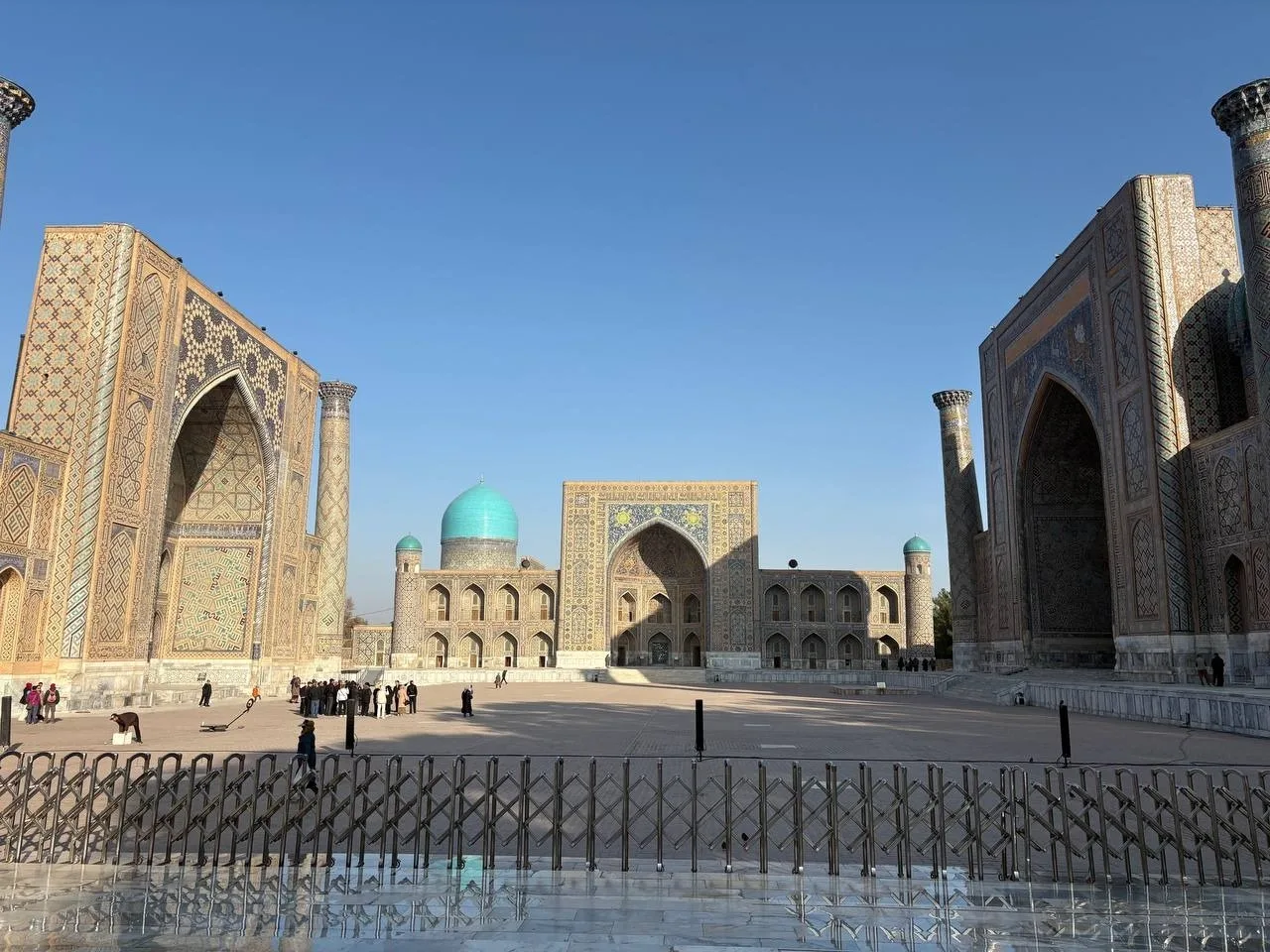
Каждый путешественник приезжает в Самарканд с ожиданием увидеть Регистан — три медресе, поднимающиеся в торжественном великолепии над огромной каменной площадью. И не напрасно. Регистан заслуживает всех превосходных степеней. Но Самарканд — один из древнейших непрерывно населённых городов на Земле, и одного утра у одной площади едва хватает, чтобы прикоснуться к его тайнам. Для тех, кто готов свернуть с привычного пути, город открывает второй пласт истории, которого большинство маршрутов по Самарканду так и не достигают.
Мечеть Биби-Ханым: несбыточная мечта Тимура
Названная в честь китайской жены Тимура Великого, мечеть Биби-Ханым была заложена в 1399 году как крупнейшая в исламском мире. Амбиции превзошли инженерные возможности: трещины появились ещё до высыхания штукатурки, а землетрясения разрушили большую её часть к XVI веку. То, что стоит сегодня, — это восстановленные руины потрясающего масштаба: один лишь главный портальный свод достигает 35 метров. В отличие от Регистана, здесь почти не бывает толп. Можно неторопливо обойти весь двор, осмотреть огромный каменный пюпитр для Корана в его центре и оценить грандиозность тимуридских замыслов в почти полной тишине. Мавзолей Биби-Ханым напротив, где похоронена жена Тимура, также достоин короткого отступления от маршрута.
Шахи-Зинда: улица мёртвых
Пятиминутная прогулка на север приводит к самому духовно насыщенному месту Самарканда. Шахи-Зинда («Живой царь») — это церемониальная улица, обрамлённая мавзолеями, которые органично разрастались на протяжении шести столетий. Изразцы — глубокий кобальт, бирюза и золото — словно излучают собственный свет. Гробницы принадлежат тимуридской знати и, по преданию, Касиму ибн Аббасу — двоюродному брату Пророка Мухаммада, который, как считается, принёс ислам в Центральную Азию. Паломники посещают это место круглый год, и атмосфера меняется час от часу: торжественная на рассвете, тихо туристическая в полдень, золотистая и безмолвная на закате. Выделите не менее девяноста минут. Соседние фасады никогда не повторяют друг друга — искать различия в геометрических узорах само по себе становится медленным удовольствием.
Музей Афрасиаб и древний город
Немногие путешественники знают, что современный Самарканд стоит на руинах своего предшественника VII века до н. э. Древний город Афрасиаб занимает пологое плато к северу от Шахи-Зинды, а его небольшой, но замечательный музей хранит подлинное сокровище: расписной зал VII века с яркими фресками, изображающими посольские процессии, речных богинь и охотничьи сцены. Эти росписи созданы до прихода ислама в регион и сохранились лишь потому, что были погребены под многовековыми завалами.
На что обратить внимание внутри
При посещении обратите внимание на:
- Китайских и корейских послов, узнаваемых по характерным головным уборам
- Двух цариц, летящих на фантастических птицах, — отсылку к доисламскому весеннему обряду
- Пигмент лазурита, объясняющий исключительную сохранность цветов
- Черепки керамики, представленные в контексте и прослеживающие 2600 лет узбекской керамической традиции
Макет городища у входа стоит изучить несколько минут до того, как отправиться в залы.
Гур-э-Амир: скромная усыпальница Тимура
Мавзолей Тимура расположен в короткой прогулке от Регистана, но существует в совершенно ином ритме. Рифлёный бирюзовый купол — прямой предок могольской архитектуры в Индии — возвышается над интерьером из панелей оникса и позолоченных надписей. Мраморный кенотаф, отмечающий место захоронения Тимура, проще, чем можно было бы ожидать от покорителя мира. Приходите рано утром, когда свет, проникающий сквозь голубой барабан, бросает цветные тени на пол, а пространство почти пустует.
Обсерватория Улугбека: наука на Шёлковом пути
На холме к северу от старого города внук Тимура Улугбек построил в XV веке обсерваторию, которая измеряла положения звёзд с точностью, не превзойдённой в Европе целое столетие. Под землёй сохранилась лишь изогнутая мраморная дорожка гигантского секстанта. Небольшой музей рядом рассказывает достаточно о знаменитом звёздном каталоге Улугбека, чтобы математика ощущалась поистине замечательной. Здесь редко бывает многолюдно, а осмотр занимает меньше часа — достойное завершение любого маршрута по Самарканду.
Откройте Самарканд вместе с CraftnCulture
Многоуровневый маршрут по Самарканду сочетает знаменитое с незаметным: Регистан на закате, Афрасиаб на завтрак, Шахи-Зинда в золотой час, секстант Улугбека — в последнее утро. Туры CraftnCulture по Шёлковому пути построены именно на такой глубине: архитектурные посещения сочетаются с мастер-классами у ремесленников, прогулками по местным рынкам и ужинами в самаркандских домах. Если вы готовы увидеть город так, как видят его местные жители, — изучите наши путеводные туры и сезонные маршруты.
Ссылки
About the author
CraftnCulture
The CraftnCulture editorial team — Tashkent-based cultural tourism specialists covering Uzbekistan travel, artisan crafts, and Silk Road heritage.