Шагните в Хиву — и века сжимаются вокруг вас. Этот пустынный город в Узбекистане, расположенный в самом сердце Хорезма, хранит редкую драгоценность: полностью сохранившуюся крепость, где каждая дверь, купол и минарет рассказывают историю, высеченную за тысячу лет. Большинство путешественников едут сначала в Самарканд или Бухару — но те, кто добирается до Хивы, часто шепчут, что именно она была самой волшебной остановкой на всём Великом шёлковом пути. Причина — Ичан-Кала, внутренняя крепость, и неповторимый ритм хорезмийской архитектуры, наполняющий каждый её угол.
Почему Ичан-Кала особенная
Ичан-Кала — это окружённое стенами ядро старой Хивы, внесённое в список Всемирного наследия ЮНЕСКО в 1990 году — первый объект Узбекистана, получивший это признание. Около 26 гектаров заключены внутри зубчатых стен из сырцового кирпича высотой восемь метров и длиной два километра. Внутри стоят более 50 памятников и 250 традиционных домов, расположенных так плотно, что весь комплекс можно обойти за полдня. Но в этой плотности и есть смысл: нигде больше в Центральной Азии нельзя так полно проследить эволюцию исламского города.
Что отличает Хиву — так это тишина. Если Самарканд ослепляет, а Бухара бурлит, то Ичан-Кала задерживает дыхание. Стены медового цвета светятся на закате, песок мягко скользит по булыжникам, а призыв к молитве звучит с минаретов, более древних, чем большинство европейских соборов.
Краткая история Хорезма
Цивилизация Хорезма старше самой Хивы — упоминания о ней встречаются в зороастрийских текстах и ахеменидских надписях около 2500 лет назад. Хива была скромной оазисной остановкой на пустынном караванном пути, пока в 1592 году не стала столицей Хивинского ханства, когда Амударья изменила своё русло. С XVII по XIX век Хива была невольничьим рынком, научным центром и упрямым оплотом независимости — пока в 1873 году не оказалась в сфере влияния России.
Архитектура, которую вы видите сегодня, оформилась именно в эпоху ханства: строгий, геометрический стиль, отвергающий пышную мозаику тимуридского Самарканда в пользу дисциплинированной бирюзовой плитки, резного алебастра и искусно точёных деревянных колонн.
Пять памятников, которые нельзя пропустить
Прежде чем бесцельно бродить (а Хива это вознаграждает), привяжите визит к этим ориентирам:
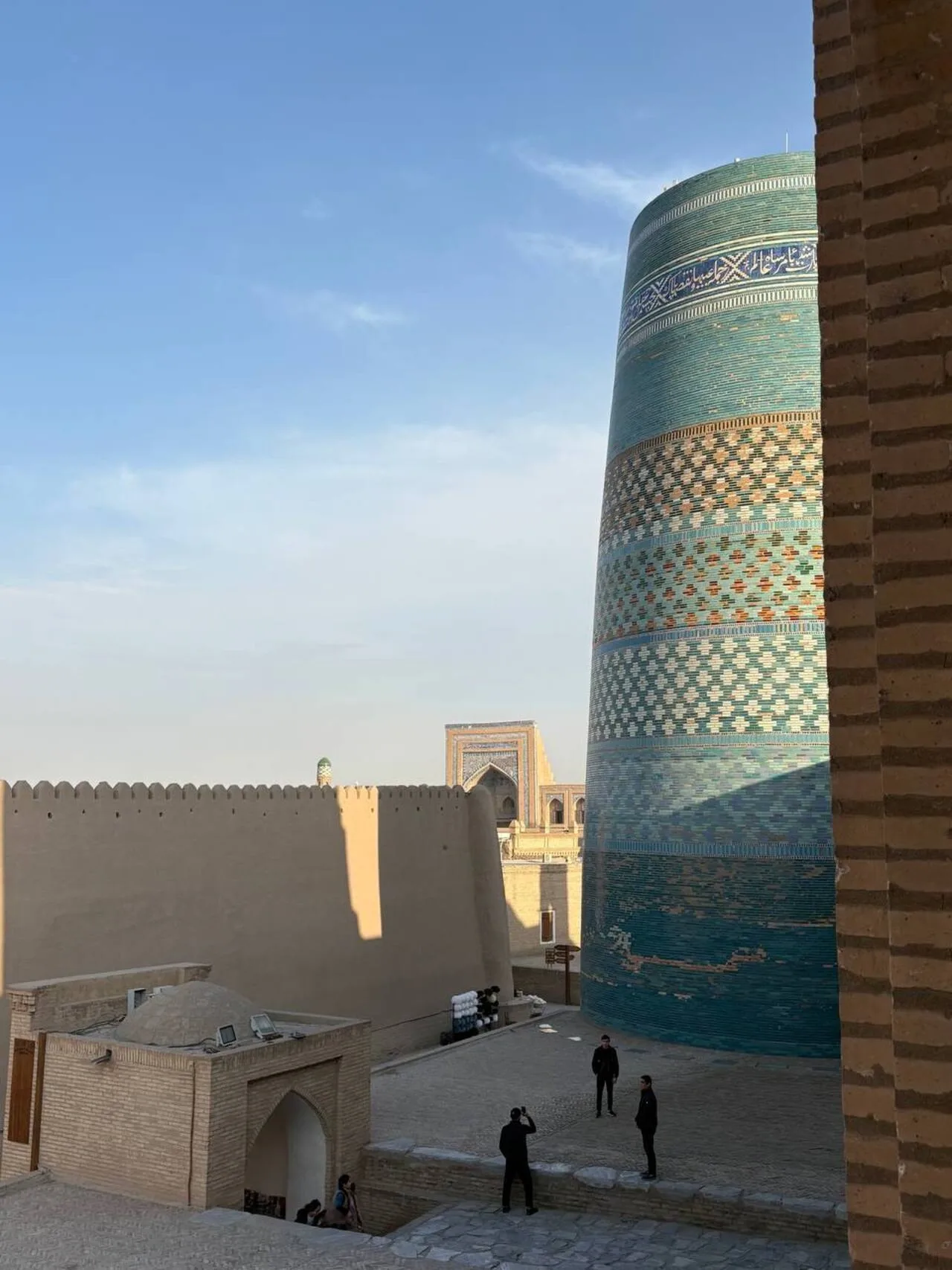
- Минарет Кальта-Минор — недостроенная толстая голубая башня, задуманная как самая высокая в исламском мире, заброшенная на 29 метрах в 1855 году
- Мечеть Джума — 218 резных деревянных колонн, каждая уникальна, некоторые относятся к X веку
- Куня-Арк — крепость хана с летней мечетью, плитка которой соперничает с лучшими образцами Узбекистана
- Дворец Таш-Хаули — 163 комнаты вокруг трёх дворов, потолок гарема стоит входной платы
- Минарет Ислам-Ходжа — поднимитесь по 118 узким ступеням ради вида, определившего все фотографии Хивы
Несколько слов о плитке
Хорезмийские плиточники работали почти исключительно с кобальтом, бирюзой и белым. Узоры математические — восьмиконечные звёзды, шестиугольники, растительные арабески — но никогда не повторяются вблизи. Попросите местного гида показать вам намеренные «ошибки», встроенные в геометрические панели: традиция, напоминающая мастерам, что только Аллах создаёт совершенство.
Как читать хивинское здание
Большинство посетителей фотографируют и идут дальше. Медленный взгляд открывает больше. Ищите резные алебастровые ганчевые панели вокруг михрабов — они скульптурные, а не штампованные. Обратите внимание, что входы мечетей слегка смещены от оси двора — хорезмийская особенность, призванная сбить с толку злых духов. Если хватит терпения, посчитайте деревянные колонны внутри мечети Джума: местные говорят, что нет двух одинаковых, и они правы. Некоторые повторно использованы из мечетей, предшествовавших монгольскому нашествию 1220 года.
Заглянув в медресе, посмотрите в кельи. Студенты, жившие в этих крошечных комнатах — иногда по десять лет — создали рукописи, ныне разбросанные по библиотекам Ташкента, Санкт-Петербурга и Стамбула.
Планирование поездки
Хива лучше всего с апреля по май или с сентября по октябрь, когда жара пустыни ослабевает, а небо остаётся ясным. Две ночи внутри Ичан-Калы лучше дневной поездки из Ургенча: когда туристические автобусы уезжают на закате, город становится вашим. Если возможно, остановитесь в гостинице, переоборудованной из медресе — комнаты скромные, но проснуться внутри кельи XVIII века на рассвете — воспоминание, переживающее любую фотографию.
Если хочется большего, CraftnCulture устраивает архитектурные прогулки с местными историками, а также посещение мастерских резьбы по дереву и керамики прямо за стенами — мест, где те же техники, что вы видите в Таш-Хаули, до сих пор практикуются вручную. Проведёте ли вы два дня в Ичан-Кале или впишете её в более длинное путешествие по Шёлковому пути — Хива вознаграждает тех, кто замедляется и смотрит внимательно.
Источники
About the author
CraftnCulture
The CraftnCulture editorial team — Tashkent-based cultural tourism specialists covering Uzbekistan travel, artisan crafts, and Silk Road heritage.