For centuries, suzani embroidery has bloomed across cotton and silk in the courtyards of Uzbekistan. Today, the same stitches that once decorated a bride's dowry are catching the eye of designers in Paris, gallery owners in Brooklyn, and collectors from Tokyo to Berlin. The journey from village loom to global marketplace is older than it looks — Uzbek textile heritage was always built for trade — and understanding that journey is the difference between buying a souvenir and buying a piece of living history.
A Stitch That Travels
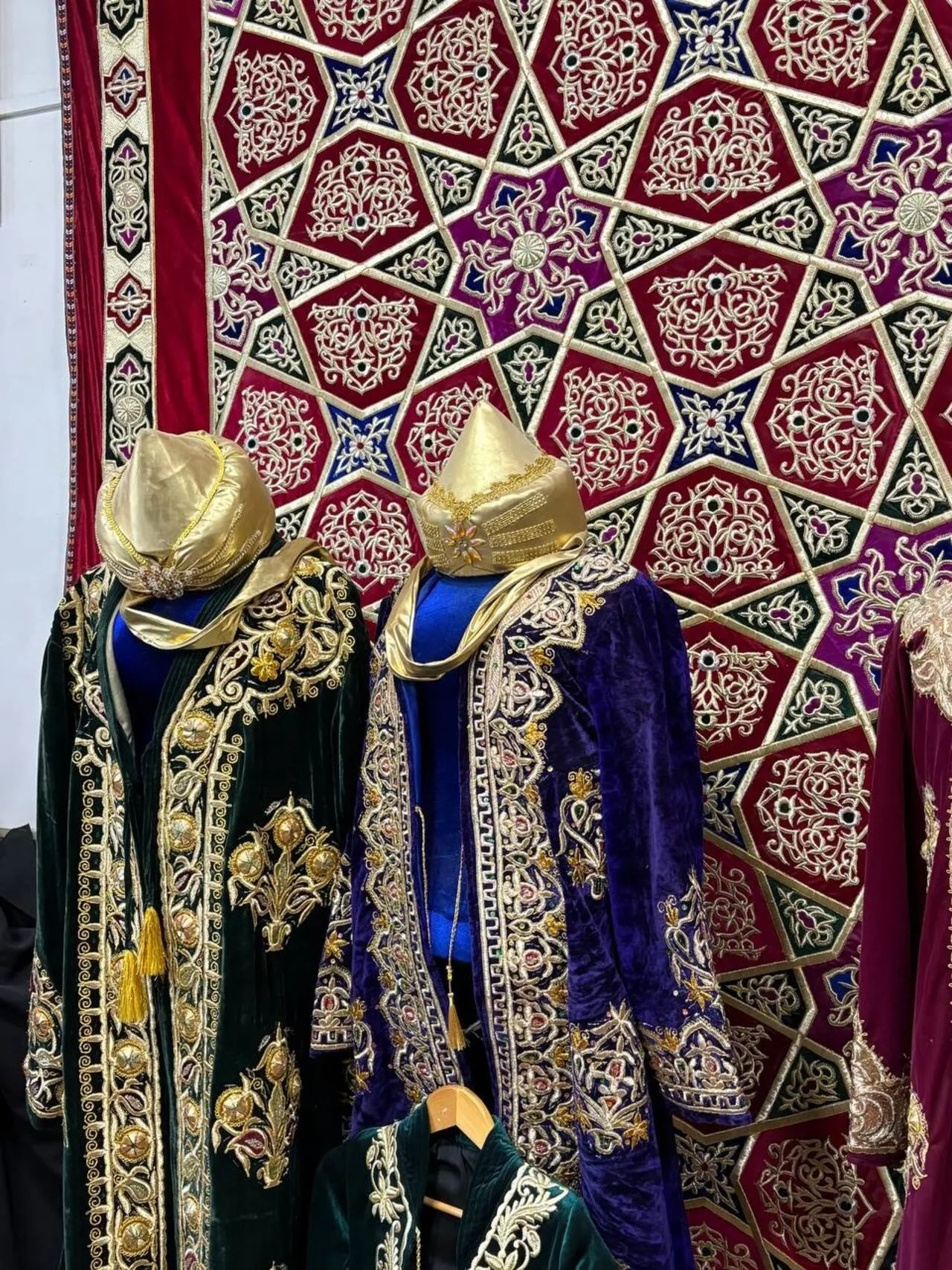
The word suzani comes from the Persian for "needle," and the tradition stretches back at least to the 18th century, though many of its motifs — pomegranates for fertility, suns for protection, tulips for renewal — are far older. Villages around Samarkand, Bukhara, Nurata, and Shahrisabz each developed their own visual dialect, recognizable to anyone who has spent time in the textile aisles of a market. A Bukharan suzani leans into restrained palettes and tight rosettes. A Nurata piece often features intricate central medallions framed by smaller florals. Shahrisabz favors bold, large-scale motifs in vivid reds and indigos.
These regional signatures matter because they are how buyers, dealers, and museum curators trace a piece's origin. The story is the value.
Inside the Village Workshop
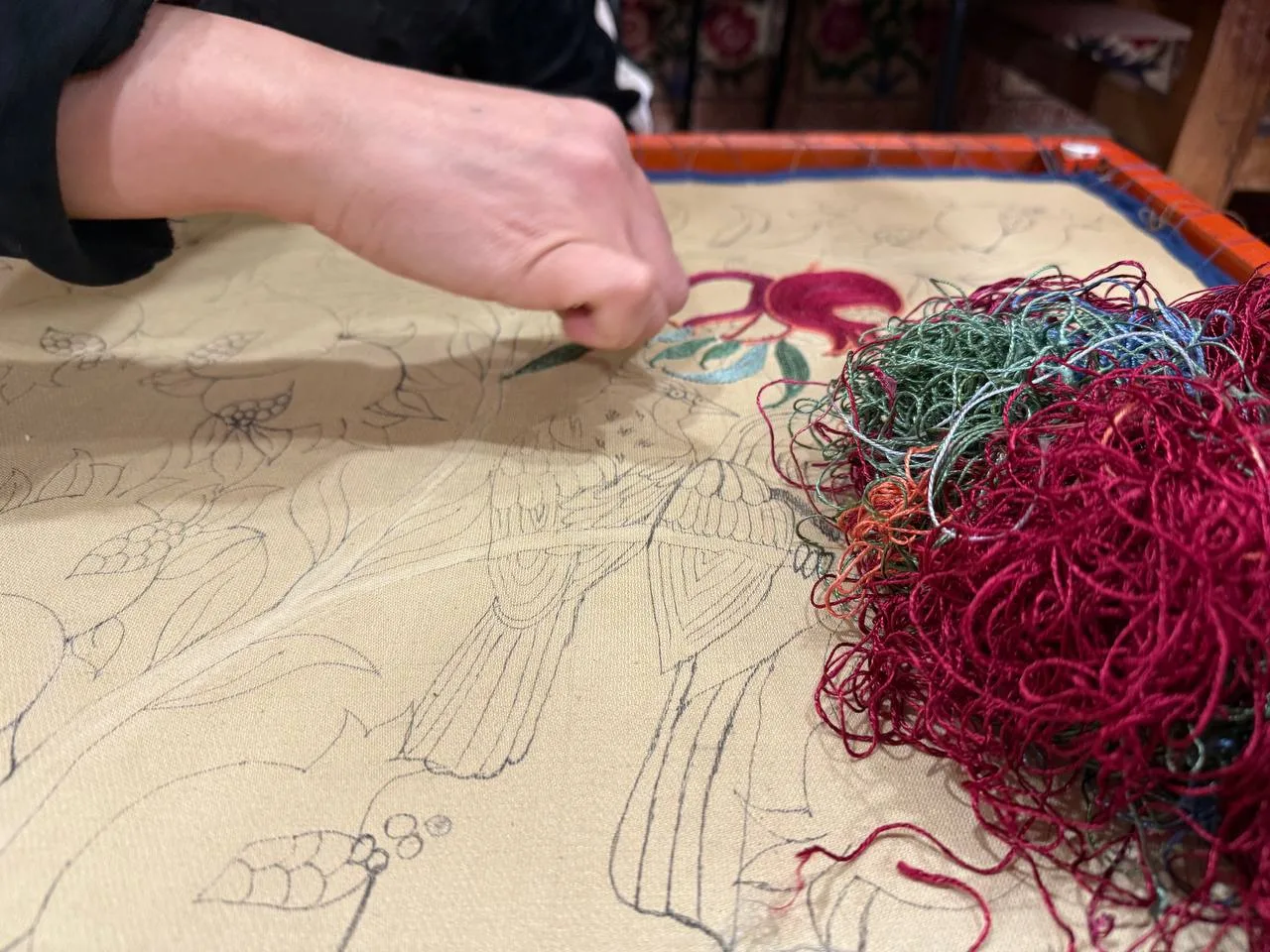
Most suzanis are still made the way they have been for generations: by women working in small home-based ateliers, often across several households. A senior embroiderer draws the design directly onto a length of cotton or silk with a thin reed pen and natural ink. The cloth is then cut into long panels, distributed to two, three, or four stitchers, and reassembled at the end — which is why genuine handmade suzanis show small, deliberate misalignments where the panels meet. Machine-made imitations are flawless. Real ones are not.
Who Stitches
In most villages, suzani-making is matrilineal knowledge. Grandmothers teach mothers, who teach daughters, and the workshop is also a social institution — a place where weddings are planned, advice is traded, and quiet income flows into rural households where formal jobs can be scarce. In recent years, cooperatives in Samarkand and the Fergana Valley have begun publishing the names of individual embroiderers on the back of every piece. That single tag — a name, a village, a date — has done more for fair pricing than any export policy.
From Atelier to Marketplace
The supply chain from a Nurata courtyard to a New York interior designer is shorter than you might think. A typical journey today looks like this:
- A village cooperative completes a suzani over six to eighteen months, depending on size and density of stitching.
- The piece is photographed, tagged with the makers' names, and listed on an artisan marketplace or sold through a partnered gallery in Tashkent or Bukhara.
- Buyers from Europe, North America, and East Asia purchase directly, often visiting in person during spring and autumn travel seasons.
- The piece ships with an export certificate, since Uzbek antiquities laws regulate textiles over fifty years old.
- A growing share of sales now happens online, with platforms vetting workshops to keep counterfeit machine-stitched goods from diluting the market.
This is a small revolution. Twenty years ago, the same suzani might have passed through four or five middlemen before reaching a buyer. Today, the embroiderer often knows where her work ended up.
Reading a Suzani: What Buyers Look For
Quality is judged on a handful of details. Stitch density should be even but not mechanical. Natural dyes — madder for red, indigo for blue, pomegranate skin for yellow — age more gracefully than synthetic ones and will deepen rather than fade. The reverse side of a real suzani is almost as tidy as the front; sloppy backing is a tell. And a well-made piece will feel surprisingly heavy for its size, because the silk floss is laid down thread by thread, not skimmed over the surface.
Price reflects all of this. A small Nurata panel might sell for a few hundred dollars; a large antique Shahrisabz spread can run into five figures at auction.
Why Provenance Matters Now
As suzani moves into global interiors and runway collections, the risk of generic, machine-made replicas grows alongside it. Every authentic purchase keeps a workshop open and a stitch alive. Asking who made a piece — and where — is not a luxury question. It is the question.
If you want to see a working suzani atelier, walk the back streets behind the Registan in Samarkand, or step into the small workshops tucked into Bukhara's old caravanserais. Better yet, time your visit for a Friday market in Nurata. CraftnCulture's artisan tours and curated marketplace connect you directly with the families behind the needle, so the story keeps traveling — and the next generation of stitchers has a reason to begin.
References
About the author
CraftnCulture Editorial
CraftnCulture Editorial contributes to the CraftnCulture journal, covering Uzbekistan's living craft traditions and Silk Road heritage.