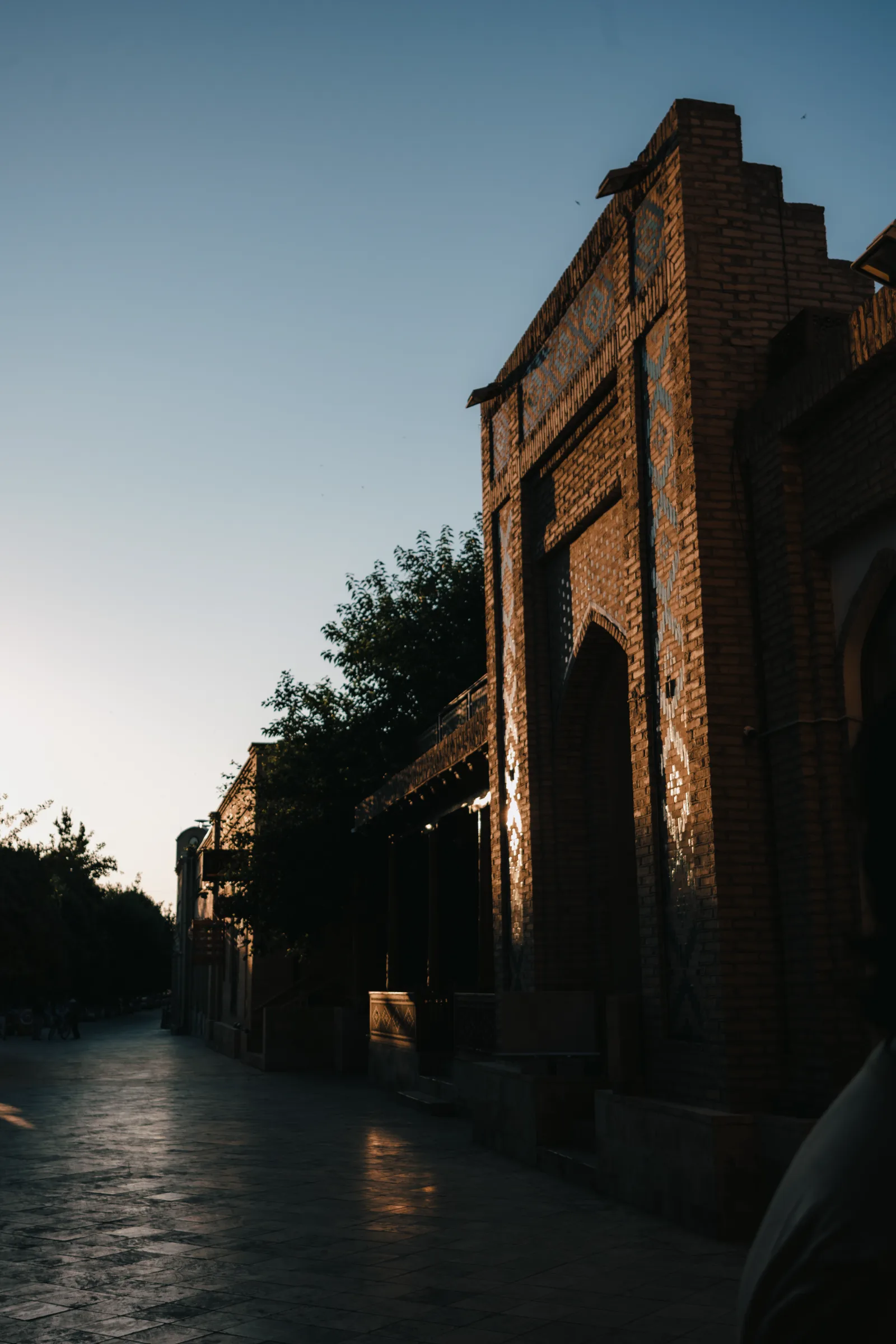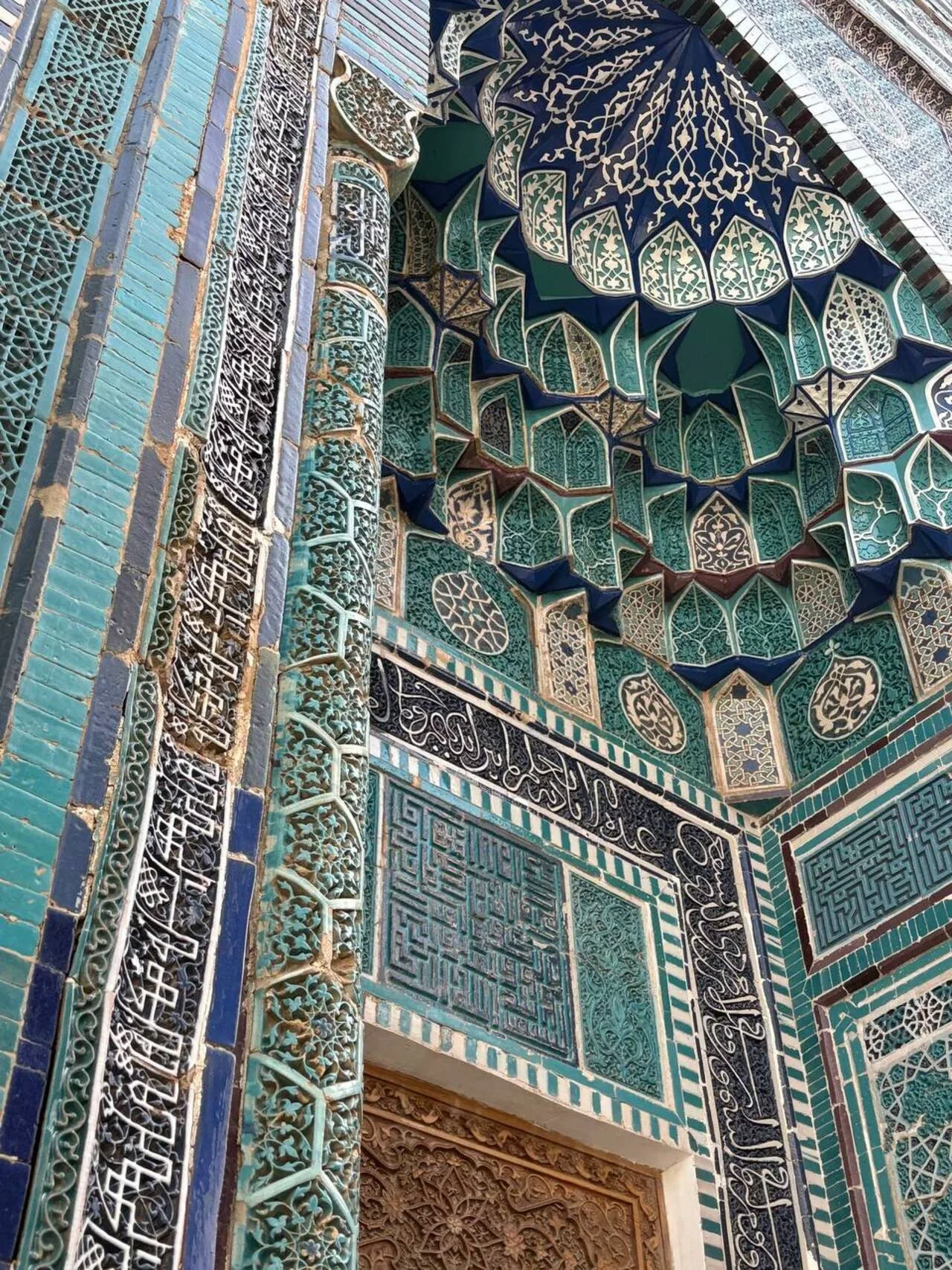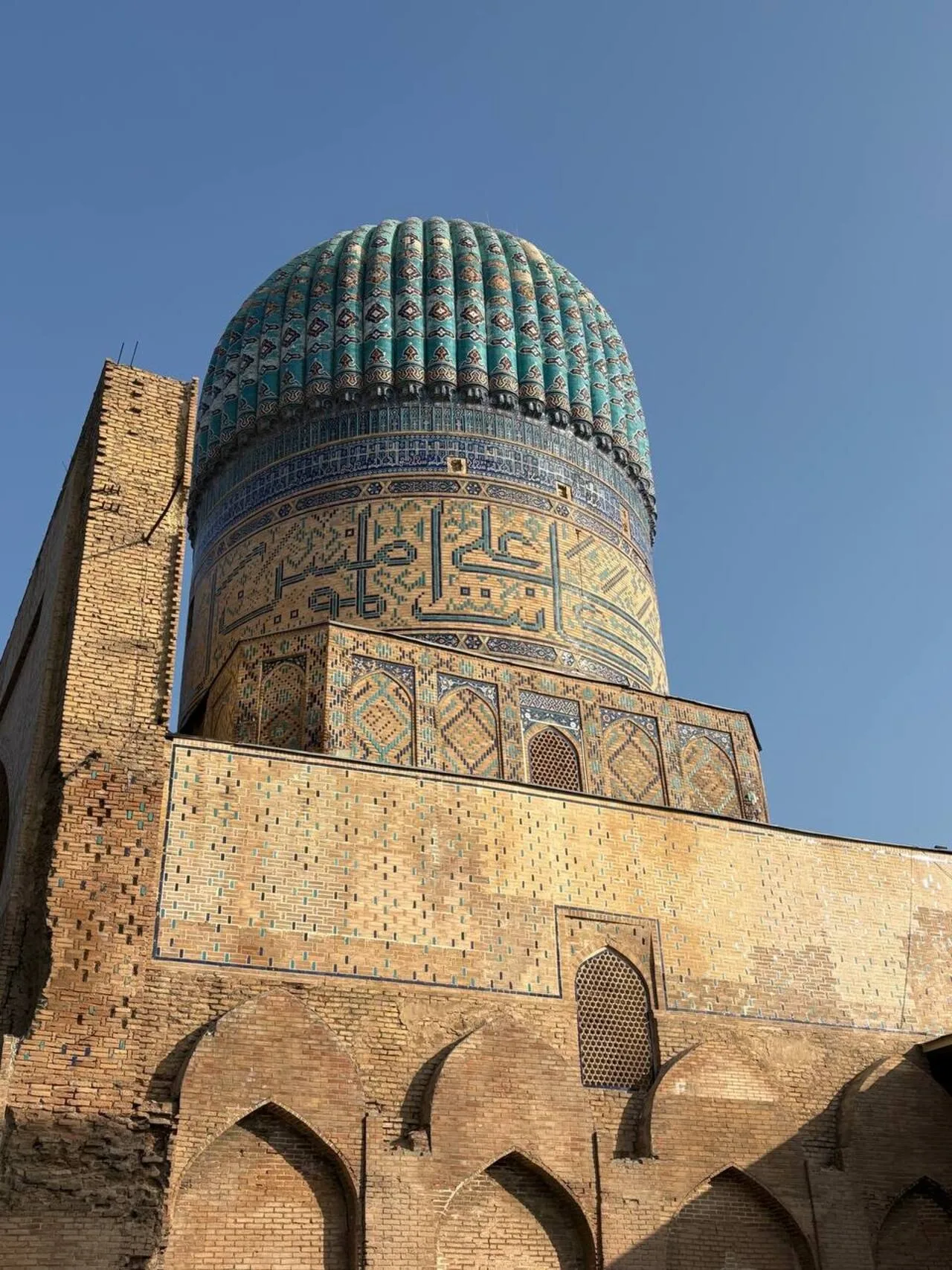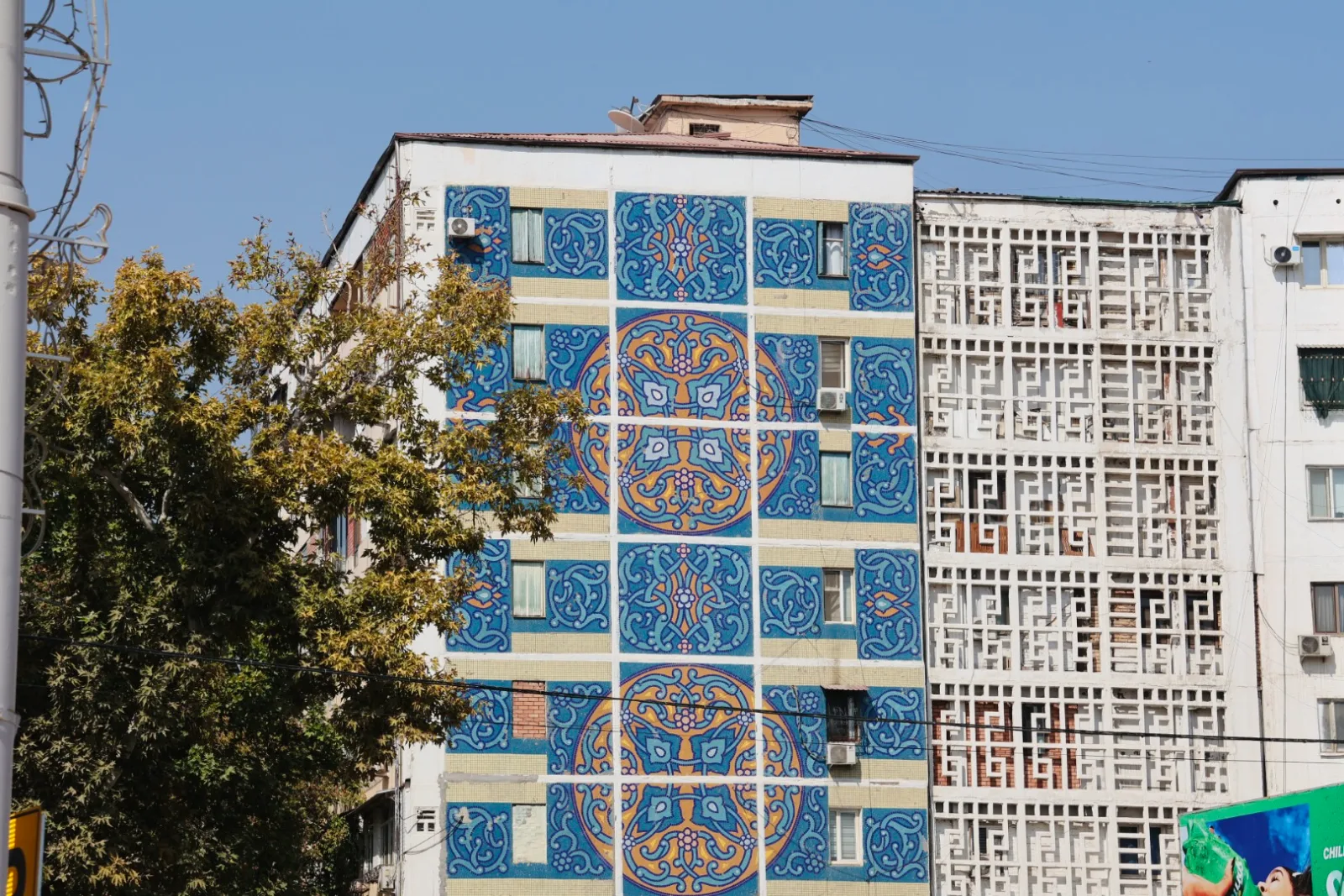
Tashkent doesn't look like the rest of Uzbekistan. It looks like Kyiv had a fling with Samarkand and left the receipts scattered across a hundred city blocks - hexagonal concrete lattices where you'd expect a madrasah dome, a circus building shaped like a flying saucer two streets from a 15th-century mosque. I'd read that the 1966 earthquake leveled most of the old city and the Soviets rebuilt it in five years flat. I hadn't understood what "rebuilt" meant until I was standing under the Hotel Uzbekistan's honeycomb facade with my neck craned back, counting concrete hexagons instead of tiles.
How I ended up looking up instead of down
Most people come to Tashkent for the layover, or as the gateway before Samarkand and Bukhara take over the itinerary with their turquoise domes. I'd budgeted one afternoon for the capital, expecting a transit day. A guide with CraftNCulture talked me out of that plan on the drive in from the airport, listing off buildings the way other guides list off mosques: the Tashkent TV Tower, the Hotel Uzbekistan, the Chorsu Bazaar dome, the metro stations built as underground museums during a period when photography inside them was technically illegal. Cold War Uzbekistan built an entire architectural language out of concrete, mosaic, and the specific optimism of a state that wanted its capital to look like the future rather than the past. I stayed three days instead of one.
The itinerary that convinced me wasn't a walking tour of "Soviet Tashkent" as a themed package - it doesn't exist as a single bookable product, and I'd be skeptical of one that promised to cover a city this size in ninety minutes anyway. It was folded into CraftNCulture's Full Tashkent Experience, a day that mixes craft workshops with the kind of street-level city context most operators skip because it doesn't photograph as cleanly as a bazaar stall.
What actually survived, and why it looks the way it does
The 1966 earthquake killed eight people directly but displaced nearly 300,000, and the Soviet response was less "rebuild the old city" than "build a new one on top of where it used to be." Architects from across the USSR were rotated through on assignment, which is why Tashkent's modernist buildings don't read as a single coherent style the way, say, Timurid architecture does in Samarkand - you're looking at fifteen years of competing regional interpretations of what "modern" meant, filtered through hexagonal concrete screens (panjara, adapted from traditional latticework, poured instead of carved) meant to manage heat and light in a desert capital.
The Hotel Uzbekistan, built in 1974, is the clearest example: a curved concrete slab wrapped in that honeycomb screen, functional sun-shading dressed up as monumental civic architecture. The Chorsu Bazaar's blue-and-white dome, from 1980, does something similar in reverse - traditional bazaar form, industrial-era materials. The metro system, opened in 1977, is the one that surprised me most. Kosmonavtlar station is genuinely a small planetarium underground, cobalt blue tile and portrait medallions of cosmonauts, built as functioning infrastructure that also happened to double as propaganda and public art in the same breath.
What it actually felt like to walk through it
I expected this to feel like visiting ruins - Soviet, therefore obsolete, therefore sad. It didn't. The buildings are used. People wait for buses under the honeycomb screens, kids play in the plaza in front of the Hotel Uzbekistan, the metro runs on time and is, block for block, cleaner than most metros I've used in cities that never had a centrally planned aesthetic to maintain. What surprised me wasn't decay, it was maintenance under strain - paint jobs that don't match the original palette, a mosaic mural with a missing panel patched in mismatched tile, a plaza redesigned around a fountain nobody asked for. The city is visibly negotiating with this architecture rather than either preserving it as a museum piece or tearing it down. Nobody I talked to on the tour had a simple answer for how they felt about it - not nostalgia, not resentment, something closer to "this is just what Tashkent looks like."
My guide, who grew up two blocks from the TV Tower, kept correcting my assumption that Soviet meant imposed-from-outside. Several of the architects on major Tashkent projects were Uzbek, and the panjara screening wasn't a Soviet import - it was a local desert-architecture solution the state happened to fund at industrial scale. That distinction mattered more than I expected it to. It's the difference between a colonial imposition and a genuinely hybrid style, and you can't get to it by reading a plaque.
Why the small group made the difference
A city tour is an easy thing to run badly at scale - twenty people trying to hear one guide over traffic on Amir Temur Avenue, most of them checking a map instead of a building. In a group of six, the guide could actually stop mid-block, point at the specific patching job on a mosaic, and explain what it had originally looked like before budget cuts changed the tile order. That kind of detail doesn't survive a megaphone and a crowd of forty.
What I left with
Not an object - this isn't a workshop with a scarf or a bowl at the end of it. What I left with was a genuinely different way of reading a city block, and an itinerary reshuffled around three days instead of a layover. If you're heading through Tashkent as CraftNCulture's gateway before Samarkand and Bukhara, don't treat it as a transit stop. Build the modernist buildings into the Full Tashkent Experience day, or ask about pairing them with the textiles-to-pottery shopping route through the old city - both run in small groups capped low enough that the guide can actually stop and point.
CraftNCulture's Full Tashkent Experience: Culture, Food & Hands-On Workshop runs roughly seven hours, small group, from $110 per person.
About the author
CraftnCulture
The CraftnCulture editorial team — Tashkent-based cultural tourism specialists covering Uzbekistan travel, artisan crafts, and Silk Road heritage.