CraftnCulture
首页旅游线路工作坊巴扎集市相册博客Book Now
首页旅游线路工作坊巴扎集市相册博客Book Now我的账户
Language:

保持联系

订阅我们的新闻通讯,获取工作坊更新、文化见解和独家优惠。

CraftnCulture

通过亲身实践的工作坊和沉浸式多日游,探索正宗的中亚工艺。在乌兹别克斯坦与工艺大师建立联系。

探索

  • 工作坊
  • 乌兹别克斯坦旅游线路
  • 巴扎集市
  • 相册
  • 成为合作伙伴

资源

  • 旅行博客
  • 关于我们
  • 常见问题解答
  • 订单追踪
  • 联系我们

联系我们

  • Emailinfo@craftnculture.uz
  • Phone+998 90 272 01 13
  • WhatsApp+998 90 272 01 13
  • Studio乌兹别克斯坦塔什干
© 2026 CraftnCulture 版权所有隐私政策条款与条件
Home/Blog/History/Bukhara Islamic Scholars: A Medieval Center of Learning
History

Bukhara Islamic Scholars: A Medieval Center of Learning

Discover how medieval Bukhara became the Silk Road's greatest center of Islamic scholarship, and why its madrasas and scholars still draw travelers.

CraftnCulture EditorialJune 9, 20263 分钟阅读
Bukhara Islamic Scholars: A Medieval Center of Learning
本页内容▾
  1. A City Built on Knowledge
  2. The Samanid Engine
  3. The Scholars Who Made Bukhara Famous
  4. Madrasas: Where Learning Took Architectural Form
  5. Why It Matters for Educational Tourism
  6. Plan a Visit That Honors the Story
  7. References

本页内容

  1. A City Built on Knowledge
  2. The Samanid Engine
  3. The Scholars Who Made Bukhara Famous
  4. Madrasas: Where Learning Took Architectural Form
  5. Why It Matters for Educational Tourism
  6. Plan a Visit That Honors the Story
  7. References

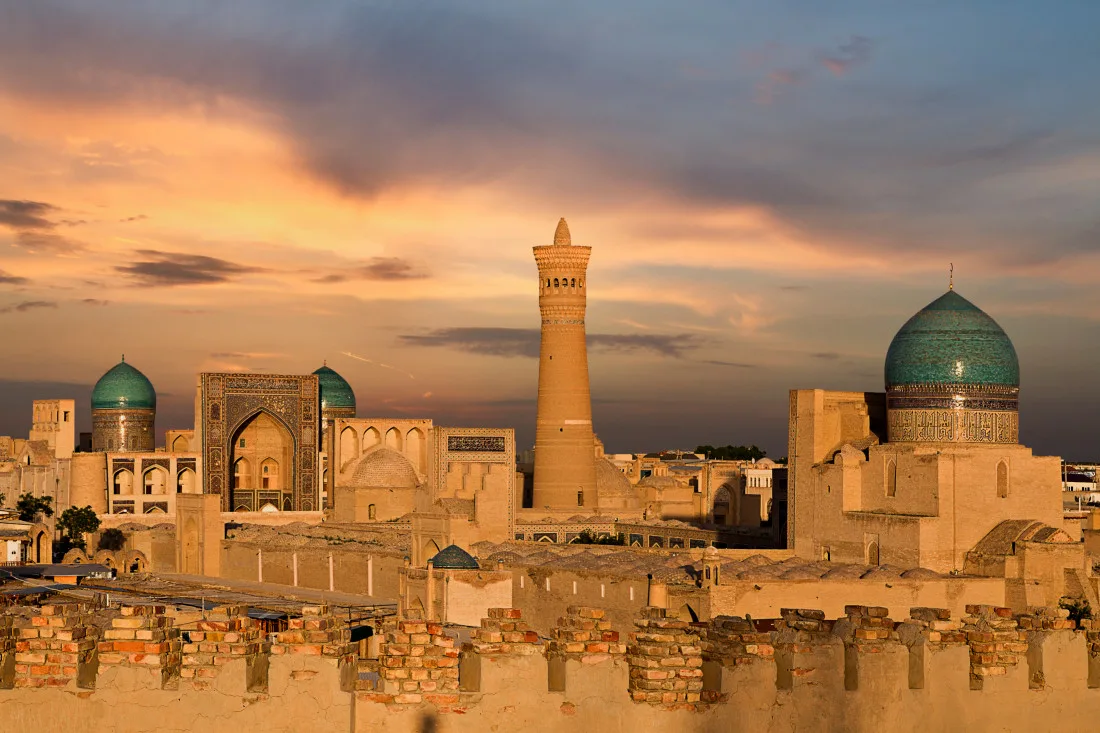
Long before Bukhara became a postcard of turquoise domes and quiet caravanserais, it was one of the medieval world's great engines of thought. Between the ninth and twelfth centuries, this oasis city on the medieval Silk Road grew into a magnet for theologians, physicians, mathematicians, and astronomers. The Bukhara Islamic scholars who studied and taught here helped shape the intellectual life of the entire Muslim world, and their legacy is now one of the most rewarding reasons to visit.

A City Built on Knowledge

By the time the Samanid dynasty made Bukhara its capital in the tenth century, the city rivaled Baghdad and Cordoba as a hub of learning. Its libraries were legendary. The young polymath Ibn Sina, known in the West as Avicenna, described gaining access to the Samanid royal library and reading through collections he could find nowhere else. Wealth from Silk Road trade funded paper workshops, copyists, and the patronage that let scholars devote their lives to study rather than mere survival.

The Samanid Engine

The Samanids understood that prestige flowed from scholarship as much as from armies. They invited grammarians, jurists, and scientists to court, endowed teaching posts, and stocked their library with manuscripts gathered from across the Islamic world. The resulting exchange of ideas turned Bukhara into a place where a curious mind could find a teacher in almost any field, and where students arrived from as far as Khorasan and India to learn at the feet of recognized masters.

The Scholars Who Made Bukhara Famous

Several figures gave the city its enduring reputation. Imam al-Bukhari, born here in the ninth century, compiled the Sahih al-Bukhari, regarded across the Sunni world as one of the most authoritative collections of hadith. Avicenna laid the foundations of works that would be taught in European universities for six hundred years. Theologians, Quranic reciters, and mathematicians trained in Bukhara carried its methods across Persia, India, and Anatolia.

What set the city apart was not a single genius but a system that produced them: well-stocked libraries, endowed teaching positions, and a culture that treated debate as a civic virtue.

Madrasas: Where Learning Took Architectural Form

The madrasa, a residential college, is Bukhara's most visible scholarly inheritance. Walking the old city today, you can still step into courtyards where students once memorized texts and argued points of law. A few stand out for travelers interested in this history:

  • The Mir-i-Arab Madrasa, still functioning and facing the great Kalyan Minaret.
  • The Ulugh Beg Madrasa, built by the astronomer-king and the oldest in Central Asia.
  • The Abdulaziz Khan Madrasa, famous for its lavish interior tilework.
  • The Chor Minor, a quirky four-towered gatehouse to a vanished madrasa.

Each one rewards slow looking: the calligraphy, the muqarnas vaulting, and the cool cell-lined courtyards were all designed to focus the mind.

Why It Matters for Educational Tourism

Bukhara is having a quiet renaissance as a destination for educational tourism. Travelers increasingly want more than monuments; they want context. Guided visits that pair the madrasas with the stories of the scholars who filled them turn a photo stop into a genuine encounter with intellectual history. For anyone interested in the history of science, Islamic civilization, or the medieval Silk Road, few cities offer a denser concentration of meaning per square kilometer.

The experience also connects naturally to nearby Samarkand, where Ulugh Beg's observatory continues the same story of inquiry, making a two-city route a satisfying arc through Central Asian learning. Local guides can explain how a single endowment funded both a mosque and the classrooms beside it, and why so many madrasas cluster around the Po-i-Kalyan and Lyab-i-Hauz, turning a short walk into a lesson in how a medieval city organized its scholarly life.

Plan a Visit That Honors the Story

If this history speaks to you, Bukhara repays the kind of travel that moves slowly and asks questions. CraftnCulture's guided cultural routes are built around exactly this, pairing the city's madrasas and bazaars with local historians, artisan workshops, and the conversations that make a place stick. Whether you come for the architecture, the scholarship, or the still-living craft traditions in the surrounding old town, Bukhara is a city best understood with someone who can read its walls. Come curious, and let the old center of learning teach you something.

References

  • Historic Centre of Bukhara — UNESCO World Heritage Centre
  • Bukhara — Encyclopaedia Britannica
  • Avicenna (Ibn Sina) — Encyclopaedia Britannica
  • al-Bukhari — Encyclopaedia Britannica
  • Bukhara — Lonely Planet
bukharaislamic scholarssilk roadeducational tourismhistory

About the author

CraftnCulture Editorial

CraftnCulture Editorial contributes to the CraftnCulture journal, covering Uzbekistan's living craft traditions and Silk Road heritage.

Bukhara: Monuments, Madrasahs & Market Streets Walking Tour
与我们同行

Bukhara: Monuments, Madrasahs & Market Streets Walking Tour

From $80 per person

立即预订
本地贴士

日出后一小时再到访 —— 商贩更热情,光线更柔和,人群也尚未聚集。

相关故事

Timurid Architecture: Inside Timur Empire's Artistic Legacy
History

Timurid Architecture: Inside Timur Empire's Artistic Legacy

June 9, 2026
3 分钟阅读
Silk Road Uzbekistan: Ancient Trade Routes and Their Modern Revival
History

Silk Road Uzbekistan: Ancient Trade Routes and Their Modern Revival

May 1, 2026
3 分钟阅读
Silk Road History: Uzbekistan's Trading Legacy
History

Silk Road History: Uzbekistan's Trading Legacy

February 24, 2026
7 分钟阅读

亲身体验匠心工艺

加入我们在塔什干、撒马尔罕、布哈拉、希瓦及更多地区的精选行程与工作坊。

浏览行程

保持灵感

订阅我们的杂志,获取来自中亚的全新故事、旅行贴士与工艺师专访。

无垃圾邮件,随时可取消订阅。