Bakhmal Revival: Learning Uzbekistan's Nearly Lost Silk Velvet Weaving
The loom made a sound I didn't expect — not a click but a thud, low and heavy, like a door closing. I'd pictured silk weaving as something delicate. It isn't. Bakhmal, Uzbekistan's traditional silk velvet, is beaten into existence one pass at a time, and by the third row my shoulder already understood why this craft nearly disappeared.
How I Got Here
I'd signed up for CraftNCulture's Fergana Valley day out of curiosity, not expertise. The ikat scarves in Margilan's shops had caught my eye on an earlier trip to Uzbekistan — those blurred, watercolor-edge patterns — but nobody had mentioned bakhmal to me before this small group craft tour of Uzbekistan put it on the itinerary. I hadn't heard the word. Most travelers haven't. Velvet, in the Silk Road imagination, belongs to Venice or Lyon, woven fortunes shipped west along the very route that runs through this valley. Fewer people know it was also woven here, and that the local version — cut, uncut, sometimes shot through with metal thread — nearly vanished twice in the last century.
We were eight people that morning, driven out from Margilan proper to a workshop that still uses drawlooms alongside a handful of newer mechanized frames. The building smelled like raw silk smells, which is not a pleasant smell exactly — faintly animal, faintly like wet paper — before the dye and the weaving turn it into something else.
The Craft Itself
Bakhmal is not the same operation as the ikat ("adras" or "atlas") weaving Margilan is known for internationally. Ikat gets its pattern from resist-dyeing the threads before they're ever mounted on the loom — the pattern exists in the yarn itself. Velvet weaving is a different problem entirely: a supplementary pile warp is woven in alongside the ground fabric, looped over thin metal wires, and then — this is the part that stopped me — those loops are cut, by hand, with a specialized blade run along a groove in each wire, to release the pile and give the fabric its nap.
Get the cut wrong and you don't get velvet. You get snagged loops, a bald patch, weeks of someone else's work undone in a second. The workshop's senior weaver, whose family has worked silk in Margilan for three generations, let me try exactly one pass of the cutting blade — on a test strip, not on a piece anyone intended to sell. My hand was not steady. I could feel, immediately, why this step is the one apprentices aren't trusted with for years.
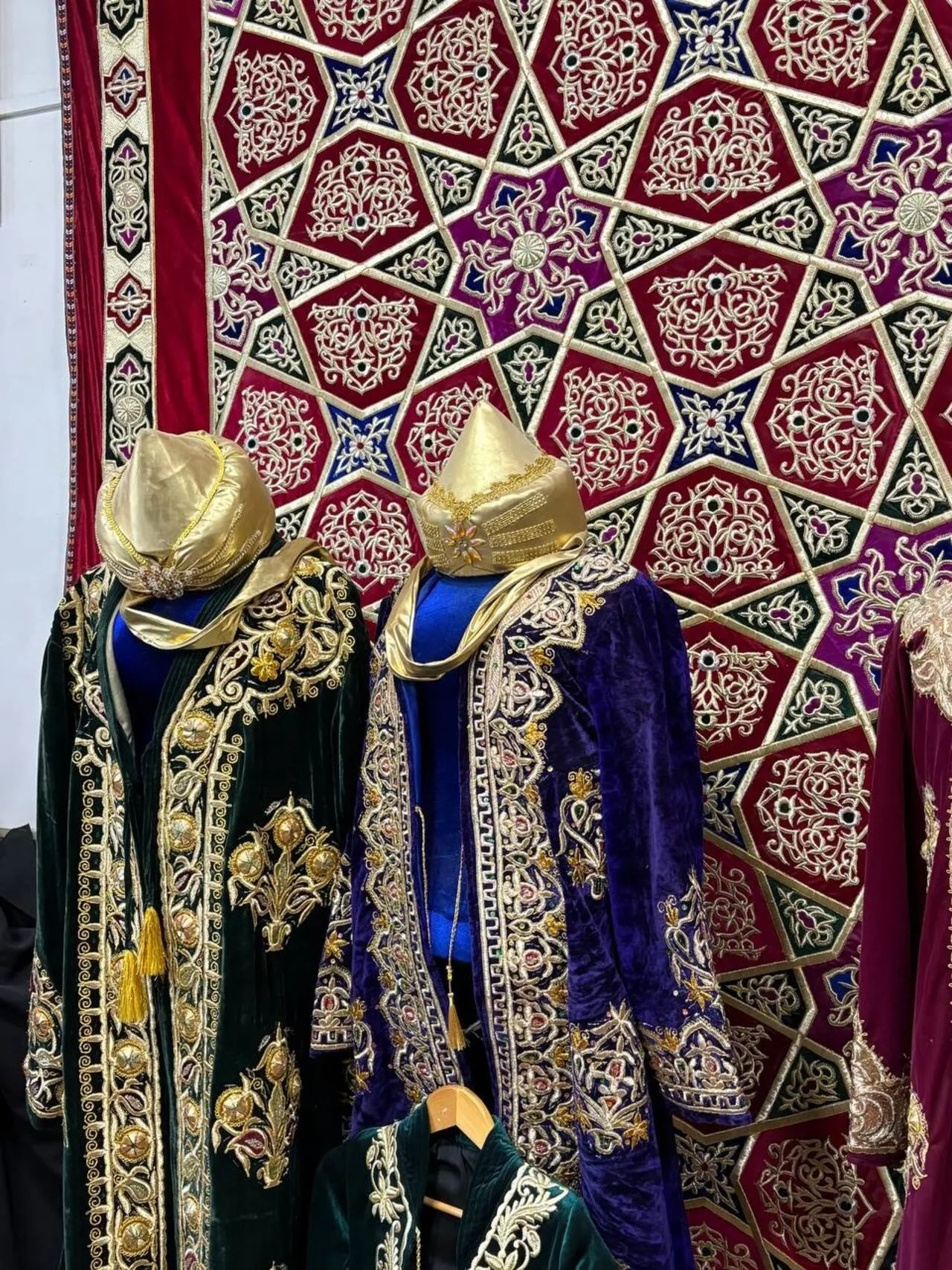
Historically, bakhmal here was woven with silk pile on a cotton or silk ground, sometimes brocaded with gold-wrapped thread for court and ceremonial use — the fabric of an emir's robe, not a farmer's shirt. Soviet-era industrialization gutted the handloom tradition, and what survived after 1991 survived on a small number of masters who still knew the wire-and-blade sequence by hand. The revival is recent, uneven, and, standing in the room watching it happen, obviously fragile.
What It Actually Felt Like
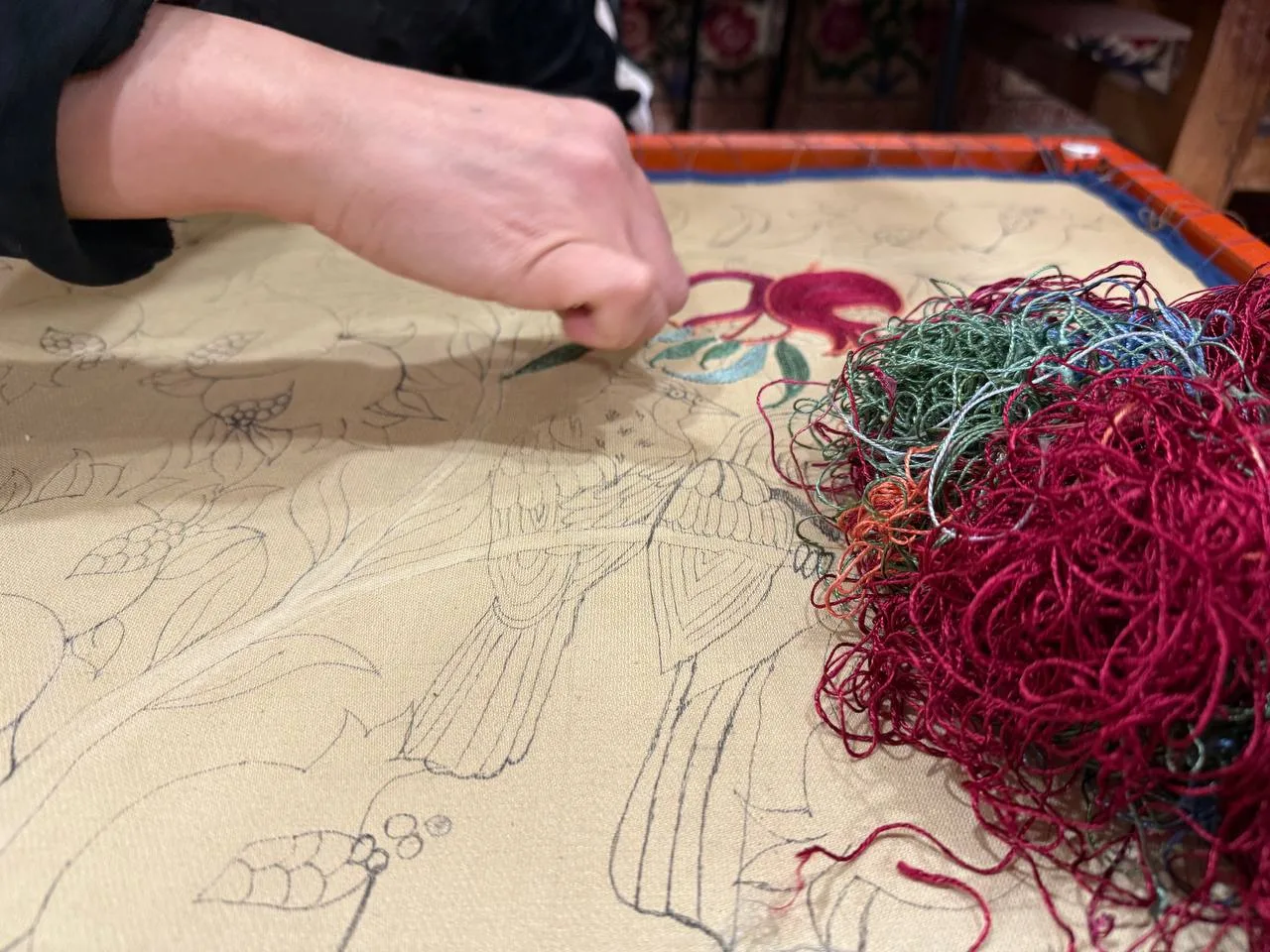
Nobody tells you that weaving is loud. The frame's rhythmic beat — thread, beat, thread, beat — fills the room in a way that makes conversation feel intrusive, so for long stretches nobody talked. I sat at a floor loom set up for beginners and worked a plain-weave section, no velvet pile, because the pile technique genuinely takes years and the workshop is honest about that. Even the plain section defeated my rhythm for the first twenty minutes. My beats landed unevenly — some too hard, warping the tension, some too soft, leaving visible gaps you could see the light through when I held the cloth up.
The weaver corrected my hand three times without saying much, just repositioning my fingers on the beater bar until the motion started to feel less like an instruction and more like a habit. That's the point where a craft stops being explained to you and starts being installed in your muscles instead — around the fortieth repetition, not the first. My forearm ached for two days afterward, a small, specific ache along the outside of the wrist that I hadn't used in exactly that way before.
What surprised me more was the smell and heat of the room by midday — raw silk under wire and blade for six hours, sun through high windows, the quiet concentration of people doing precise, dangerous-to-rush work. It didn't feel staged. It felt like a workday that would have happened whether or not we showed up, which — after prior trips where "craft demonstrations" felt choreographed for tour buses — was the thing I'd actually come for.
Why the Small Group Size Mattered
There were eight of us, and even at eight, only two people could sit at working looms at any given time while the rest of us watched, asked questions, or tried our hand at hand-spinning silk floss to fill the waiting. In a coach group of thirty or forty, that math doesn't work — you'd get a demonstration, a photo opportunity, maybe five minutes of supervised weaving each, and the master would be performing a simplified version of the craft rather than doing it. Here, the weaver kept working her own commissioned piece between our turns, which meant we watched real production, not a show staged around a tour schedule. When I asked a clumsy question about wire gauge, she stopped and actually answered it in detail, instead of giving a rehearsed line she's said five hundred times to five hundred groups.
What You Leave With
I left with a hand-woven test strip of plain silk cloth, maybe fifteen centimeters, uneven at the edges where my tension wandered — not a souvenir purchased on the way out, but the actual physical object of two hours' unsteady labor. It sits on my desk now, less as decoration than as an honest record of how hard something looked easy from the outside. The knowledge itself — where to put pressure, how the beat has to land square or the whole row skews — is not something I retained as facts. It's a felt sense that surfaces only when my hands are back on a beater bar, which is precisely what the weaver had told me at the start would happen, and precisely why I didn't fully believe her until it did.
I'm not under any illusion I could weave velvet myself, or that two hours qualifies me to judge the craft's finer points. But I understand, now, in my wrist and not just in my head, why the cutting step takes years to earn, why bakhmal nearly disappeared, and why the small number of workshops still doing it by hand are worth the drive out from Margilan to see.
Tour details: CraftNCulture's Fergana Valley silk day, part of the broader small-group cultural craft tour of Uzbekistan, runs with a maximum of eight guests and includes the ikat weaving centre alongside this bakhmal velvet workshop — book both together for the fullest picture of Margilan's silk tradition.
Meta description: What it actually takes to weave Uzbekistan's near-lost silk velvet, bakhmal — a first-hand account from CraftNCulture's small-group Fergana Valley craft tour of Uzbekistan.
About the author
CraftnCulture
The CraftnCulture editorial team — Tashkent-based cultural tourism specialists covering Uzbekistan travel, artisan crafts, and Silk Road heritage.