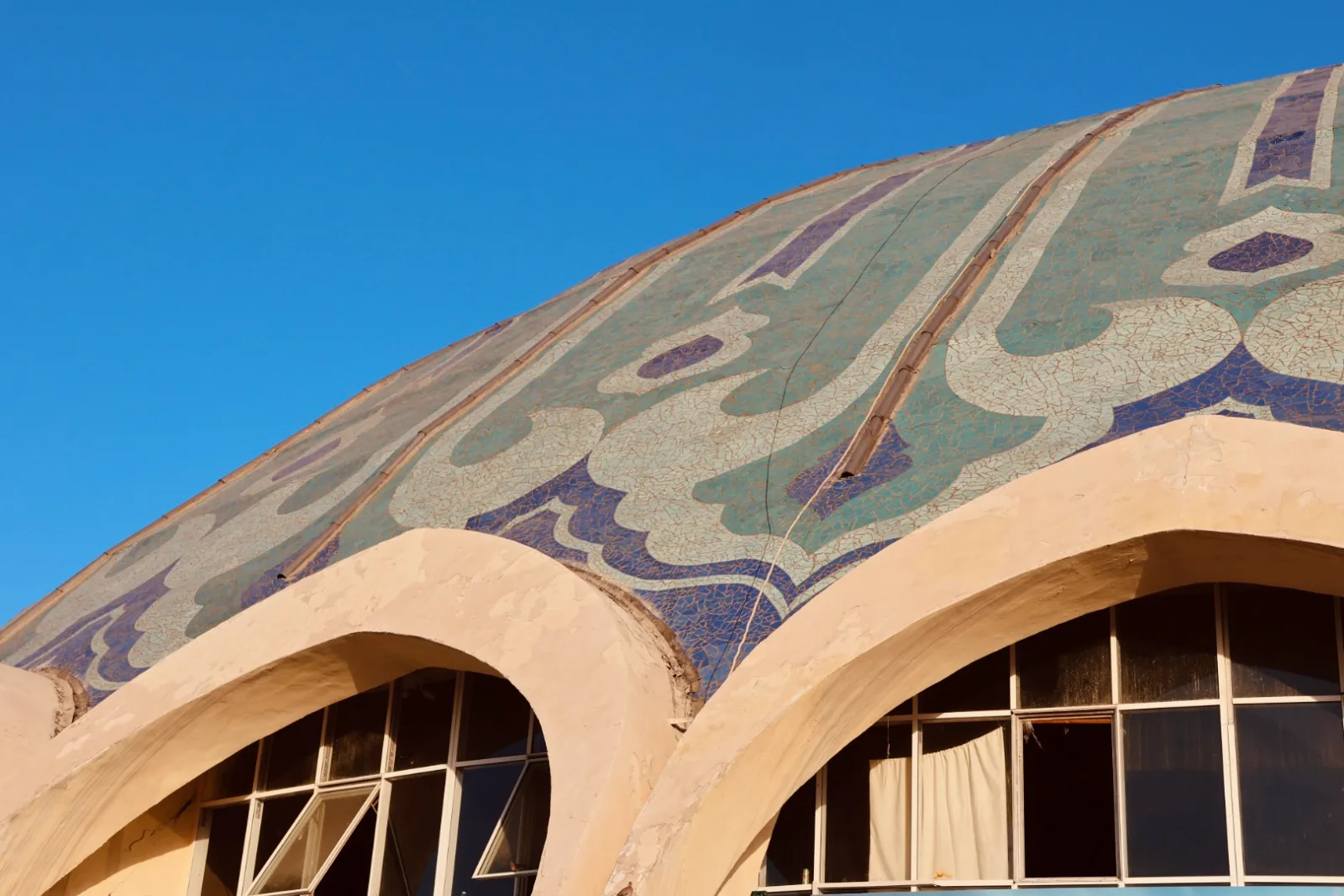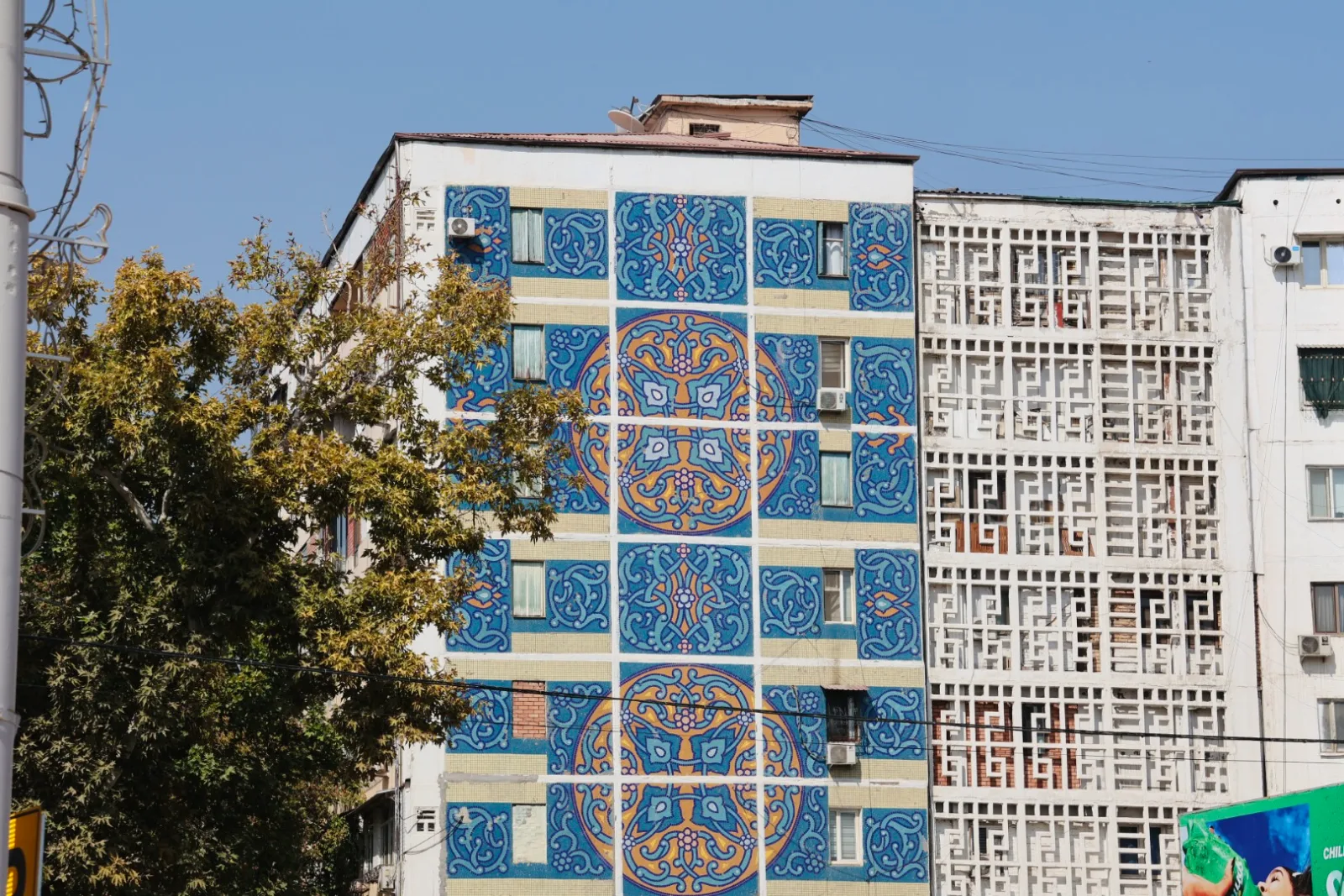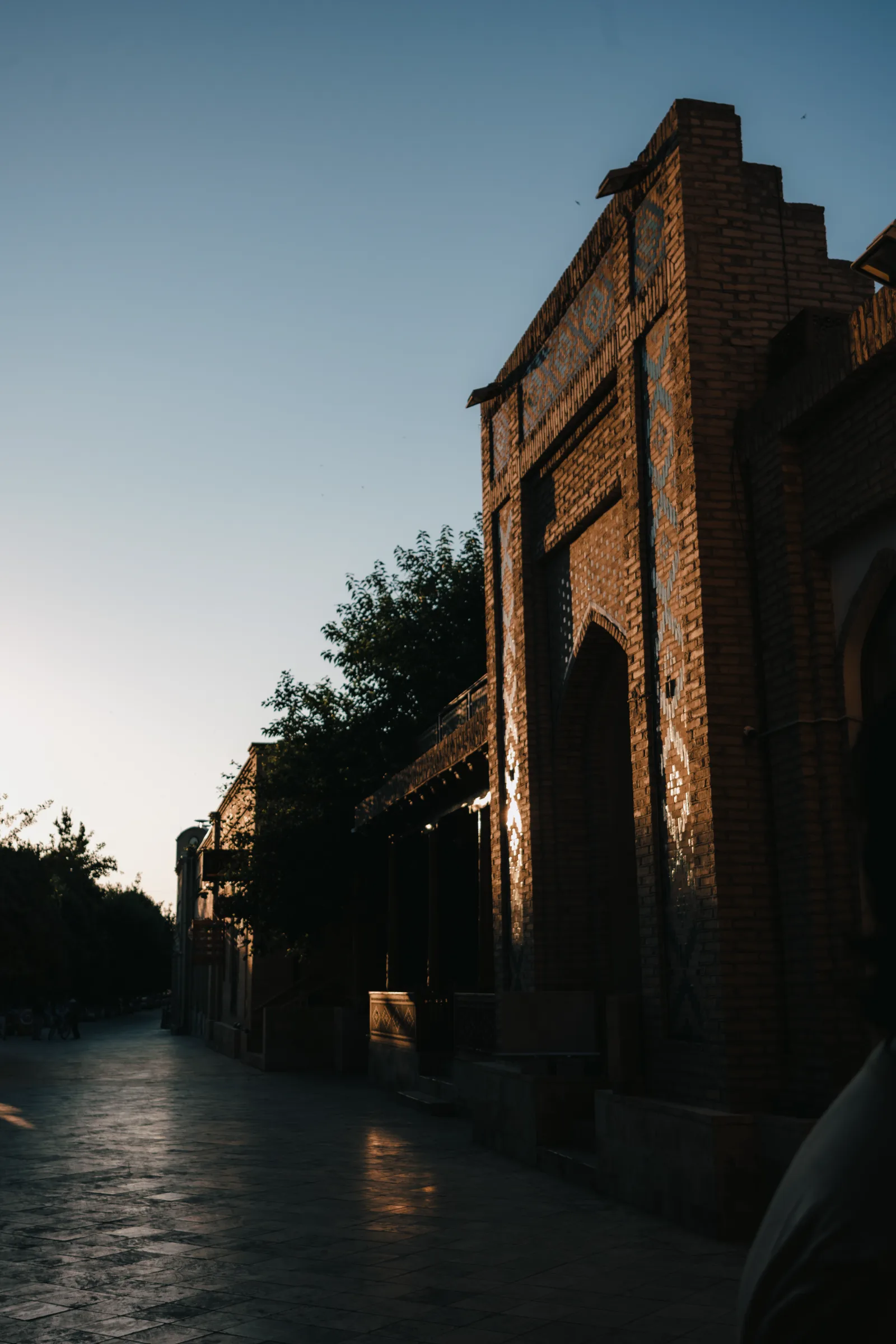
Stań przed Registanem w Samarkand o zachodzie słońca, a zrozumiesz coś, co trudno ująć w słowa. Strzeliste portale, kobaltowo-turkusowa mozaika kafelkowa, kaligraficzne wstęgi pnące się ku niebu — to architektura Timurydzka w pełnej skali. Zrodzona z podbojów i wyszlifowana w jeden z najambitniejszych programów estetycznych, jakie znał świat islamu, do dziś pozostaje wizualnym znakiem złotego wieku Uzbekistanu.
Imperium, które budowało w błękicie
Timur (Tamerlan) wyrósł ze stepów Transoksanii pod koniec XIV wieku i stworzył imperium rozciągające się od Anatolii po krańce Indii. Jego kampanie wojenne były brutalne, lecz ambicje kulturowe — równie intensywne. Do swojej stolicy, Samarkand, ściągał najlepszych kamieniarzy, snycerzy i twórców kafli z każdego zdobytego miasta — Damaszku, Sziraza, Tebrizu, Delhi — i koncentrował ich talenty w jednym miejscu. Efektem była synteza: perskie proporcje, chorasański detal i środkowoazjatycki apetyt na monumentalną skalę. Imperium Timura zamieniło architekturę w propagandę, a propagandę w piękno.
Cechy timurydzkiego designu architektonicznego
Co czyni budynek „timurydzkim", a nie po prostu islamskim? Kilka cech powraca raz po raz w zachowanych zabytkach imperium.
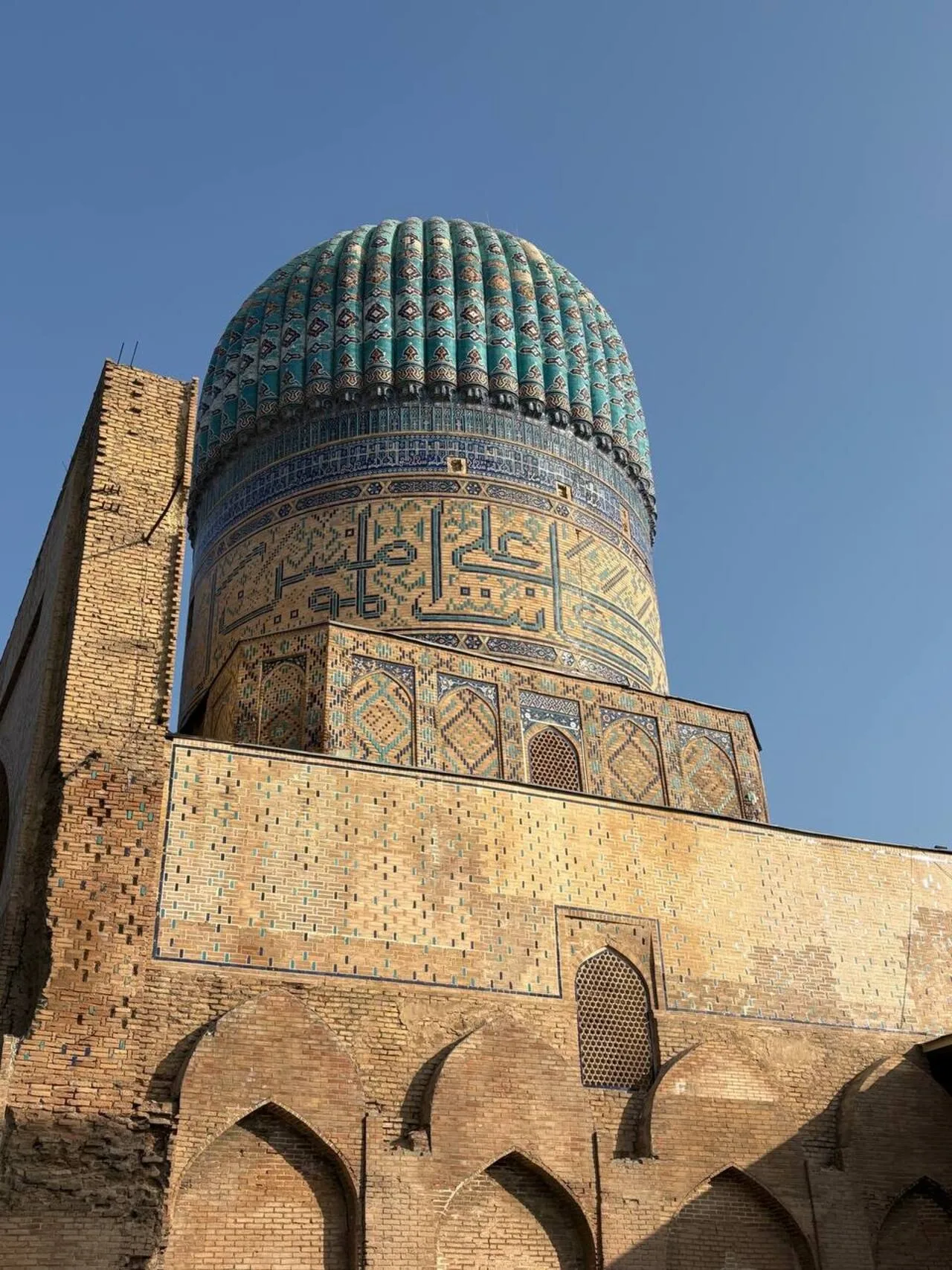
- Cebulaste kopuły dwuskorupowe, z zewnątrz wyglądające na wyższe, niż widać je od środka
- Iwany — strzeliste, wnękowe portale wejściowe okalające dziedzińce
- Geometryczna i kwiatowa mozaika kafelkowa w kobalcie, turkusie i bieli, często w ceglanych wzorach banna'i
- Sklepienia muqarnas — przypominające plastry miodu stalaktytowe sufity, które łapią światło pod każdym kątem
- Monumentalna skala, mająca przyprawiać gościa o pokorę wobec wizji fundatora
Te elementy zespoliły się w spójny język islamskiego designu architektonicznego, który wpłynął na Mogołów w Indiach, Safawidów w Iranie, a nawet osmańskich budowniczych przez kolejne dwa stulecia.
Klejnoty Samarkandu: Gur-e-Amir i Registan
Dwa miejsca opowiadają tę historię najjaśniej. Razem pokazują, jak architektura Timurydzka w czasie krótszym niż jedno pokolenie przeszła od kameralnego mauzoleum do publicznego spektaklu.
Gur-e-Amir, prototyp
Mauzoleum samego Timura to miejsce, w którym styl się krystalizuje. Jego żebrowana, melonowata kopuła — pokryta lazurowymi kaflami i wzniesiona na wysokim bębnie — stała się wzorcem, który Mogołowie później przekładali na grobowiec Humajuna i Tadż Mahal. W środku płyty z ciemnego nefrytu znaczą miejsce spoczynku jednego z najbardziej brzemiennych w skutki zdobywców w historii. Wewnętrzne złocenia wciąż zapierają dech, a proporcje wydają się zaskakująco współczesne.
Kilka minut spaceru dalej plac Registan przejmuje ten sam język wizualny i skaluje go do miejskiego teatru. Trzy medresy obejmują jeden plac, wznoszone przez dwa stulecia, lecz mówiące tym samym dialektem. Medresa Uług Bega (1420) jest uczonym seniorem — z iwanem pokrytym kafelkową mozaiką w gwieździsty wzór. Sher-Dor (1636) łamie islamską konwencję słynnymi tygrysami i słońcami z ludzkimi twarzami. Tilya-Kori (1660) zamyka zespół pozłacanym mihrabem, który w południe lśni jak piec.
Bibi-Khanym i kosmos Uług Bega
Niedaleko bazaru Siab w Samarkand wznosi się ruina meczetu Bibi-Khanym — kamienny przejaw timurowej zachłanności. Zlecił, by była to największa świątynia świata islamu; konstrukcja zaczęła się walić jeszcze za jego życia. Jednak nawet w ruinie jej skala zatrzymuje w pół kroku. Obok jego wnuk Uług Beg zbudował obserwatorium — budynek udający instrument naukowy, z wykutym w skale czterdziestometrowym sekstantem. Timurydzi byli nie tylko budowniczymi. Mierzyli niebiosa.
W Shakhrisabz, miejscu narodzin Timura, rozbite bramy pałacu Ak-Saray nadal wznoszą się na blisko 40 metrów; ocalałe kafle należą do najpiękniejszych w całym imperium.
Dlaczego ma to znaczenie dziś
UNESCO wpisało Samarkand, Bukhara i Shakhrisabz na Listę Światowego Dziedzictwa w dużej mierze dzięki ich timurydzkim zabytkom. Prace konserwatorskie trwają — większość mozaiki kafelkowej została przełożona od czasów sowieckich renowacji — ale szkielet jest oryginalny. Dla podróżników, projektantów i pasjonatów historii sztuki spacer po tych przestrzeniach to najbliższe podróży w czasie, co może zaoferować architektura.
Jeśli chcesz doświadczyć timurydzkiego designu poza fotografiami, trasy dziedzictwa CraftnCulture po Samarkand i Shakhrisabz łączą zwiedzanie zabytków z warsztatami, gdzie rzemieślnicy wciąż tną mozaikę kafelkową tak samo, jak twórcy Timura. Czym innym jest podziwiać kopułę. Czym innym — patrzeć, jak mistrz dopasowuje fragmenty, z których powstaje.
Źródła
About the author
CraftnCulture
The CraftnCulture editorial team — Tashkent-based cultural tourism specialists covering Uzbekistan travel, artisan crafts, and Silk Road heritage.