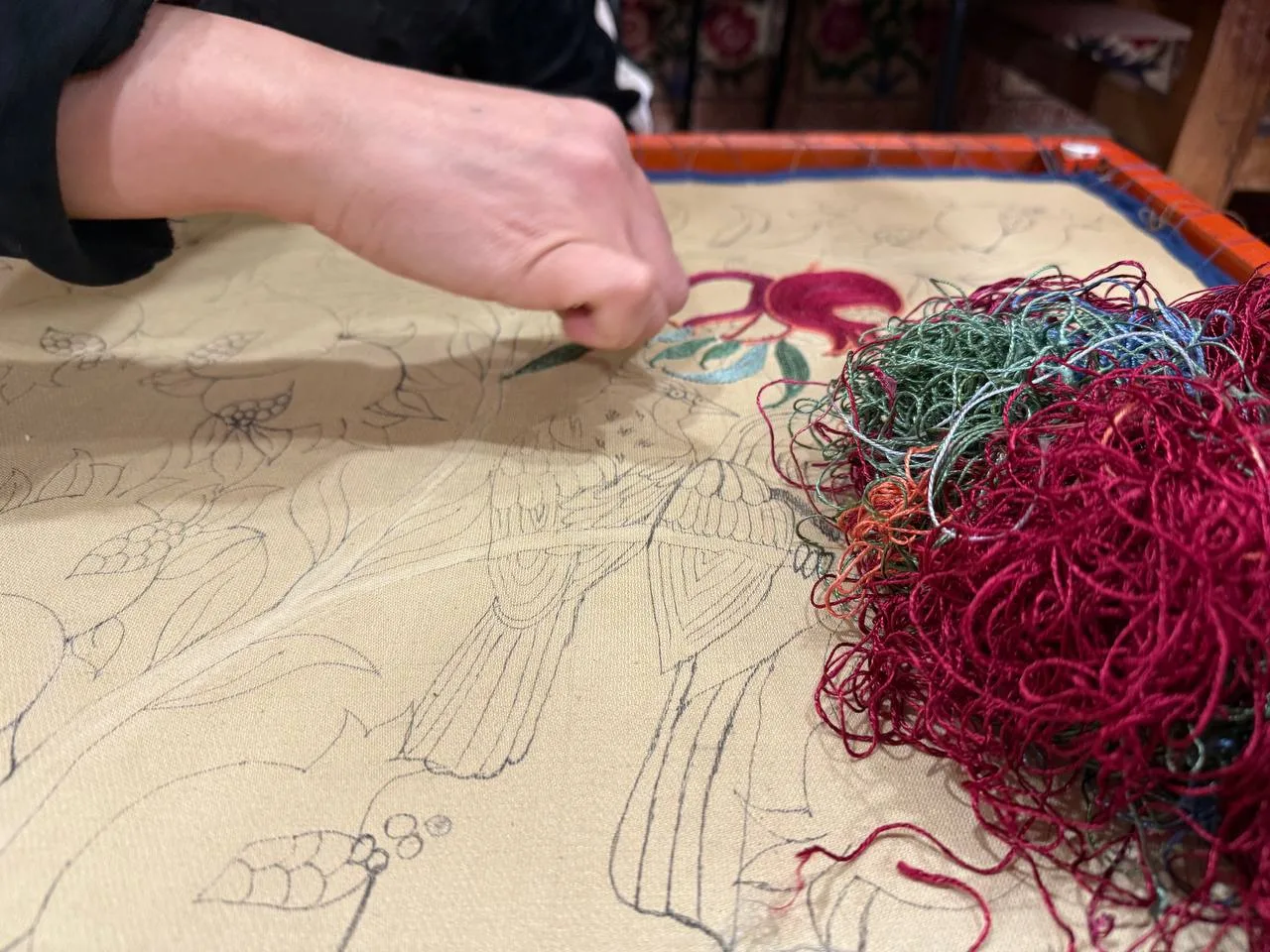
In a quiet courtyard in Bukhara, three generations of women sit in a circle. Grandmother, mother, daughter. Their needles flash in the afternoon light, pulling crimson and gold threads through cotton stretched on wooden frames.
They're working on a suzani—a large embroidered textile that will hang in the youngest woman's bedroom on her wedding night. Her mother started it when she was born. Twenty-two years of stitches, hopes, and prayers in thread.
"She doesn't know all the meanings yet," the grandmother says, gesturing to the young bride-to-be. "But she will. When she has her own daughter."
What Is a Suzani?
The word comes from Persian—"suzan" means needle. But calling a suzani just "needlework" is like calling the Sistine Chapel just "a ceiling painting."
These are large embroidered panels, typically measuring several feet in each direction. Traditionally, they were made as essential parts of a bride's dowry, presented to the groom on the wedding day and hung in the couple's bedroom as both decoration and blessing.
But a suzani is also a coded message, a visual language of symbols that carry specific meanings understood by those who can read them.
The Secret Dictionary
Walk into any suzani workshop and you'll see the same motifs repeated across different pieces. They're not random. They're vocabulary.
Pomegranates appear everywhere—stylized, bursting with seeds. They represent fertility, abundance, and the hope that the marriage will be blessed with many children. The more pomegranate seeds visible in the embroidery, the stronger the wish.
Tulips symbolize innocence and purity. They're typically used in work made for young brides, representing the hope that she will maintain her integrity.
Roses represent beauty, both physical and spiritual. They're often paired with nightingales, which represent wisdom—the combination suggesting that the bride will be both beautiful and wise.
Almonds signify longevity—a life together that stretches across decades.
Ram horns, spiraling in repeated patterns, represent courage and protection. They're often used near the borders, acting as guardians around the central imagery.
Even the colors carry meaning. Red thread protects against evil. Blue brings peace. White represents purity and truth.
The Making of a Suzani
Creating a suzani is traditionally a communal effort. The base fabric is often divided into sections, each given to a different woman to work on. This isn't just practical—it's symbolic. The combined efforts of mothers, aunts, grandmothers, and friends literally create the blessing that will protect the new couple.
The work itself takes years. A woman might begin her daughter's suzani at birth, adding to it slowly over the child's lifetime. Some pieces represent over a decade of intermittent work.
Crucially, a small section is traditionally left deliberately unfinished. The bride herself adds the final stitches, symbolizing her completion of girlhood and her readiness for marriage.
Regional Variations
Each area of Uzbekistan has developed its own distinctive style:
Bukhara suzanis tend to feature a single massive central medallion, often radiating outward in cosmic patterns that suggest the sun or moon.
Samarkand pieces often have more scattered arrangements, with flowers spread across the surface like a garden viewed from above.
Tashkent suzanis are distinctive for their solid embroidery—the background is filled in completely, creating a denser, heavier appearance. The colors tend toward darker reds and blacks.
Nurata is famous for its flowers. Blue, pink, gold, and cream blossoms cover the surface, along with birds and animals that appear less frequently in other regional styles.
Why This Matters Now
Like many traditional crafts, suzani embroidery is at a crossroads. Machine-produced imitations flood markets, sold to tourists who can't tell the difference. Young women who might once have spent years learning the craft can now download embroidery patterns to their phones.
But in homes across Uzbekistan, the tradition continues. Quietly. Persistently. Mothers still teach daughters. Needles still flash. And somewhere, right now, a grandmother is beginning a suzani for a grandchild who won't marry for twenty years.
That's the thing about this craft. It doesn't just require skill. It requires faith in the future—a commitment to create something meaningful for a life that hasn't even fully begun.
When you visit Uzbekistan, seek out real suzani workshops. Watch the work happen. Ask about the meanings. Buy directly from artisans when possible—not just for the beauty, but because your purchase becomes part of this chain of creation that stretches back centuries.
Every stitch matters. Every symbol carries weight. Every suzani is a love letter written in thread.
About the author
CraftnCulture
The CraftnCulture editorial team — Tashkent-based cultural tourism specialists covering Uzbekistan travel, artisan crafts, and Silk Road heritage.