In a quiet pottery town tucked into Uzbekistan's Fergana Valley, the floor of nearly every courtyard is dusted with the same powdery turquoise. Rishtan has been firing ceramics for more than eight centuries, and the cobalt-and-copper "ishkor" glaze made here — that unmistakable Rishtan blue — is still mixed by hand from local plants and minerals. For travelers who want to look past Samarkand's domes and Bukhara's bazaars, a day spent in Rishtan's workshops is one of the most direct ways to meet the pottery masters keeping a living craft alive.
Why Rishtan Is the Capital of Uzbek Blue
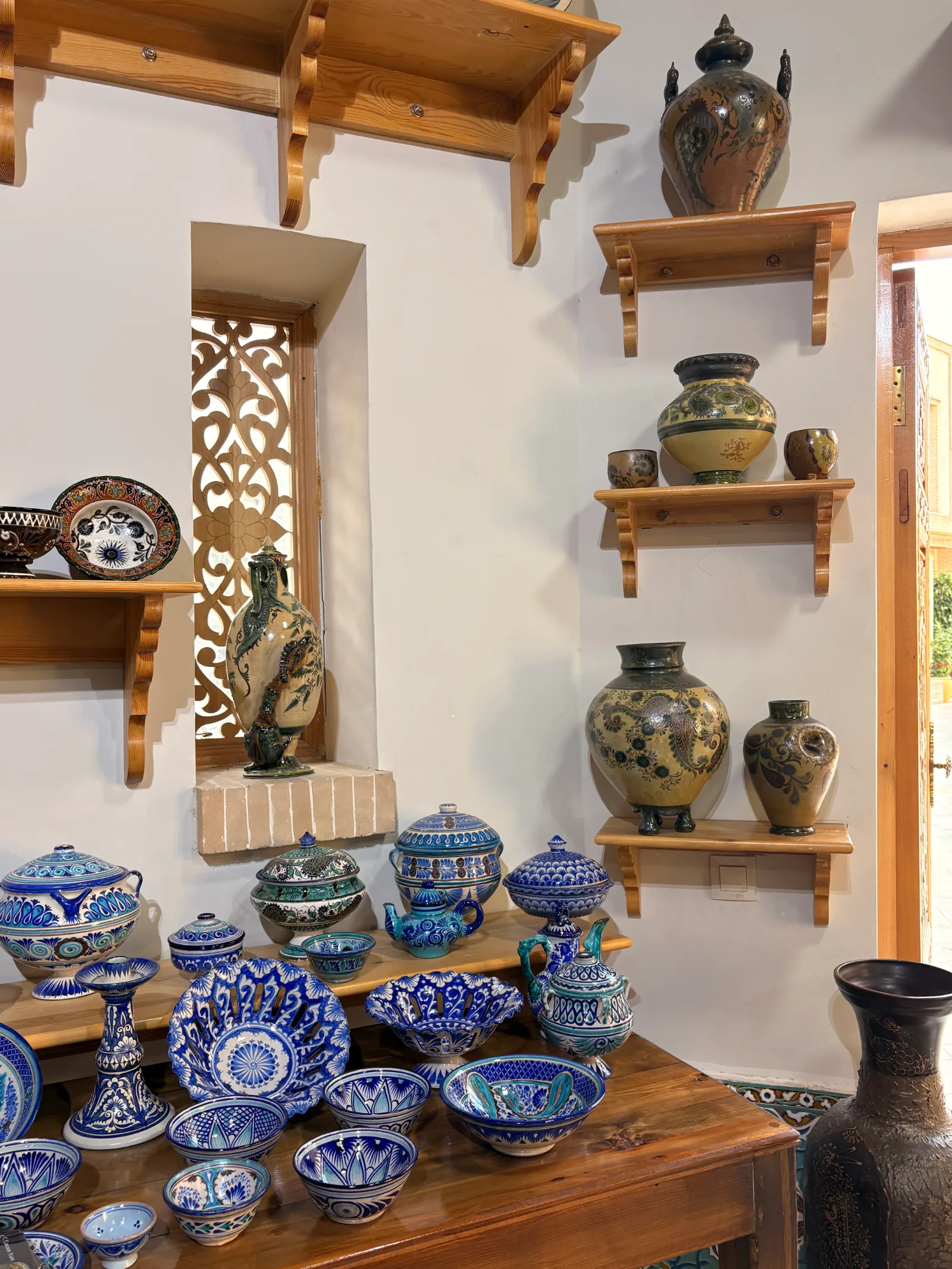
Rishtan sits between Kokand and Fergana in eastern Uzbekistan, on a deep bed of red, iron-rich clay that potters call "qizil tuproq." That clay, combined with ishkor — an alkaline glaze made from desert plants like saksaul and burned to ash — gives Rishtan's ceramics their depth and the famous "moving blue" that shifts between turquoise and ultramarine depending on the light. There are an estimated 1,000+ working potters in town, but the lineage of true masters who fire ishkor glaze in wood-burning kilns is much smaller, often passed father to son across six or seven generations.
UNESCO added the school of Rishtan ceramics to its Representative List of the Intangible Cultural Heritage of Humanity in 2023, which has accelerated interest from visitors, collectors, and design buyers worldwide. Workshop tourism in Rishtan is still small-scale and informal — most studios are tucked behind unmarked wooden gates inside private courtyards.
The Masters Behind the Glaze
The most recognizable name in Rishtan is Rustam Usmanov, an "Usto" (master) whose courtyard workshop and small museum receive visitors most days. His son Damir Usmanov has built on the family style with contemporary forms while keeping ishkor at the center. Other widely respected names include the Nazirov family — Alisher Nazirov in particular — and Sharofiddin Yusupov, whose work often appears in Tashkent galleries.
What Makes Someone a Rishtan "Usto"
Becoming an "usto" is less a certification than a recognition by other masters that you have the full chain: digging and aging your own clay, hand-throwing on a foot-driven wheel, painting freehand without stencils, mixing ishkor from scratch, and firing with mulberry wood at the right temperature for the right number of hours. Visitors often pay attention to painting, but ask any usto what is hardest and they will say the glaze and the fire.
Inside a Rishtan Workshop Visit
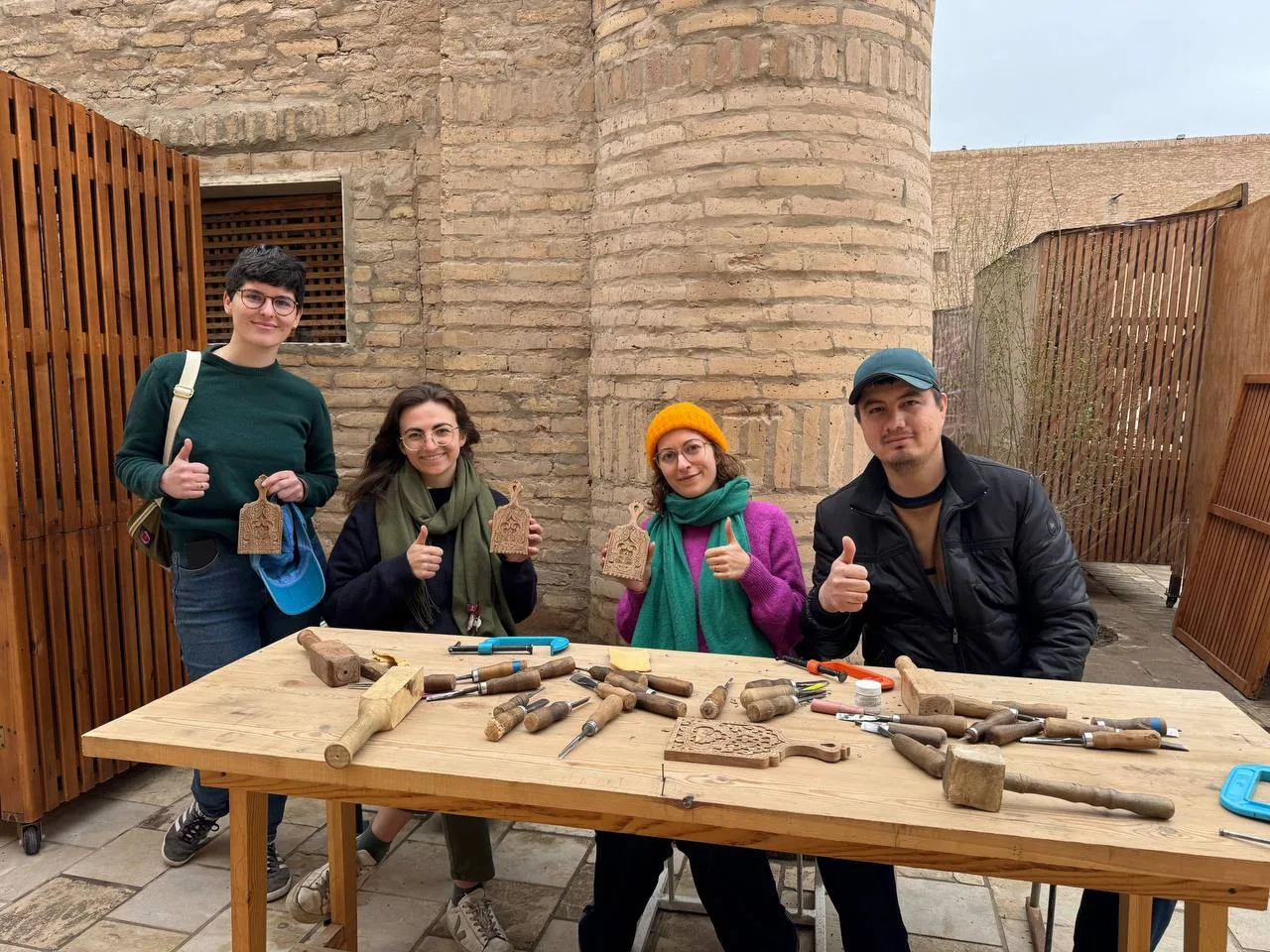
A typical visit lasts two to three hours and follows a slow rhythm. You arrive at a courtyard, are seated under a grapevine with green tea and bread, and the master walks you through the cycle: lumps of clay aging in shaded pits, the wheel, the painting room, the kiln. Most workshops offer a hands-on segment — a 30-minute throwing lesson, or painting a tile or small bowl that the master fires and ships for you later. Prices range roughly from 150,000 to 400,000 UZS per person depending on the workshop and what you make.
Photography is welcome in most rooms, though it is polite to ask before photographing painters mid-stroke. If you speak no Uzbek or Russian, almost every workshop has a younger family member who speaks some English; bringing a translator app is still helpful for the glaze chemistry questions you will inevitably want to ask.
What to Buy (and How to Buy Well)
Pieces you encounter in Rishtan range from 50,000 UZS souvenir cups to museum-grade lyagans (large serving plates) priced in the hundreds of dollars. A few things to look for before you commit:
- Glaze depth — true ishkor has a slight watery sheen and tiny irregularities, not a flat plastic-like finish
- Foot mark — most working masters incise or stamp their name on the base
- Brushwork — freehand strokes vary slightly across a plate; stencil pieces are flatter and more uniform
- Weight — ishkor-glazed pieces fired in wood kilns feel lighter and "ring" gently when tapped
- Provenance — ask which family made it; in Rishtan, the name behind the piece is half the value
Planning Your Rishtan Detour
Rishtan works best as a day trip from Fergana city (about 45 minutes by shared taxi) or as a half-day stop on a Tashkent–Fergana–Kokand circuit. Spring and autumn are kindest for the open-courtyard workshops; summer afternoons in the valley can push past 38°C. Most masters welcome unannounced visitors during daylight, but for hands-on classes or large group visits, calling a day ahead through your hotel or guide is the difference between a rushed hello and a real afternoon. CraftnCulture's artisan-led itineraries can pair a Rishtan workshop day with Margilan's silk ateliers and Kokand's khan-era palaces, so reach out if you'd like one woven together for your trip.
References
About the author
CraftnCulture
The CraftnCulture editorial team — Tashkent-based cultural tourism specialists covering Uzbekistan travel, artisan crafts, and Silk Road heritage.