Why Uzbek Plov Takes 4 Hours (And Why That Matters)
I'll never forget the first time a 67-year-old Uzbek oshpaz (plov master) told me to stop stirring the rice. "You're treating it like Italian risotto," he said, shaking his head. "Plov doesn't need you. Plov needs time."
That was seven years ago. Since then, I've stood beside dozens of master cooks in backyards across Tashkent, watching them transform lamb, carrots, and rice into Uzbekistan's national dish. And I've learned that plov cooking class isn't about learning a recipe—it's about unlearning everything Western cooking taught you about speed and control.
The 4-Hour Philosophy: Why Plov Can't Be Rushed
In Uzbek culture, plov isn't made on weeknights. It's not a quick dinner. Real plov—the kind served at weddings, funerals, and Friday gatherings—takes four hours minimum. Often five. Sometimes six.
This isn't inefficiency. It's the point.
The process breaks down into distinct phases, each with its own rhythm:
Phase 1: The Zirvak (1.5 hours)
The zirvak is the soul of plov—a rich, caramelized base of lamb, onions, and carrots cooked slowly in cottonseed oil. In our plov cooking class sessions, this is where Western students struggle most. They want to crank the heat, to "get things moving."
But the oshpaz knows: low heat for 90 minutes creates depth you can't fake. The onions turn mahogany. The lamb fat renders completely. The carrots—julienned thick as your thumb—soften while holding their shape.
You can't rush caramelization. The Maillard reaction doesn't care about your schedule.
Phase 2: The Rice Marriage (30 minutes)
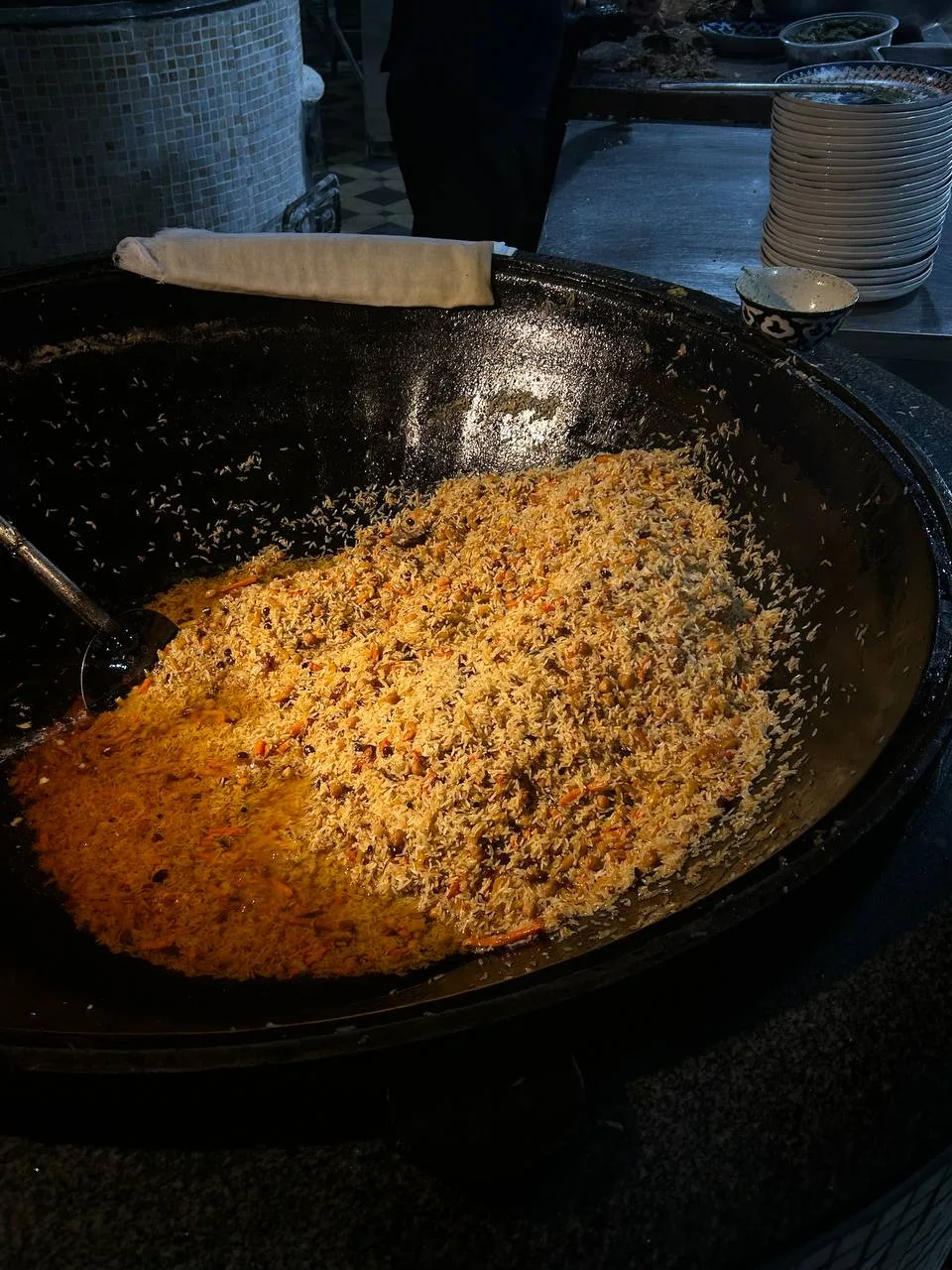
When the zirvak is ready—and you'll know because the oil rises to the surface, glistening amber—the rice gets added. Not stirred in. Added.
Devzira rice, the traditional variety from Fergana Valley, sits on top of the meat and vegetables. You level it with a slotted spoon. You poke holes to let steam circulate. Then you cover the kazan (cast-iron cauldron) and walk away.
This is where the uzbekistan cooking philosophy diverges from French or Italian technique. There's no constant monitoring, no adjustment, no interference. The rice steams in the fragrant lamb fat, absorbing cumin, barberry, and garlic.
You trust the process or you ruin the plov. There's no middle ground.
Phase 3: The Wait (2 hours)
After the initial steam, the kazan comes off the fire. The plov rests, wrapped in blankets or towels, for a minimum of two hours. Often three.
Western cooking doesn't have an equivalent to this. We "rest" a roast for 15 minutes, maximum. But plov needs hours for the rice grains to firm up, for the flavors to marry completely, for the crispy bottom layer (the prized bits) to develop.
In traditional mahallas (neighborhoods) across Tashkent, this is when the real gathering happens. Men sit on tapchans (raised platforms) drinking green tea, talking, waiting. The plov is cooking itself. Your job is to do nothing.
What This Teaches You (Beyond Cooking)
Our tashkent food tour participants often tell us the plov class was the most valuable part of their trip—not because they mastered the recipe, but because they experienced a completely different relationship with time and food.
In a world where we Uber Eats dinner and microwave leftovers, spending four hours on a single dish feels almost rebellious. But it's also freeing.
You can't multitask your way through plov. You can't half-ass it. You either commit to the four hours or you order osh from a nearby chaikhana.
This is intentional. In Uzbek culture, plov is communal by design. It's made in quantities that feed 20, 50, sometimes 100 people. The four-hour process ensures that cooking is an event, not a chore. It forces you to slow down, to be present, to actually talk to the people around you.
The Modern Compromise (And Why It Doesn't Work)
You can find "quick plov" recipes online. Pressure cooker versions that promise authentic taste in 45 minutes. Instant pot hacks. Pre-made zirvak bases.
Here's what those recipes miss: plov isn't just about the final taste. It's about the transformation that happens during those four hours—in the food, yes, but also in the cook and the community gathered around the kazan.
When you rush plov, you get flavored rice with meat. When you take four hours, you get a dish that tastes like patience, like attention, like care. You can taste the difference.
What You'll Actually Do in Our Cooking Class
Our plov cooking class in Tashkent doesn't sugarcoat the time commitment. When you book with us, we tell you upfront: plan for 4-5 hours. Wear comfortable shoes. Come hungry, but don't expect to eat quickly.
You'll work alongside Jahongir, who learned from his grandfather, who learned from his grandfather. The recipe hasn't changed in four generations—because it doesn't need to.
Here's what a typical session looks like:
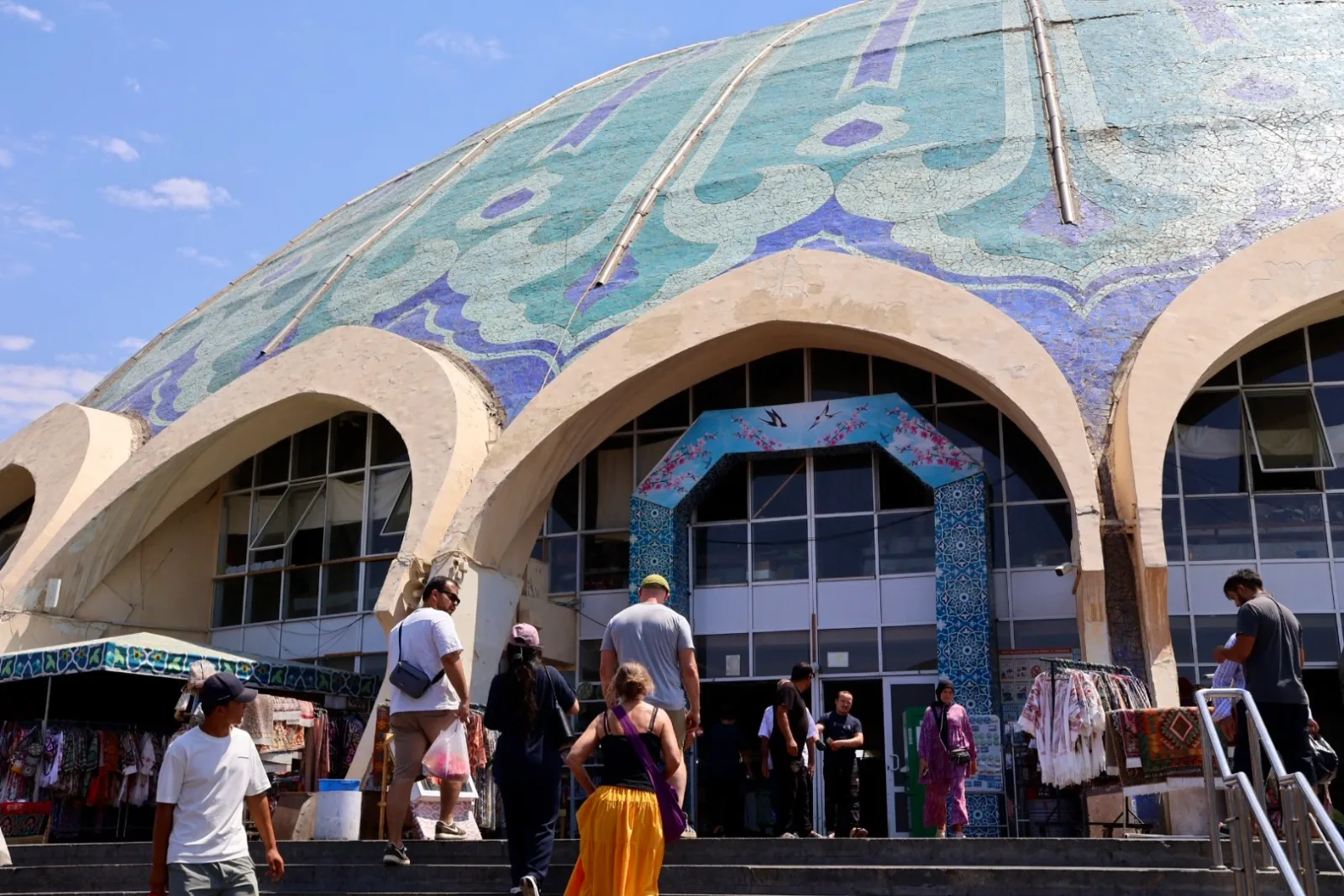
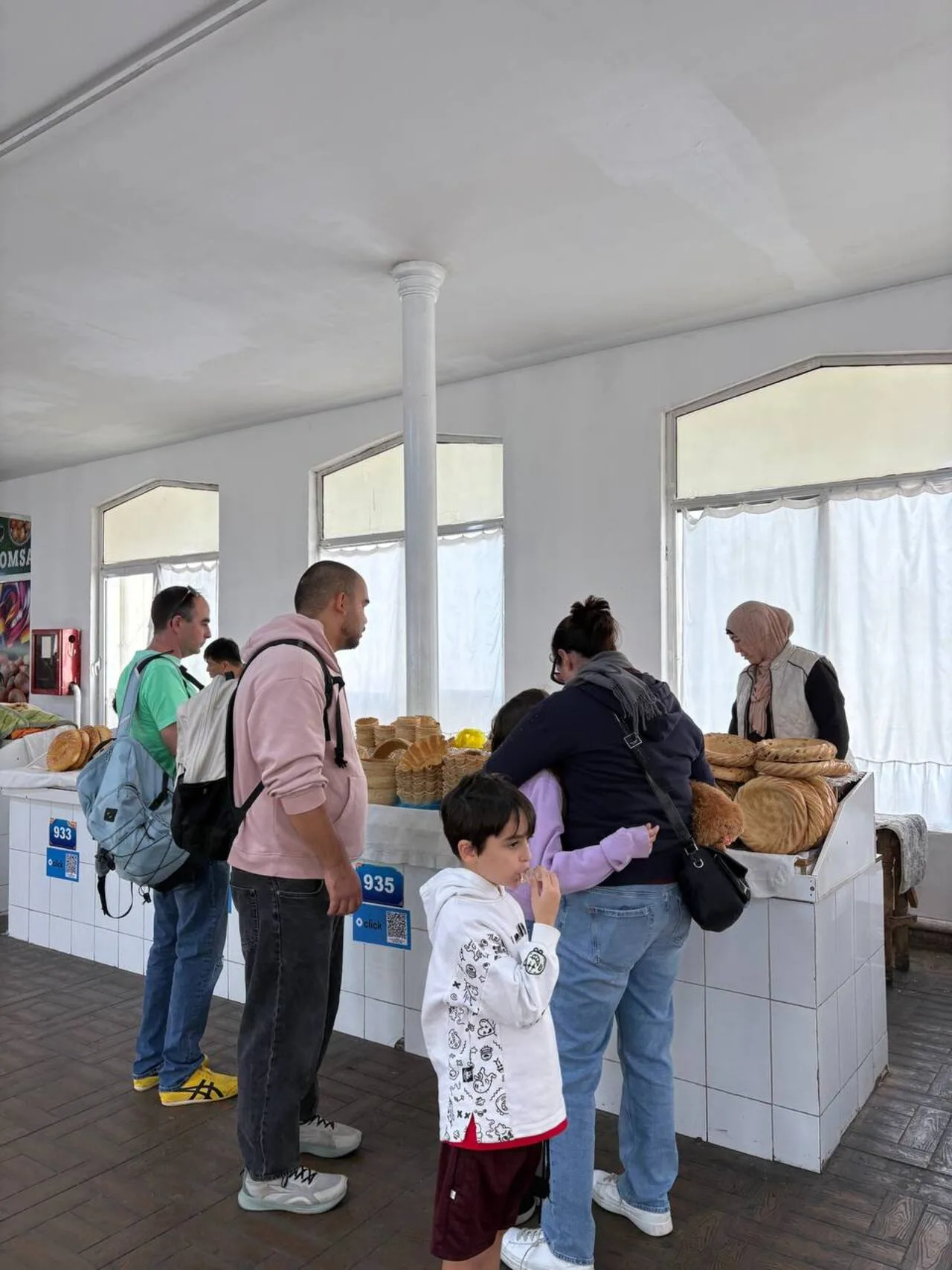
- 8:00 AM: Meet at Chorsu Bazaar to select ingredients. Jahongir teaches you how to judge devzira rice by feel, how to spot fresh lamb, why certain carrots work better than others
- 9:30 AM: Arrive at the family courtyard. Fire up the kazan outdoors. Begin the zirvak
- 11:00 AM: Rice goes in. First tea break while it steams
- 12:00 PM: Kazan comes off the fire. Wrap it. Now we wait
- 12:30 PM: Tour the mahalla, meet neighbors, learn about Uzbek tea culture
- 2:00 PM: Return. Unwrap the kazan. Serve plov on a communal platter
- 2:30 PM: Eat with your hands, as tradition dictates, sitting on the floor around the dastarkhan (tablecloth)
By the end, you haven't just learned to make plov. You've experienced why it matters.
The Dishes You'll Taste Along the Way
While the plov rests, our hosts serve a full spread of Uzbek appetizers:
- Achichuk salad: tomatoes, onions, and herbs, simple and sharp
- Non bread: fresh from the tandir oven, still warm
- Suzma: strained yogurt with dill
- Kazy: horse meat sausage (optional—we ask about dietary restrictions)
- Green tea: endless pots of kok choy, the social lubricant of Uzbek culture
This isn't filler while you wait. It's part of the ritual. Plov is always served after several rounds of tea and conversation. To serve it immediately would be rude—like you're rushing your guests out the door.
Bringing Plov Home: What Actually Works
Here's the honest truth: most students don't make plov when they return home. Not because they can't, but because the context is missing.
Plov requires:
- A 10-15 kg capacity pot (most home cookware maxes out at 5 kg)
- 4-5 hours of uninterrupted time
- Devzira rice (available online but expensive outside Uzbekistan)
- Multiple people to feed (plov for two is depressing)
- Preferably an outdoor fire (indoor stoves work but lack the romance)
What students DO take home is the philosophy: that some things can't be rushed, that the best meals require community, that cooking can be meditation if you let it.
Several past participants have told us they now host "slow cooking Sundays" inspired by their Tashkent plov experience—spending all afternoon making a single dish, inviting friends, making it an event.
That's the real lesson.
Book Your Spot: Join the Next Cooking Class
We run authentic plov cooking classes every Tuesday, Thursday, and Saturday morning in Tashkent. Small groups only (max 8 people) to ensure hands-on time with Jahongir.
What's included:
- Chorsu Bazaar ingredient tour
- 4-hour cooking session with master oshpaz
- All meals (breakfast, plov lunch, tea/snacks)
- Mahalla walking tour during rest period
- Recipe booklet and shopping guide
- Transportation from/to your hotel
Price: $85 per person
Book your plov cooking class now and learn why Uzbekistan's national dish can't be made in a hurry—and why that's exactly the point.
CRAFTNCULTURE operates small-group cultural experiences in Tashkent, Uzbekistan. We're not a travel agency—we're operators who live here, work with local artisans, and believe that the best travel happens slowly, over tea, with your hands in the dough.
About the author
Julia Drzymała
Polish creative director and cultural storyteller. Co-founded CraftnCulture in 2024 to connect Uzbekistan's master artisans with travelers worldwide.