Uzbek Tea Culture: Sacred Rituals & Green Tea Traditions
In Uzbekistan, tea isn't just a beverage—it's a sacred social contract, a symbol of hospitality, and the cornerstone of daily life. From bustling choyxonas (tea houses) to intimate family gatherings, understanding Uzbek tea culture is essential to experiencing the soul of this ancient Silk Road nation.
What Is the Sacred Role of Tea in Uzbek Society?
When you're invited into an Uzbek home, the first thing offered is always tea. This isn't mere politeness—it's a tradition dating back centuries along the Silk Road, where offering tea signaled safe passage and genuine welcome.
Tea ceremonies in Uzbekistan carry deep symbolic meaning. The person pouring tea demonstrates respect by filling the cup only halfway, allowing guests to drink while the tea is still hot and preventing spills. Refusing tea is considered deeply disrespectful, as it rejects the host's hospitality.
Green Tea: The Heart of Uzbek Tradition
Why Green Tea Dominates
While black tea has gained popularity in recent decades, green tea (kok choy) remains the traditional choice, especially among older generations. There are practical reasons: Uzbekistan's hot, arid climate makes green tea ideal for quenching thirst without raising blood pressure.
The most popular variety is Chinese green tea, though locals often blend it with herbs, dried fruits, or spices. In rural areas, you'll find homemade blends incorporating local mint, thyme, or even saffron for special occasions.
The Three-Cup Ritual
The traditional Uzbek tea ceremony follows a precise ritual:
-
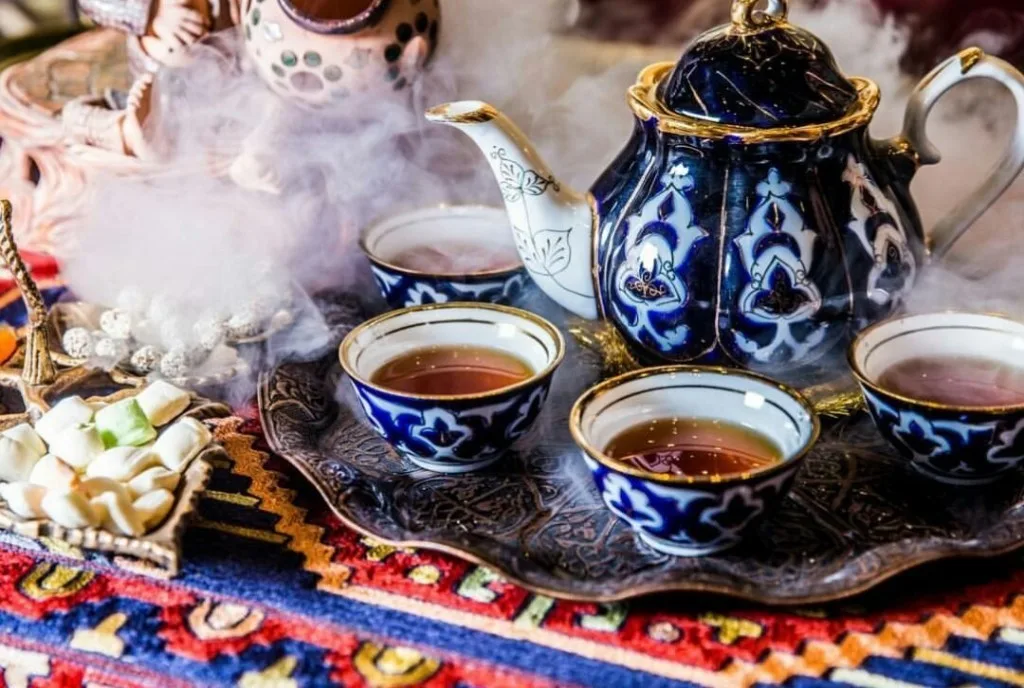
First pour: The tea master pours tea into a piala (small bowl), then returns it to the teapot three times. This aerates the tea and ensures even flavor.
-
The serving: Tea is poured only to one-third or half the piala's capacity. This keeps the tea hot and shows the guest is valued—you want them to stay long enough for multiple refills.
-
Continuous refills: An empty cup signals it's time to leave. As long as your host keeps refilling, you're welcome to stay.
Choyxona: The Social Heart of Uzbekistan
More Than Tea Houses
Choyxonas are uniquely male-dominated social spaces where men gather to discuss business, politics, and life over endless cups of green tea. These establishments range from humble roadside stops with tapchans (raised platforms) to elaborate establishments with fountains and gardens.
What you'll experience:
- Low tables surrounded by tapchans covered in colorful kurpacha (mattresses)
- Constant flow of fresh tea served in traditional ceramic teapots
- Accompaniments: non bread, fresh fruit, nuts, halva, and seasonal sweets
- Hours-long conversations that move at the pace of tea drinking
Etiquette in Choyxonas
- Remove shoes before stepping onto a tapchan
- Accept tea with your right hand or both hands (never left alone)
- Don't point the bottom of your feet at others while sitting cross-legged
- Wait for elders to be served first
- Never pour your own tea if a host is present
Regional Tea Traditions
Tashkent Style
The capital blends tradition with modernity. Expect green tea as standard, but urban choyxonas now offer black tea, herbal infusions, and even coffee.
Samarkand & Bukhara
These ancient cities maintain stricter traditions. Green tea dominates, and ceremonies follow classical Silk Road customs. Many choyxonas occupy historic caravanserais in Samarkand and Bukhara.
Fergana Valley
Known for the strongest tea culture in Uzbekistan. Locals here are tea connoisseurs, often blending their own varieties and taking particular pride in tea preparation techniques.
Modern Tea Culture: Evolution & Experimentation
The Young Generation's Twist
While respecting tradition, young Uzbeks are experimenting with:
- Fruit-infused green teas (apple, quince, pomegranate)
- Spiced blends with cardamom, cinnamon, and ginger
- Specialty tea cafés in Tashkent serving premium varieties
- Instagram-worthy presentations in trendy establishments
Tea Tourism on the Rise
Several cultural centers and homestays now offer tea ceremony experiences for travelers:
- Demonstrations of traditional tea preparation
- Tastings of regional green tea varieties
- Lessons on proper etiquette and symbolic meanings
- Opportunities to participate in authentic family tea gatherings
Health Benefits: Why Uzbeks Swear by Green Tea
Uzbekistan's tea culture isn't just tradition—it's practical medicine:
- Hydration in extreme heat: Green tea rehydrates more effectively than water in 40°C+ summers
- Digestive aid: Essential after heavy plov and meat-rich cuisine
- Blood pressure regulation: Important in a cuisine high in salt and fat
- Antioxidant boost: Combat effects of desert sun and harsh continental climate
How to Experience Authentic Tea Culture
For Travelers
-
Accept every invitation: If locals invite you for tea, say yes. These unplanned moments reveal authentic culture.
-
Visit traditional choyxonas: Skip tourist cafés for neighborhood establishments where locals gather.
-
Learn basic phrases:
- "Choy qo'yasizmi?" (Would you like tea?)
- "Rahmat" (Thank you)
- "Juda mazali" (Very delicious)
-
Book a homestay: Family tea time offers the most intimate cultural exchange.
-
Time it right: Early morning (6-8am) and late afternoon (4-6pm) are peak choyxona hours.
What to Order
- Kok choy (green tea): The traditional choice
- Oq choy (white tea): Rare but exquisite
- Ko'k-qora (green-black blend): Modern hybrid popular with younger crowds
- Seasonal specials: Fruit teas in summer, spiced varieties in winter
The Philosophy Behind the Cup
Uzbek tea culture teaches valuable lessons:
Slow down: Tea drinking can't be rushed. The ritual forces presence and mindfulness.
Community over individualism: Tea is never drunk alone—it's a social glue binding families, friends, and strangers.
Hospitality as sacred duty: Offering tea represents one of the highest forms of respect.
Respect for elders: The serving order and ceremony reinforce social hierarchy and tradition.
Planning Your Tea Journey
CRAFTNCULTURE offers immersive cultural experiences including:
- Traditional tea ceremony workshops
- Guided visits to historic choyxonas in Samarkand and Bukhara
- Homestay experiences featuring authentic family tea gatherings
- Artisan craft tours combined with tea culture immersion
Whether you're sampling kok choy in a centuries-old Bukhara choyxona or learning the three-pour ritual from an Uzbek grandmother, tea culture offers the most intimate window into this nation's soul.
Ready to experience authentic Uzbek hospitality over endless cups of green tea? Contact CRAFTNCULTURE to design your cultural journey through Uzbekistan's tea traditions.
Explore more Uzbekistan cultural experiences: ceramic workshops, ikat weaving tours, and plov cooking classes that pair perfectly with traditional tea ceremonies.
About the author
CraftnCulture
The CraftnCulture editorial team — Tashkent-based cultural tourism specialists covering Uzbekistan travel, artisan crafts, and Silk Road heritage.