Lagman in Tashkent and lagman in Andijon share a name and almost nothing else. I found this out the hard way, three bowls in, on a CraftNCulture food route that never advertised itself as a noodle education but turned into one anyway.
How I Got Here
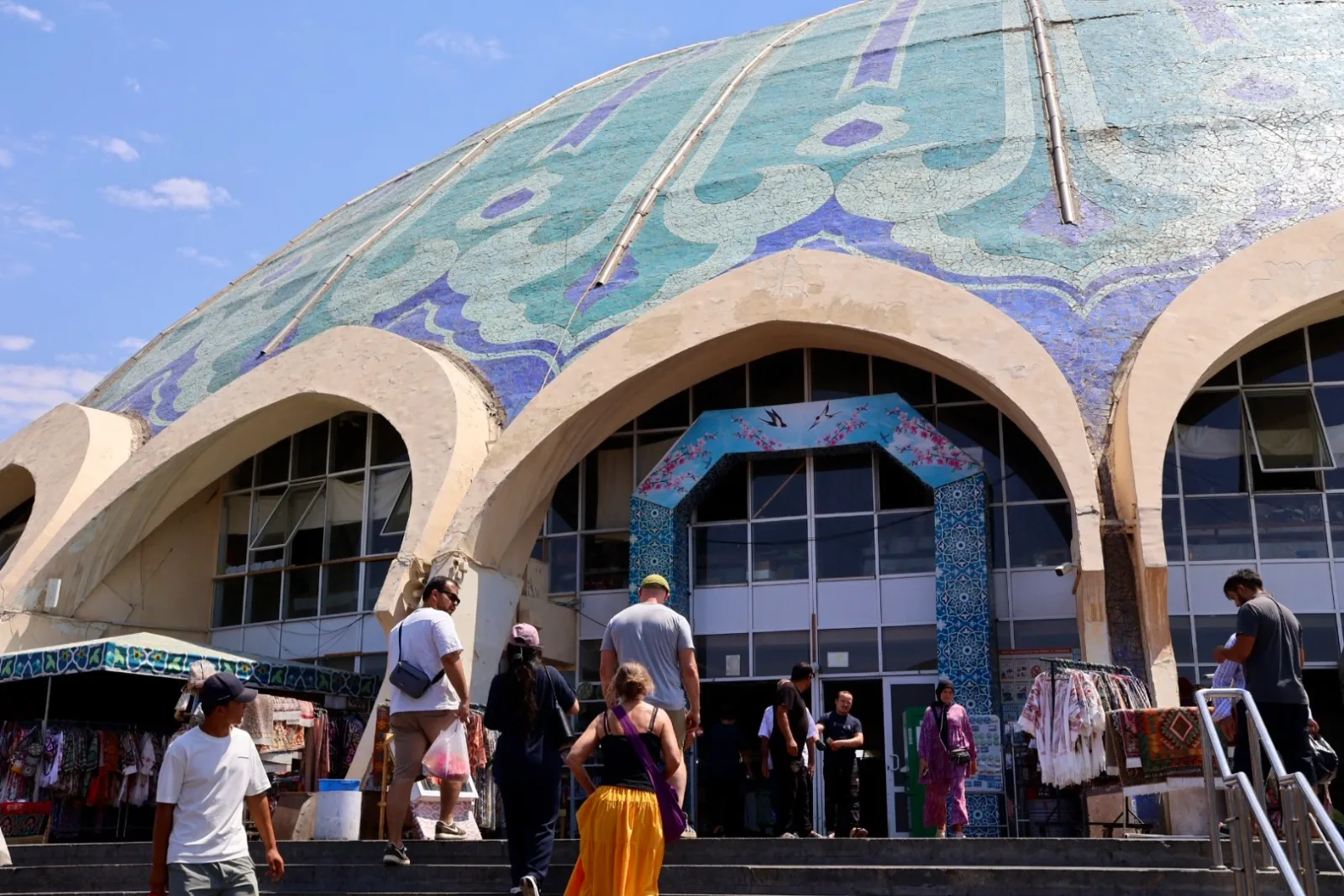
I'd booked what I thought was a straightforward food afternoon in Tashkent — CraftNCulture's Chorsu Food Tour, a few hours weaving through the bazaar with a local guide, Farrukh, who talked about ingredients the way some people talk about weather. I wasn't looking for a lesson in Uzbek cuisine's regional variations. I was looking for lunch. What I got was an argument, conducted entirely through broth, about whose lagman was correct — and everyone in that argument was right, which was the part that took me the rest of the trip to understand.
Lagman is a hand-pulled noodle dish, Uyghur in origin, that migrated across Central Asia and then refused to stay the same in any two places it landed. In Tashkent it arrived at our table as a soupy, tomato-forward stew, the noodles thick and slightly irregular, floating in a broth heavy with bell pepper and a cumin note I hadn't expected. Farrukh called it "gui lagman" — the wet version, the one most visitors actually mean when they say the word.
The Noodle Itself
The technique is the part nobody photographs well, because it's fast and repetitive and looks, from the outside, unremarkable. A cook takes a rope of dough, stretches it, folds it, slaps it against the counter, stretches it again — six, eight, ten times — until one thick rope becomes a tangle of thin ones without ever being cut by a knife. Farrukh's aunt, who ran the stall we ended up at twice, did this without looking down, mid-sentence, correcting my Uzbek pronunciation at the same time she doubled a noodle rope in her hands.
The dough itself carries the first regional split. Tashkent and the Fergana Valley favor a slightly heavier hand with the flour, producing noodles that hold their shape in a wet broth for the twenty minutes it takes to eat a full bowl. Further into the mountains, toward Namangan, the dough runs thinner and the noodles cook faster — a practical adaptation, someone told me later, from households where fuel for a long simmer wasn't always guaranteed.
What It Actually Tasted Like
By the third city, I'd stopped expecting lagman to be one thing and started tasting for what had changed. In Samarkand, a version turned up drier, closer to a stir-fried noodle dish than a soup — less broth, more char on the vegetables, a dish clearly built for people eating on their way somewhere rather than settling in. The tomato base thinned out the further we moved from the capital; toward the steppe-adjacent regions, cooks leaned harder on dried spices and less on fresh pepper, presumably because fresh pepper wasn't always the reliable ingredient it is in a bazaar stall in Tashkent.
None of it was better or worse. That's the honest admission I didn't expect to make about a noodle soup. The Tashkent bowl was more assertive — you tasted the tomato and pepper first, the noodle second. The drier regional version made you taste the noodle's actual texture, the specific chew of hand-pulled dough, because there wasn't much broth to hide behind. I liked both for different reasons and would be lying if I picked a favorite; my notebook from that week just says "spicier=Tashkent, drier=further east," which is a less poetic conclusion than I'd hoped for but the accurate one.
Why the Small Group Mattered Here
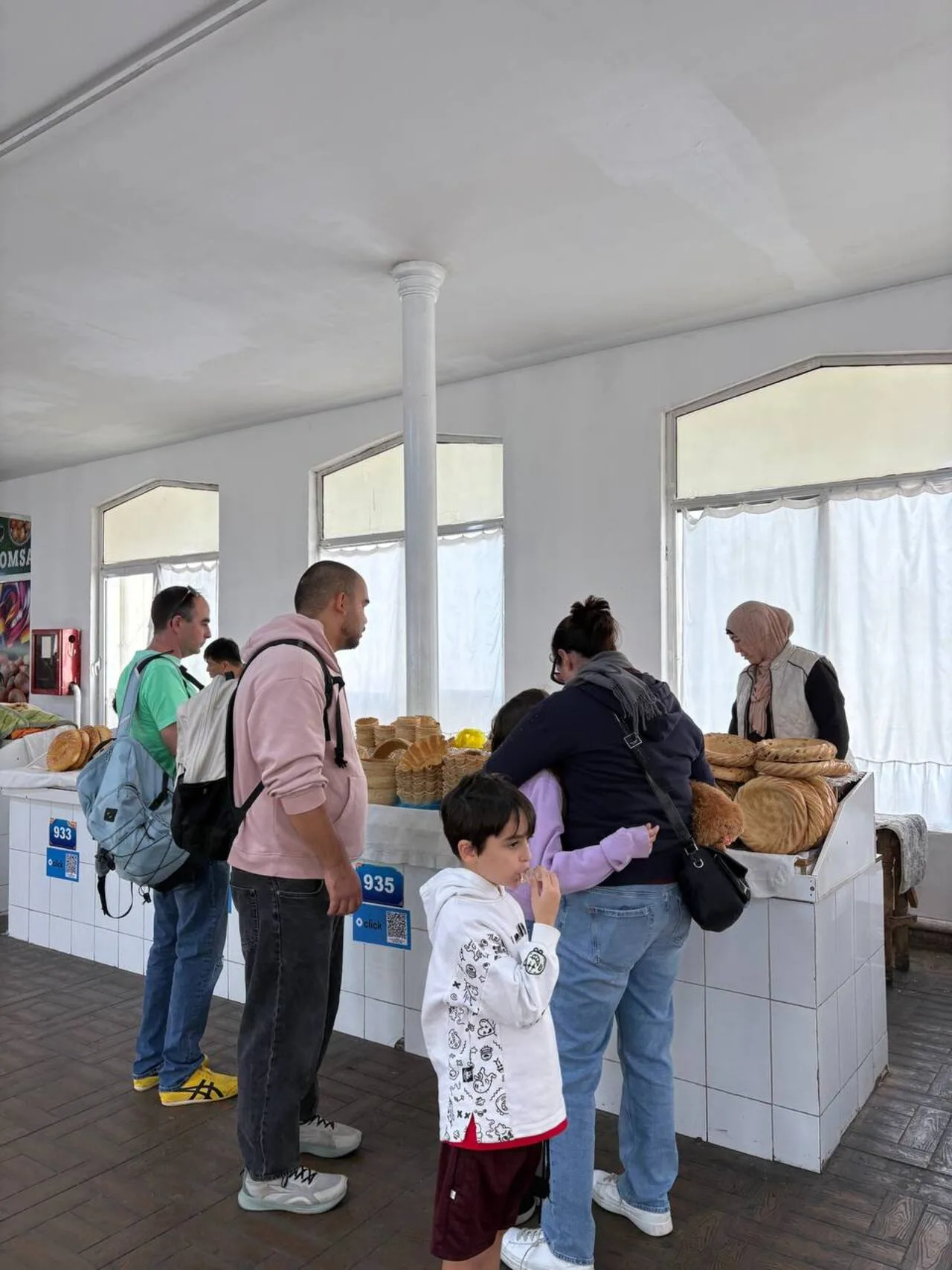
A twenty-person coach tour gets fed lagman at a restaurant built for coach tours — one version, standardized, inoffensive, correct in the way a hotel breakfast is correct. Our group was six. Farrukh could take us to his aunt's stall, then to a second stand across the bazaar run by a woman he'd known since childhood, and ask her, on the spot, to make a version closer to how her mother made it rather than the version she serves tourists. That second bowl — heavier on cumin, noodles a shade thicker — wasn't on any menu. It existed because there were six of us and she had the time and reason to bother.
That's the difference a small group actually buys you: not more comfort, but more access. Nobody performs a "tourist lagman" for six people who are clearly paying attention and asking follow-up questions about the dough.
What You Leave With
I left Uzbekistan without a lagman recipe I could confidently reproduce — the noodle-pulling technique alone needs more practice than a single afternoon gives you, and Farrukh's aunt made it look easier than it is. What I did leave with was an actual map in my head: which regions favor broth, which favor char, where the tomato thins out and the dried spice takes over, and why. That's more useful to me than a recipe card would have been, because it's the kind of knowledge that travels — I now order lagman differently depending on which Central Asian city I'm in, and I've stopped assuming "lagman" on a menu means one specific thing.
CraftNCulture's Chorsu Food Tour and 4-Hour Food Tour & Metro Journey both run through Tashkent's bazaar stalls where this conversation actually happens, in small groups (typically 6–10), for $65–85 depending on the route. If you want the hands-on version — actually pulling the noodle rather than just eating it — the Uzbek Plov Cooking Workshop in a Local Home Setup covers the same hand-pulled dough fundamentals in a different dish, and is worth booking alongside a food tour rather than instead of one.
Explore more CraftNCulture stories for other regional food narratives across Uzbekistan.
About the author
CraftnCulture
The CraftnCulture editorial team — Tashkent-based cultural tourism specialists covering Uzbekistan travel, artisan crafts, and Silk Road heritage.