Silk Road History: Uzbekistan's Trading Legacy
Standing in Samarkand's Registan Square at dawn, watching the sun illuminate those three impossibly blue madrasahs, you're not just looking at architecture. You're standing at the crossroads of human civilization—the place where East met West, where Chinese silk traded for Roman gold, where ideas moved as freely as spices.
We've walked these routes with historians, sat in those ancient caravanserais with elderly merchants who remember the old stories, and traced the Silk Road through Uzbekistan's beating heart. This isn't a textbook history. This is the story of how trade built empires, and how Uzbekistan sat at the center of it all.
What Was the Silk Road?
The Silk Road wasn't a single road—it was a 4,000-mile network of trading routes connecting China to the Mediterranean. And right in the middle? Uzbekistan. Specifically, the cities of Samarkand, Bukhara, and Khiva became essential stops on every merchant's journey.
From roughly 130 BCE to 1453 CE, these ancient trade routes carried far more than silk. Yes, Chinese silk was the luxury item that gave the route its name, but caravans also hauled spices, precious metals, glassware, paper, gunpowder, and ideas that would reshape the world.
Why Uzbekistan Became the Silk Road's Heart
Geography made Uzbekistan unavoidable. The natural mountain passes through the Tian Shan and Pamir ranges funneled all east-west traffic through the Fergana Valley and into the oasis cities of modern-day Uzbekistan.
But geography alone doesn't explain it. Smart rulers like Timur (Tamerlane) deliberately made Samarkard the most magnificent city on earth specifically to attract merchants. They built covered markets, secure caravanserais, and guaranteed safe passage. They understood that trade wasn't just about goods—it was about power.
The Great Cities: Samarkand, Bukhara, and Khiva
Samarkand: The Crossroads of Civilizations
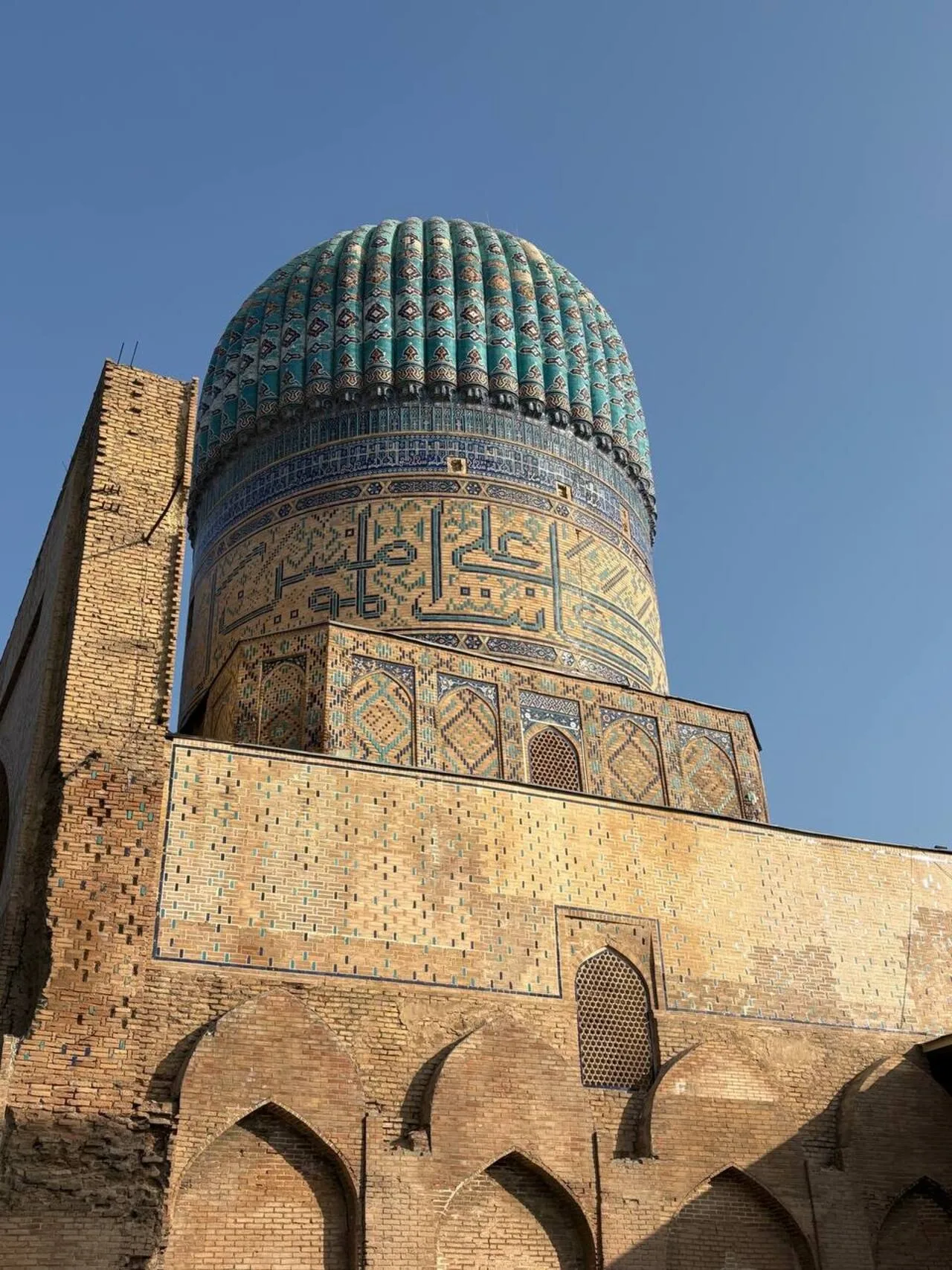
Samarkand wasn't just a stop—it was the destination. By the 14th century under Timur, it was arguably the world's most important city. The Registan wasn't built for show; those madrasahs were universities where scholars from Baghdad debated with philosophers from Beijing.
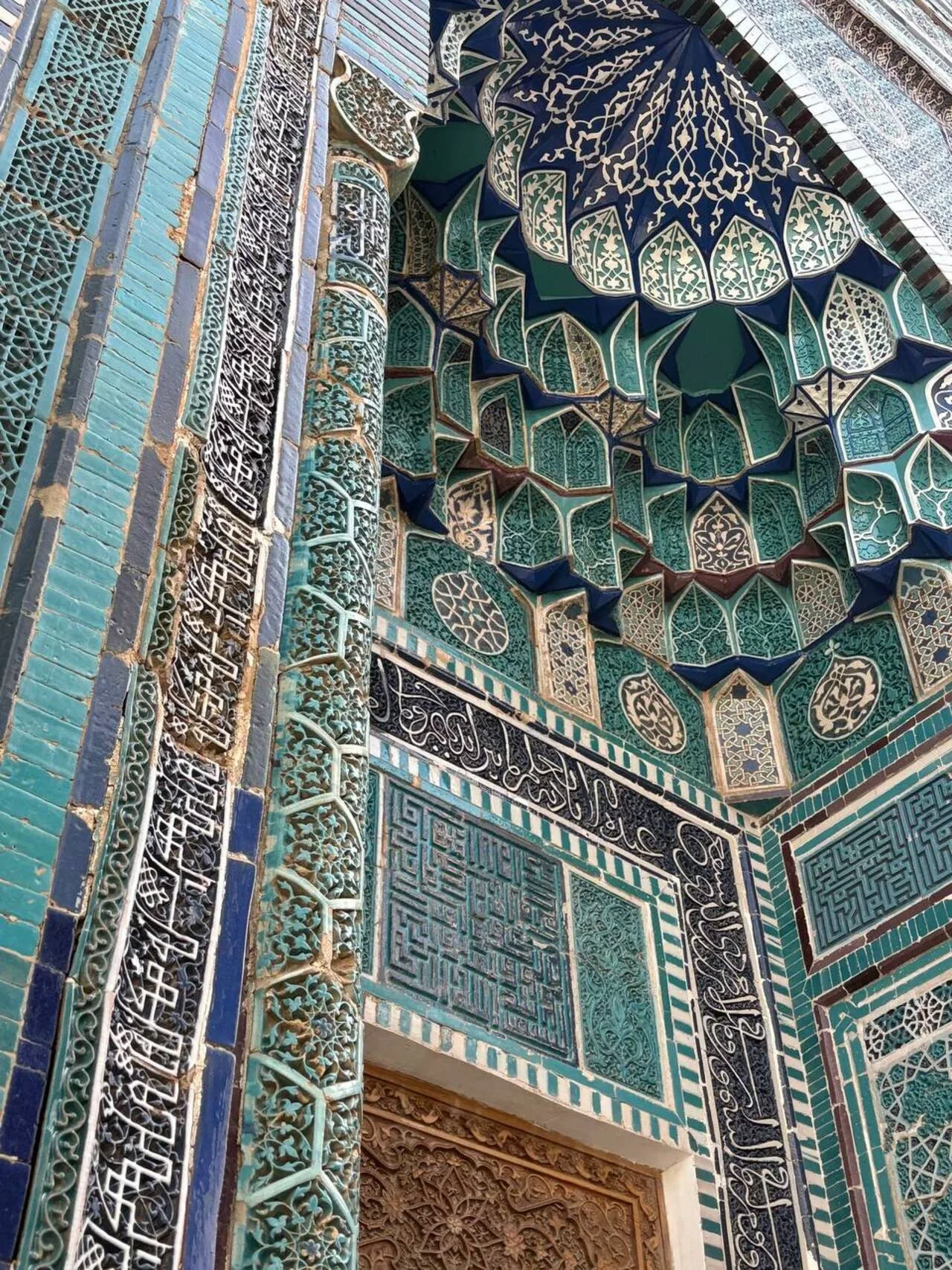
Walk through the Shah-i-Zinda necropolis today, and you'll see tiles using techniques that traveled from Persia, China, and Central Asia all blending into something uniquely Uzbek. That's the Silk Road in physical form.
Bukhara: The Holy City of Commerce
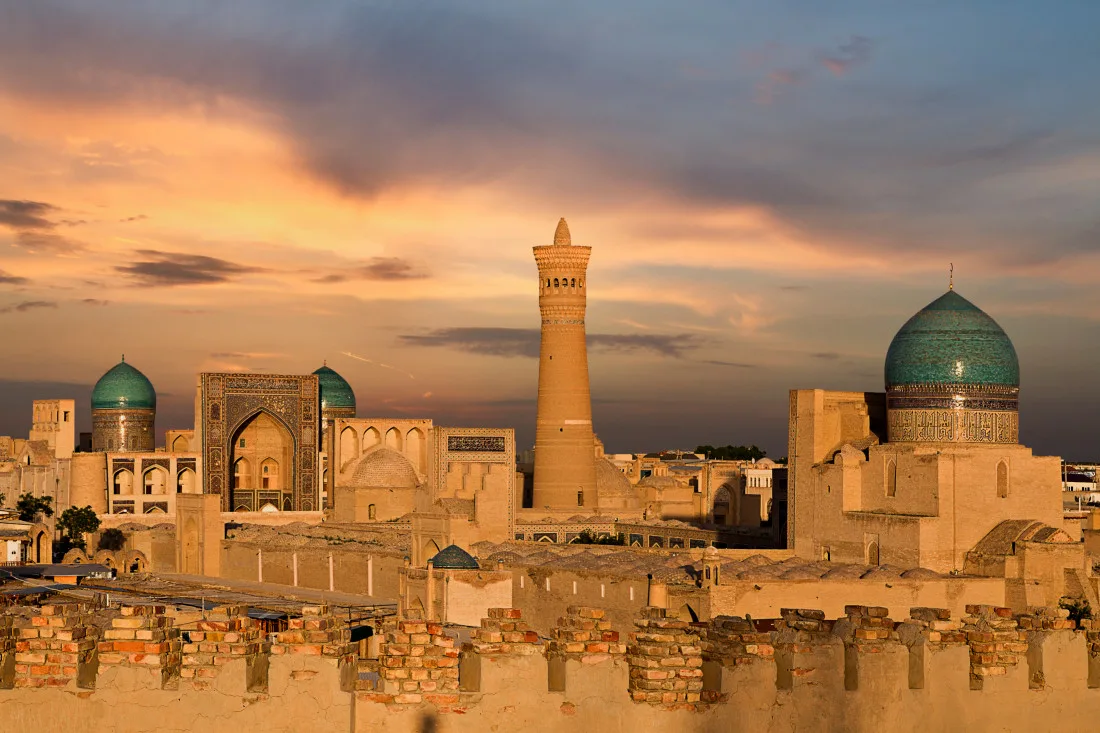
Bukhara's old town is so intact that you can still feel the ancient trading rhythms. The covered bazaars—the Toki-Zargaron (jewelers), Toki-Tilpak-Furushon (hat sellers), Toki-Sarrafon (money changers)—these weren't tourist reconstructions. They're the actual 16th-century trading domes where deals were struck.
We arrange private access to caravanserais where merchants once slept. Standing in those courtyards, you understand the system: secure your camels on the ground floor, sleep upstairs, trade in the morning, move on. Bukhara had over 60 caravanserais at its peak.
Khiva: The Last Stop Before the Desert
Khiva was different. It was the final provisioning point before the brutal Karakum Desert crossing. Smaller than Samarkand or Bukhara, but equally essential. The Ichan Kala (inner fortress) is so well-preserved that UNESCO called it "an outstanding example of medieval Muslim architecture."
Standing on Khiva's city walls at sunset, looking west toward the desert, you feel what those merchants felt: excitement mixed with dread.
What Actually Traveled the Silk Road?
The Goods
Eastbound (from the West):
- Gold and silver
- Glassware from Rome and Venice
- Wool and linen
- Coral and amber
- Horses from Central Asia (Uzbekistan's famous Akhal-Teke breed)
Westbound (from the East):
- Silk (obviously)
- Porcelain and jade
- Tea and spices (cinnamon, ginger, cardamom)
- Paper and gunpowder
- Exotic fruits and nuts
The Ideas (The Real Cargo)
But here's what makes the Silk Road profound: Buddhism traveled from India to China along these routes. Islam spread eastward. Mathematics, astronomy, medicine—all flowing both directions.
The concept of zero came from India through Uzbekistan to Europe. Paper-making technology moved from China through Samarkand to the Islamic world and then Europe. The Renaissance wouldn't have happened without Silk Road knowledge transfer.
The Caravanserai System
Every 20-30 kilometers along the route, you'd find a caravanserai—a fortified inn designed to protect merchants and their goods. These weren't primitive shelters; they were sophisticated commercial infrastructure.
We take our guests to the Rabat-i Malik caravanserai outside Bukhara. Built in the 11th century, it once had 120 rooms, a mosque, baths, and even refrigerated storage using ancient ice-house technology. Standing in that ruined courtyard, you realize these weren't just rest stops—they were the medieval equivalent of international airports.
The Economic Impact on Uzbekistan
The Silk Road made Uzbekistan wealthy beyond imagination. Samarkand's rulers could afford to import the world's best craftsmen, architects, and scholars. That's why the tilework is so extraordinary—it wasn't local artisans learning by trial and error. It was Persian masters training Uzbek apprentices, Chinese ceramicists sharing techniques, creating fusion styles that didn't exist anywhere else.
The wealth also funded religious tolerance. Bukhara had mosques, synagogues, and Christian churches all operating simultaneously. Trade requires diversity—merchants from everywhere needed to feel welcome.
The Decline: What Killed the Silk Road?
The Silk Road didn't end overnight, but three factors slowly choked it:
-
Maritime routes (1400s-1500s): Portuguese and Spanish ships found ocean routes around Africa and across the Atlantic. Why risk desert bandits when you could ship goods by sea?
-
The Mongol Empire's collapse (1368): The Pax Mongolica had guaranteed safe passage across Asia. When the empire fractured, banditry returned.
-
The Ottoman Empire (1453): When Constantinople fell, the Ottomans controlled the western termini and jacked up prices, making the routes less profitable.
By 1600, the Silk Road was dead. Uzbekistan's cities declined into regional importance. They wouldn't resurge until Soviet industrial development (a very different story).
Walking the Silk Road Today
What sets CRAFTNCULTURE apart is that we don't just show you the monuments—we help you understand the trade routes as living systems. Our Silk Road tour takes you to:
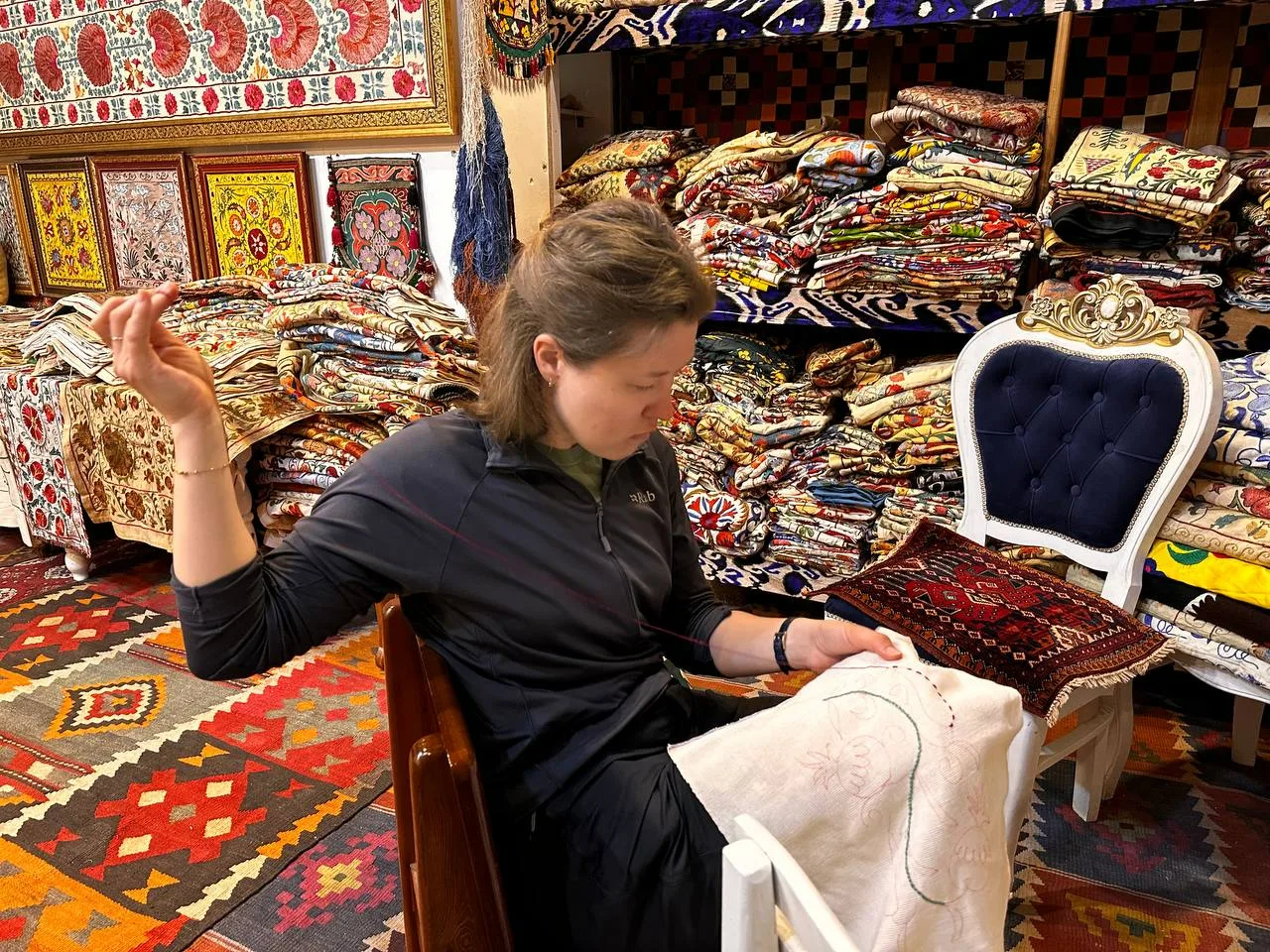
- Active trading domes in Bukhara where craftsmen still work
- The exact mountain passes caravans used
- Villages along ancient routes where descendants of Silk Road merchants still live
- Private meetings with historians who've spent careers studying these trade networks
We arrange access to places tour buses can't reach: private caravanserais, archaeological sites, museum storage rooms where Silk Road artifacts are kept.
Why the Silk Road Still Matters
China's modern "Belt and Road Initiative" isn't coincidentally named. They're trying to rebuild those ancient trade networks using high-speed rail and highways. Uzbekistan is once again positioning itself as the crossroads.
But more importantly, the Silk Road proves that globalization isn't new. People have always traded, traveled, and shared ideas across vast distances. The desire to connect is fundamentally human.
Standing in Samarkand's Registan, you're not looking at the past. You're looking at proof that when different cultures trade freely, everyone benefits. The architecture, the art, the food, the ideas—all hybrid products of connection.
That's the Silk Road's real legacy. Not the goods traded, but the reminder that we've always been a connected species.
Want to walk where merchants walked, sleep in caravanserais, and understand the trade routes that built civilizations? Join us on a Silk Road journey through Uzbekistan. We're not tour guides—we're the people who actually live this history.
About the author
Yusufbek Mukhiddinov
Uzbek entrepreneur and cultural tourism specialist. Originally from Uzbekistan, spent 4 years in Poland before returning to co-found CraftnCulture in 2024.