Let's be honest: tourism can be extractive. Visitors arrive, take photos, buy cheap souvenirs made in factories, and leave. The local community sees little benefit. Traditional craftspeople struggle to compete with mass production. Cultures become performances rather than living traditions.
But it doesn't have to be this way. Done thoughtfully, tourism can be one of the most powerful forces for cultural preservation. Every visitor who chooses authenticity over convenience, every purchase that goes directly to an artisan's hands, every hour spent learning rather than just looking—it matters.
Here's how to make your trip to Uzbekistan count.
How Do You Recognize Authentic Craftsmanship?
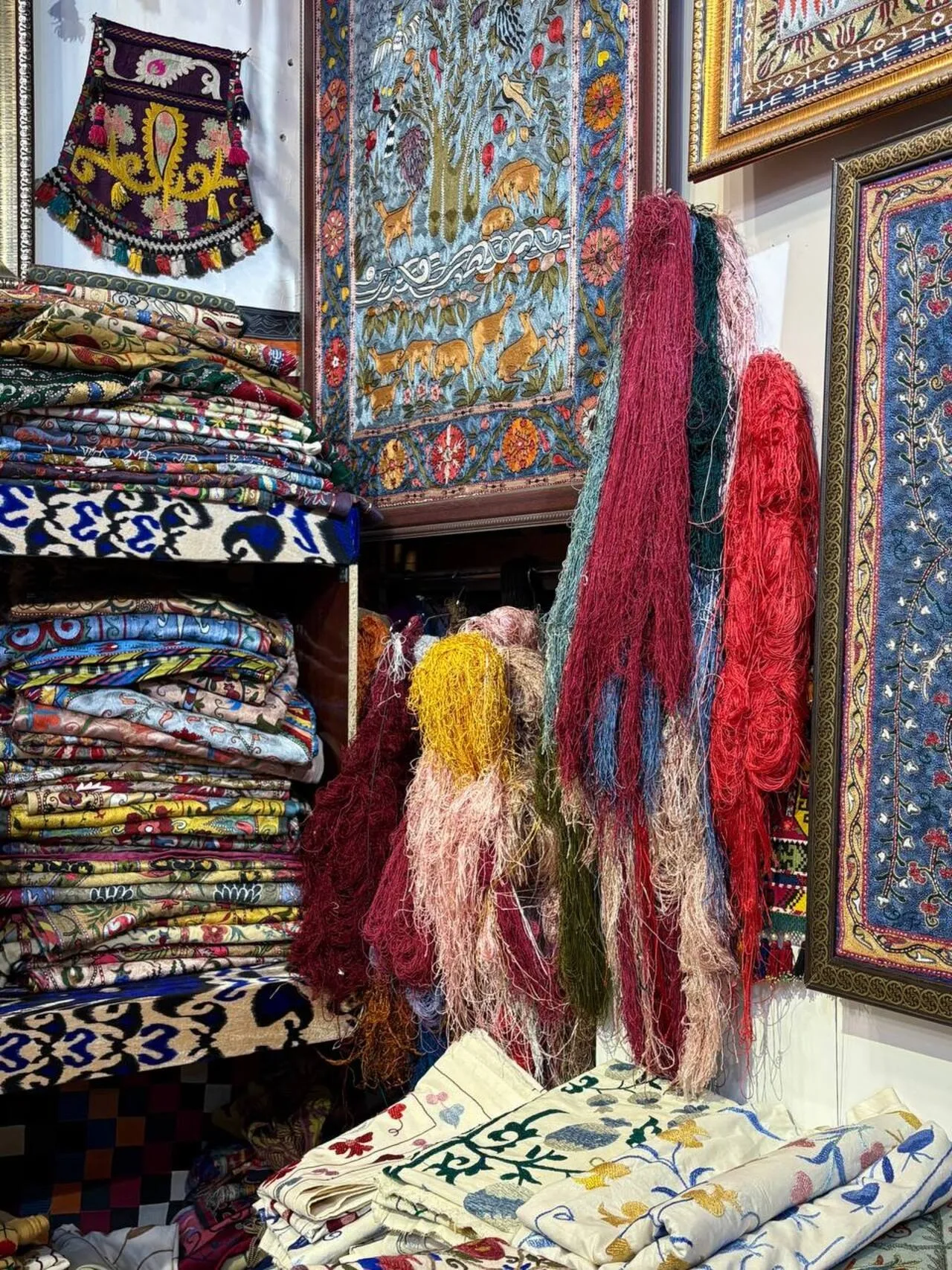
The difference between handmade and factory-made isn't always obvious. That beautiful ikat fabric might have been woven on a traditional loom by a master craftsperson—or printed in a factory using synthetic dyes.
Before you buy, ask questions:
- Who made this?
- Where was it made?
- Can I see the workshop?
Genuine artisans welcome these questions. They're proud of their work. They want you to understand what makes it special.
Red flags include vendors who can't (or won't) discuss the production process, prices that seem too low for handmade goods, and products that look suspiciously uniform.
Visit Actual Workshops
The best way to ensure your money reaches artisans is to buy where they work. In Margilan, you can walk into silk-weaving workshops unannounced. In Rishtan, potters' doors are open. In Bukhara's old town, embroiderers work in family courtyards.
These aren't always polished experiences. The workshops are working spaces, not showrooms. But that's the point—you're seeing real production, not a performance.
When you buy in a workshop, you know exactly who receives your money. There's no middleman markup. And the transaction often comes with conversation, tea, and understanding that no souvenir shop can provide.
Pay Fair Prices
Haggling is expected in bazaars, but there's a difference between negotiating and exploiting. A handmade suzani might represent months of work. A piece of Rishtan pottery carries centuries of tradition. Pushing prices to the absolute minimum doesn't get you a "deal"—it devalues the work.
Here's a useful framework: if the price still seems shockingly low for handmade goods, it probably isn't actually handmade. Genuine craftsmanship has costs—time, materials, skill. Prices that seem too good to be true usually are.
Consider what you'd pay for equivalent work elsewhere in the world. That perspective often makes Uzbek craft prices seem entirely reasonable.
Choose Tour Operators Carefully
Not all tourism companies are equal. Some run efficient operations that minimize contact with local communities—air-conditioned buses, cookie-cutter itineraries, souvenir shops that pay commissions.
Others work directly with artisans, prioritize authentic experiences, and ensure fair compensation reaches the communities they visit.
Ask operators directly: Do you work with local artisans? How do you ensure fair compensation? Can visitors meet the people who make the crafts they're seeing?
Companies that prioritize these relationships will happily discuss them. Those that don't often deflect.
Slow Down and Engage
Mass tourism moves fast. Ten cities in two weeks. Thirty minutes per monument. Just enough time to take photos before the bus leaves.
Meaningful engagement requires time. Time to watch a weaver work through a complex pattern. Time to drink tea with a potter and hear family stories. Time to notice details that rushed visitors miss.
When possible, choose depth over breadth. Spend three days in the Fergana Valley instead of racing through. Return to the same workshop twice. Let relationships develop.
Learn Before You Go
The more you understand before arriving, the more meaningful your interactions become. Read about ikat techniques. Study the symbolism in suzani embroidery. Understand why Rishtan ceramics look different from ceramics elsewhere.
This knowledge transforms you from a passive consumer into an engaged participant. Artisans notice when visitors understand their work. Conversations go deeper. Connections form.
Document and Share Responsibly
Every visitor who returns home and talks about authentic Uzbek craftsmanship expands the market for those crafts. Share what you learned. Post about the artisans you met. Recommend specific workshops and operators.
Social media, used thoughtfully, can be a force for preservation. A single viral post about a master weaver can drive meaningful traffic to their workshop.
Support Preservation Organizations
Multiple NGOs work on craft preservation in Uzbekistan. They document endangered techniques, fund training programs, and connect artisans with international markets. UNESCO's Intangible Cultural Heritage program also plays a key role in safeguarding traditions like Uzbek ikat weaving and plov-making.
Even modest donations can have significant impact. And many organizations accept support in forms beyond money—volunteer work, professional expertise, connections to international buyers.
Consider What You Buy
Not all crafts are equal from a preservation perspective. Some traditions are well-established, with healthy markets and many practitioners. Others are genuinely endangered, maintained by a handful of aging masters.
When possible, seek out the endangered crafts. A purchase from a nearly-extinct tradition does more for preservation than another item from a thriving one.
Ask guides and local contacts: What crafts here are most at risk? Who are the last masters working in disappearing techniques? Those are the purchases that matter most.
Be a Guest, Not a Consumer
Perhaps most importantly: approach Uzbekistan as a guest, not a customer. You're entering a living culture, not a theme park. The people you meet have lives beyond serving tourists. The traditions you observe carry meanings beyond their aesthetic appeal.
Show genuine interest. Ask thoughtful questions. Express gratitude. And remember that your behavior shapes how the community perceives all future visitors.
Our Commitment at Craft & Culture
At Craft & Culture, these principles aren't aspirational—they're foundational. We work directly with artisan communities. Our guides are local experts who maintain ongoing relationships with the craftspeople we visit. We ensure fair compensation reaches the people doing the work.
We believe tourism can be preservation. Every trip we run is designed to prove it.
Your Role in Cultural Preservation
The future of Uzbekistan's crafts depends partly on visitors like you. The choices you make—where to buy, who to visit, how to engage—collectively shape whether these traditions survive or fade.
It's a responsibility. But it's also an opportunity. Your trip can be more than a vacation. It can be meaningful. It can matter.
Choose that.
About the author
CraftnCulture
The CraftnCulture editorial team — Tashkent-based cultural tourism specialists covering Uzbekistan travel, artisan crafts, and Silk Road heritage.