Rasuljon's hands move with the certainty of muscle memory perfected over fifty years. In his workshop—a converted 19th-century madrassa in Margilan—he ties impossibly small knots into silk threads, creating patterns that won't be visible until the fabric is woven, dyed, and dried.
He's a 9th-generation ikat weaver. His father taught him. His grandfather taught his father. This chain stretches back centuries, to when Margilan was one of the great cities of the Silk Road.
"My son is learning," he tells me, not looking up from his work. "But many families have stopped. The young people go to Tashkent for office jobs."
What Is Ikat, and Why Does It Matter?
The word most of the world uses—"ikat"—isn't even Uzbek. Here, they call it "abrbandi," which translates to "tying clouds." And when you see the finished fabric, you understand why. The patterns seem to float, their edges soft and dreamlike, like clouds captured in silk.
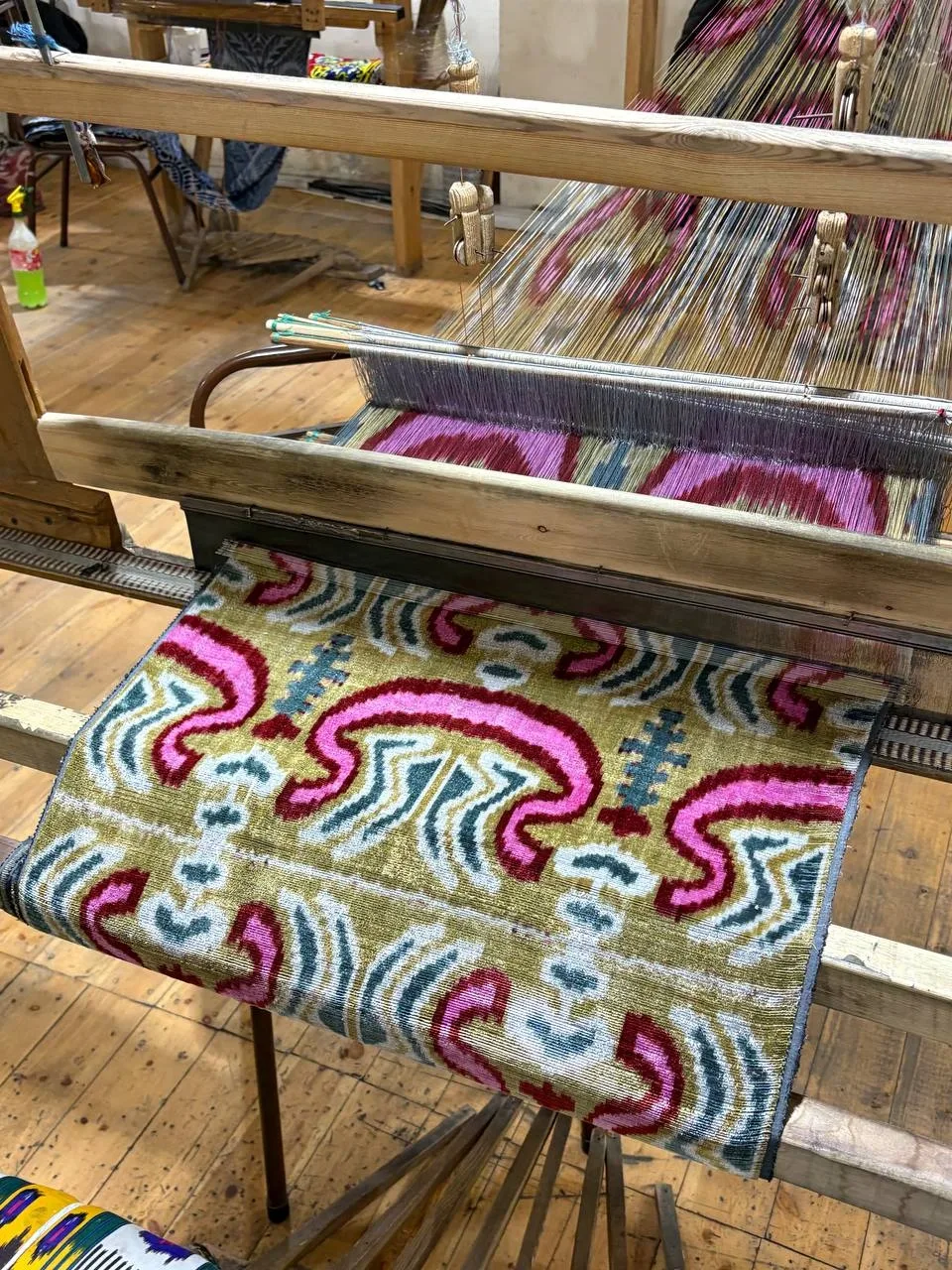
Unlike printing or embroidery, ikat's patterns come from the dyeing process itself. Sections of thread are bound tightly before dyeing, preventing color from penetrating those areas. The pattern exists in the threads before they ever touch a loom. It's a technique that demands precision, patience, and an almost supernatural ability to visualize the finished design backward.
A single length of fabric can take weeks or months to complete. There are no shortcuts.
The Soviet Shadow
In 1910, according to Uzbek textile historians, there were 1,387 silk-weaving workshops across the Fergana region. Of those, 911 were in Margilan alone.
Then came the Soviet era.
Production was centralized. Traditional designs were simplified for factory efficiency. The intimate knowledge passed between generations—the precise natural dye formulas, the regional pattern variations, the spiritual significance of certain motifs—began to erode.
By the time of independence in 1991, traditional ikat weaving had nearly vanished. Factory-made fabrics flooded the market. The young had other options. The old were dying without passing on their knowledge.
The Revival Nobody Expected
Today, there are perhaps 250 carriers of master silk-weaving traditions left in Margilan. That number sounds dire—and it is—but it represents a remarkable recovery.
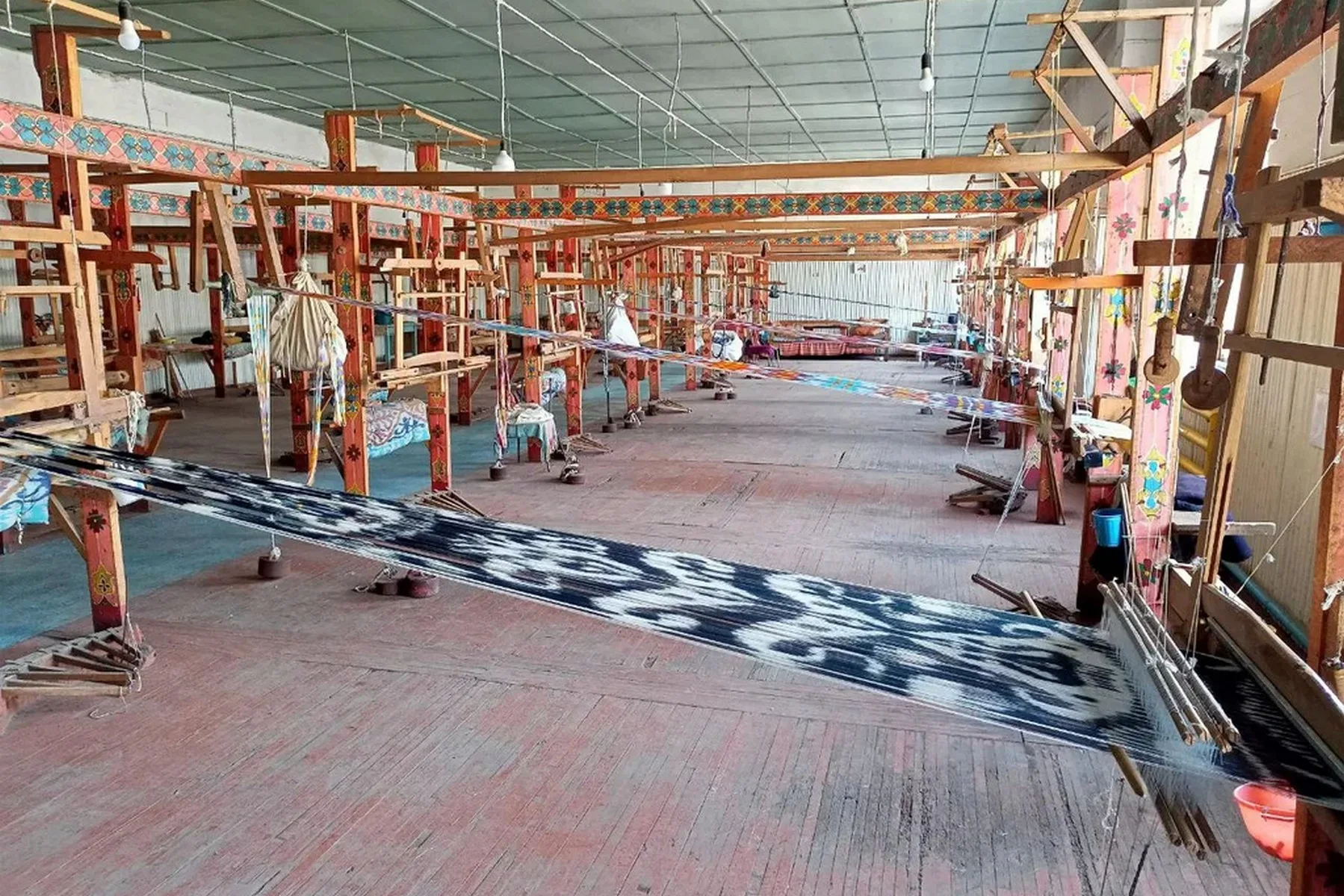
The Yodgorlik Silk Factory became a preservation effort as much as a business. "We have the whole cycle of production—from cocoon to ready fabrics—all based on preserved ancient traditions," explains one of the directors. They maintain silkworm populations, grow mulberry trees, and employ weavers who work on traditional wooden looms.
At smaller workshops like Marikat, cooperatives of independent artists work together—ikat weavers, natural dyers, block printers—sharing space and supporting each other's survival. UNESCO has recognized these traditions on its Intangible Cultural Heritage list, affirming the global significance of what Margilan's masters preserve.
Why Fashion Saved Them (Sort Of)
In an unexpected twist, international fashion discovered Uzbek ikat. Giorgio Armani, Gucci, Oscar de la Renta—major houses began incorporating traditional Uzbek fabrics into their collections.
Suddenly, there was demand. Prices rose. Young people noticed.
But this comes with its own dangers. Mass production pressure. Design copying. The temptation to cut corners, to use synthetic dyes that don't require months of plant preparation, to simplify patterns that take too long.
What You Can Do
When you visit Margilan—and you should—you can walk into workshops where real work happens. Not demonstrations for tourists, but actual production. You can watch a master like Rasuljon tie his cloud patterns, observe women at wooden looms, see the massive vats of natural indigo.
And you can buy directly from artisans, ensuring your money supports the families keeping this tradition alive.
At Craft & Culture, we believe tourism can be preservation. Every visitor who chooses an authentic workshop over a factory tour, every purchase that goes directly to artisan hands, every hour spent learning about this craft—it matters.
"The craft will survive," Rasuljon says finally, tying another microscopic knot. "But only if people care enough to come see it."
We think they will.
About the author
CraftnCulture
The CraftnCulture editorial team — Tashkent-based cultural tourism specialists covering Uzbekistan travel, artisan crafts, and Silk Road heritage.