CraftnCulture
首页旅游线路工作坊巴扎集市相册博客Book Now
首页旅游线路工作坊巴扎集市相册博客Book Now我的账户
Language:

保持联系

订阅我们的新闻通讯,获取工作坊更新、文化见解和独家优惠。

CraftnCulture

通过亲身实践的工作坊和沉浸式多日游,探索正宗的中亚工艺。在乌兹别克斯坦与工艺大师建立联系。

探索

  • 工作坊
  • 乌兹别克斯坦旅游线路
  • 巴扎集市
  • 相册
  • 成为合作伙伴

资源

  • 旅行博客
  • 关于我们
  • 常见问题解答
  • 订单追踪
  • 联系我们

联系我们

  • Emailinfo@craftnculture.uz
  • Phone+998 90 272 01 13
  • WhatsApp+998 90 272 01 13
  • Studio乌兹别克斯坦塔什干
© 2026 CraftnCulture 版权所有隐私政策条款与条件
Home/Blog/Travel Tips/Chorsu Bazaar Food Tour: Spices, Produce, and Local Flavors
Travel Tips

Chorsu Bazaar Food Tour: Spices, Produce, and Local Flavors

Walk Chorsu Bazaar with us, sampling Uzbek spices, fresh produce, and street food classics that make Tashkent's food tour the city's tastiest hour.

CraftnCulture EditorialJune 9, 20263 分钟阅读
Chorsu Bazaar Food Tour: Spices, Produce, and Local Flavors
本页内容▾
  1. Why Chorsu Stands Apart on the Tashkent Food Scene
  2. The Blue Dome: Where Smell Hits First
  3. Produce, Pickles, and the Seasonal Rhythm
  4. Where to Eat Without Getting Lost
  5. The Stalls Worth Slowing Down For
  6. Tips for a Better Visit
  7. References

本页内容

  1. Why Chorsu Stands Apart on the Tashkent Food Scene
  2. The Blue Dome: Where Smell Hits First
  3. Produce, Pickles, and the Seasonal Rhythm
  4. Where to Eat Without Getting Lost
  5. The Stalls Worth Slowing Down For
  6. Tips for a Better Visit
  7. References

Step into Chorsu Bazaar in Tashkent and your senses arrive before you do. The market's blue-tiled dome rises over a tangle of stalls, vendors calling out prices, and a haze of cumin and grilled lamb drifting between the aisles. A food tour of Chorsu bazaar Tashkent is the quickest way to understand the city's appetite — not as a museum piece, but as a working, shouting, sizzling part of daily life. This is where Uzbek cooks shop, where grandmothers haggle over apricots, and where any traveler curious about local street food should spend at least one slow morning.

Why Chorsu Stands Apart on the Tashkent Food Scene

Most capital-city markets feel curated. Chorsu doesn't. The bazaar has been Tashkent's main produce hub for centuries, anchoring the Old City between Khast-Imam and the metro stop that shares its name. The Soviet-era dome from the 1980s gives it its postcard look, but the trade underneath is far older — a continuation of the Silk Road exchange that once linked Tashkent with Samarkand and Bukhara. The result is a market where a $4 plate of plov sits a few meters from $400 saffron, and both feel equally at home. For a real food tour spice market experience in Central Asia, no shortlist is complete without it.

The Blue Dome: Where Smell Hits First

The Blue Dome is often the first stop on a guided food tour, and you'll notice it before you see it — the air is thick with the scent of cumin, dried fruit, nuts, and warm spices. The ground floor is home to the market's meat and dairy vendors, where wheels of local cheese, fresh cream, and cuts of meat draw a steady stream of shoppers. Head upstairs, however, and the atmosphere shifts to one of color and fragrance. Here, vendors display towering pyramids of zira (cumin), turmeric, dried barberries, sumac, saffron, black raisins, apricots, almonds, pistachios, and walnuts.

Vendors are generous with samples — expect a piece of nut brittle pressed into your hand, a taste of dried apricot, or a pinch of spice offered with pride. Prices are negotiable but relaxed, and most sellers are happy to weigh out small quantities if you want to take a taste of Uzbekistan home. Ask for zira by name; it's the soul of Uzbek plov and the aroma you'll encounter throughout the old city.

Produce, Pickles, and the Seasonal Rhythm

Outdoor aisles wrap the dome and shift with the calendar. Late spring brings mountains of strawberries from the Fergana Valley and the first cherries from Parkent. By midsummer, melons take over — sweet Mirzachul varieties stacked like cannonballs. Autumn means pomegranates, persimmons, and walnuts still in their green husks. Don't skip the pickle and preserves row: jars of pickled garlic, fermented tomatoes, and tart cherry kompot are the under-celebrated heroes of an Uzbek table. A short list of items worth buying or sampling on your walk:

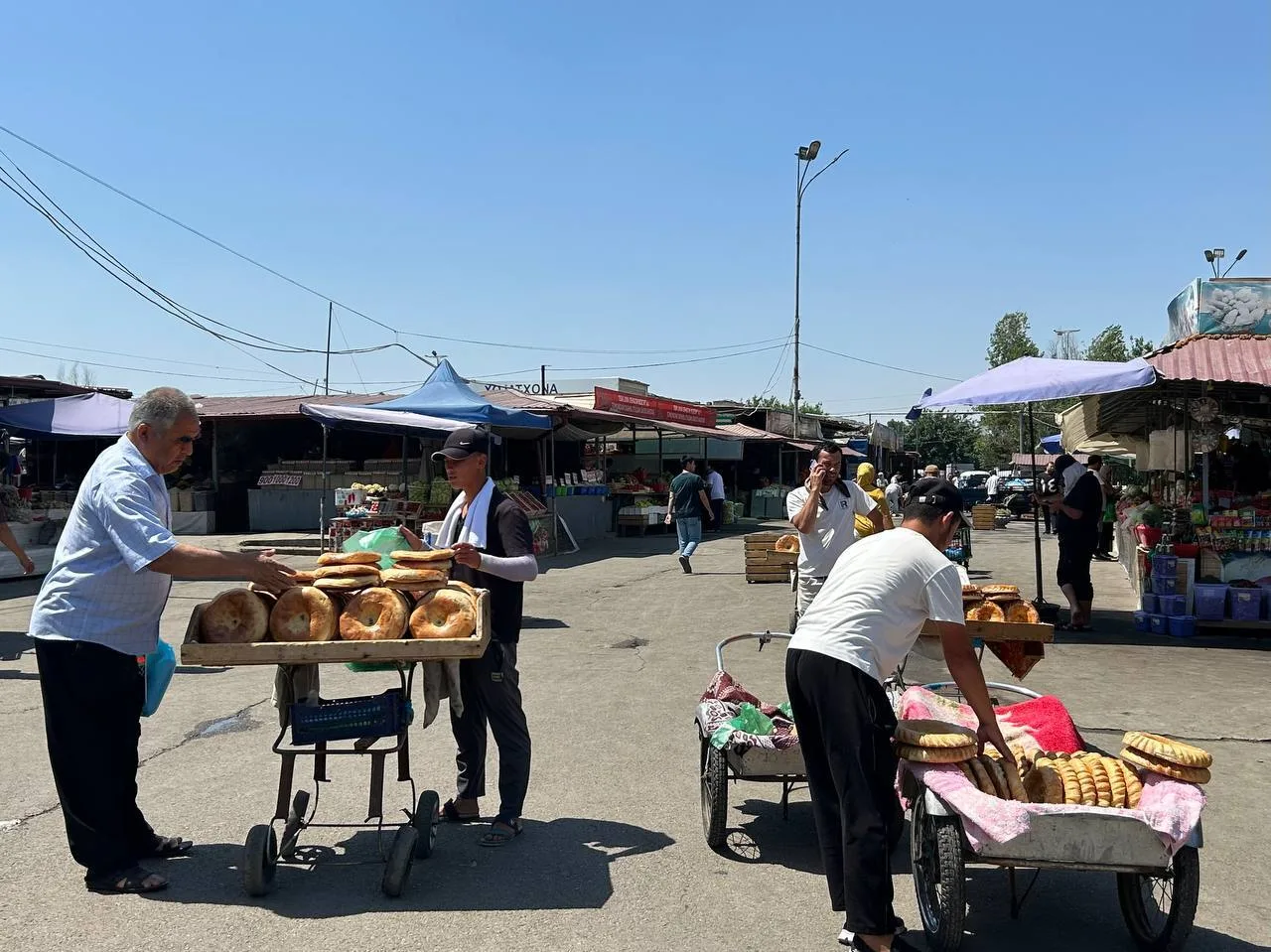
  • Non bread straight from a tandir oven, ideally within an hour of baking
  • Dried apricots and walnuts sold loose by the kilo
  • Halva in sesame, sunflower, and pistachio versions
  • Kurt — salty fermented yogurt balls, an acquired but memorable taste
  • Fresh somsa baked on the dome's outer ring, lamb or pumpkin filling

Where to Eat Without Getting Lost

The cooked-food section sits on the south side of the bazaar, a covered alley of grills and cauldrons that locals call the oshkhana row. This is where a food tour stops being shopping and turns into lunch.

The Stalls Worth Slowing Down For

Look for the plov cauldron with the longest line at 11 a.m. — that's the day's freshest batch and it sells out by 2. The lagman noodle pullers work in full view, stretching dough into long ropes before dropping it into mutton broth. Manti steamers stack their bamboo trays four high; one order is usually four dumplings, enough for a snack with green tea. For grilled food, the shashlik stalls run charcoal from dawn, and the lamb-rib version is the cut most Tashkent regulars order.

Tips for a Better Visit

Come hungry, come early, and come with small bills — most vendors don't accept cards, and breaking a 100,000 som note buys you eye-rolls. Mornings between 9 and 11 are the calmest stretch; weekends after noon get genuinely crowded. Wear closed shoes; the wet aisles of the meat and fish sections are not the place for sandals. A few words of Uzbek or Russian go a long way — rahmat (thank you) and qancha? (how much?) will earn you smiles and sometimes a small discount. If you're nervous about navigating it solo, a guided food tour spice market route with a local host turns three confusing hours into one delicious one.

Chorsu rewards travelers who treat it as a meal rather than a checklist. If you'd like to walk it with someone who knows which plov cauldron is firing best on any given Tuesday — or pair the bazaar with a hands-on workshop in suzani, ceramics, or a Tashkent home kitchen — CraftnCulture's small-group tours weave the market into a wider taste of Uzbekistan. Come for the spices, stay for the people behind them.

References

  • Lonely Planet: Chorsu Bazaar, Tashkent
  • Uzbekistan National Tourism Portal
  • BBC Travel: Uzbekistan
  • UNESCO: Silk Roads Programme
  • Caravanistan: Tashkent Guide
chorsu-bazaartashkent-fooduzbek-cuisinespice-marketfood-tour

About the author

CraftnCulture Editorial

CraftnCulture Editorial contributes to the CraftnCulture journal, covering Uzbekistan's living craft traditions and Silk Road heritage.

Tashkent: The Ultimate Chorsu Food Tour
与我们同行

Tashkent: The Ultimate Chorsu Food Tour

From $65 per person

立即预订
本地贴士

日出后一小时再到访 —— 商贩更热情,光线更柔和,人群也尚未聚集。

相关故事

Yurt Camping Uzbekistan: Nuratau Mountains Eco-Tourism Guide
Travel Tips

Yurt Camping Uzbekistan: Nuratau Mountains Eco-Tourism Guide

June 9, 2026
5 分钟阅读
Amirsoy Ski Resort: Your Guide to Winter in Uzbekistan
Travel Tips

Amirsoy Ski Resort: Your Guide to Winter in Uzbekistan

May 4, 2026
3 分钟阅读
Uzbekistan Entry Requirements 2026: Visa-Free Countries & Rules
Travel Tips

Uzbekistan Entry Requirements 2026: Visa-Free Countries & Rules

May 1, 2026
3 分钟阅读

亲身体验匠心工艺

加入我们在塔什干、撒马尔罕、布哈拉、希瓦及更多地区的精选行程与工作坊。

浏览行程

保持灵感

订阅我们的杂志,获取来自中亚的全新故事、旅行贴士与工艺师专访。

无垃圾邮件,随时可取消订阅。