В Узбекистане стук в дверь — это никогда не помеха, а честь. Принцип мехмондонлик, который часто переводят как «гость — это дар от Бога», определяет повседневную жизнь от утопающих в зелени дворов Самарканда до горных селений хребта Нуратау. Для путешественника понимание узбекских традиций гостеприимства — это разница между наблюдением за культурой и тёплым приёмом внутри неё. Это руководство объясняет традиции, с которыми вы столкнётесь за столом, у чайника и на пороге, чтобы вы могли ответить на доброту с достоинством.
Гость — это дар: дух мехмондонлик
В узбекском обществе умение тепло принять гостя ценится выше, чем богатство дома. Семьи отложат для гостя лучшую еду, лучшие подушки и всё своё внимание — даже для нежданного. Если вас пригласят в дом в Бухаре или в чайхану в Ташкенте, ожидайте, что вас усадят на самое почётное место — традиционно дальше всего от входа. Резкий отказ от гостеприимства может искренне обидеть, поэтому принимайте приглашение тепло, даже если можете задержаться лишь ненадолго.
За дастарханом: этикет за столом
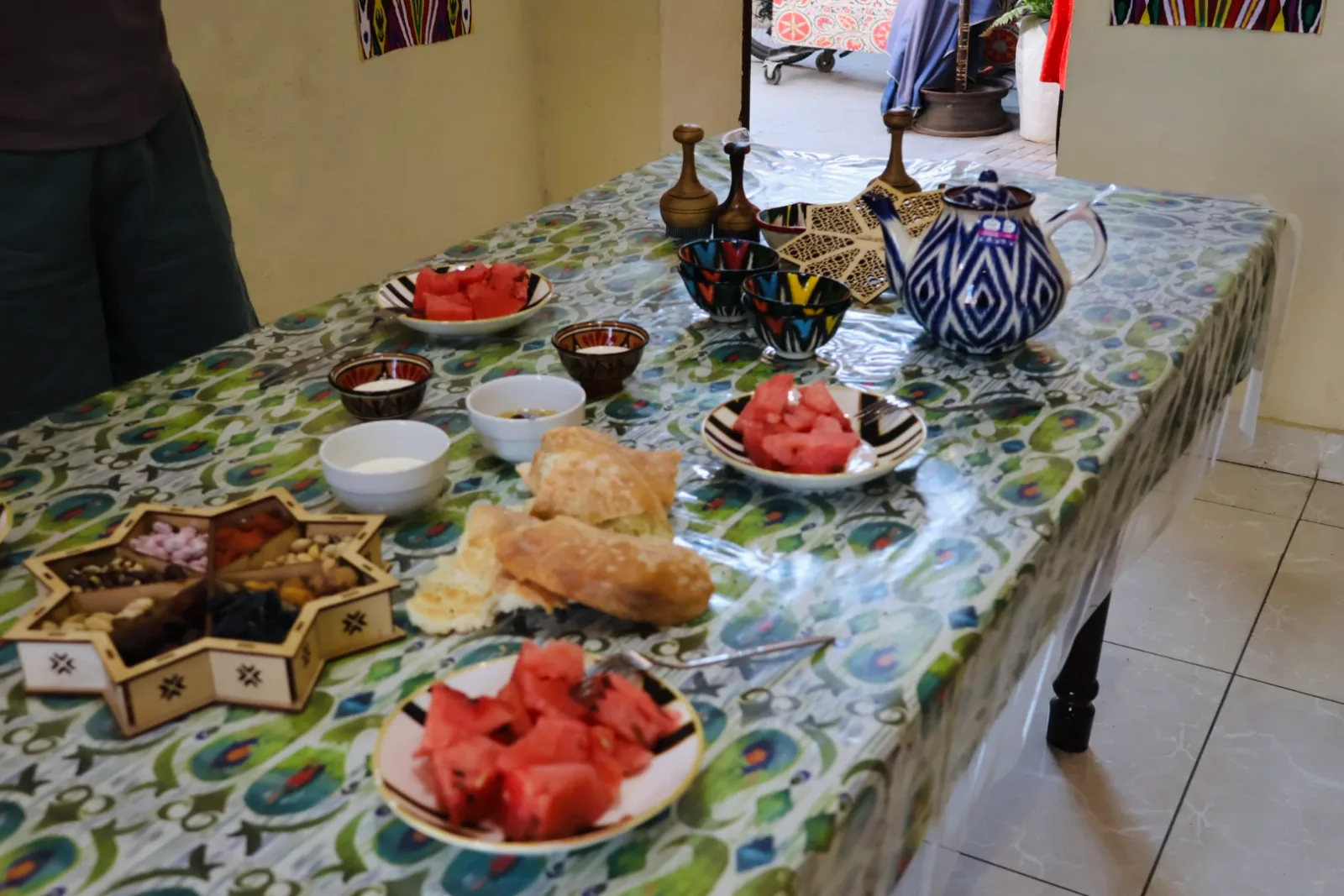
Дастархан — это и скатерть, расстеленная для трапезы, и само застолье. Прежде чем сесть, снимите обувь, затем устройтесь, скрестив ноги или подобрав их в сторону. Направлять подошвы ног в сторону других людей или еды считается невежливым. Дождитесь, пока начнёт есть самый старший, и пользуйтесь правой рукой, когда едите из общего блюда с пловом.
Несколько моментов культурного этикета, которые стоит помнить за столом:
- Ломайте хлеб (нон) руками; никогда не режьте его ножом и не кладите перевёрнутым.
- Держите ноги и жесты подальше от еды.
- Принимайте хотя бы небольшую порцию того, что предлагают, даже если вы сыты.
- Позвольте хозяину обслуживать вас, а не тянитесь через скатерть.
- Похвалите повара — теплота всегда уместна.
Священный статус хлеба
Узбекский нон, круглый хлеб с узором от чекича, несёт глубокий символический смысл. К нему относятся почти как к живому существу: его не роняют, не выбрасывают и всегда кладут лицевой стороной вверх. Во многих домах кусочек хлеба хранят у двери для благословения и защиты. Когда вы делите нон, вы участвуете в ритуале гораздо более древнем, чем любое меню ресторана.
Чайный ритуал и его скрытая логика
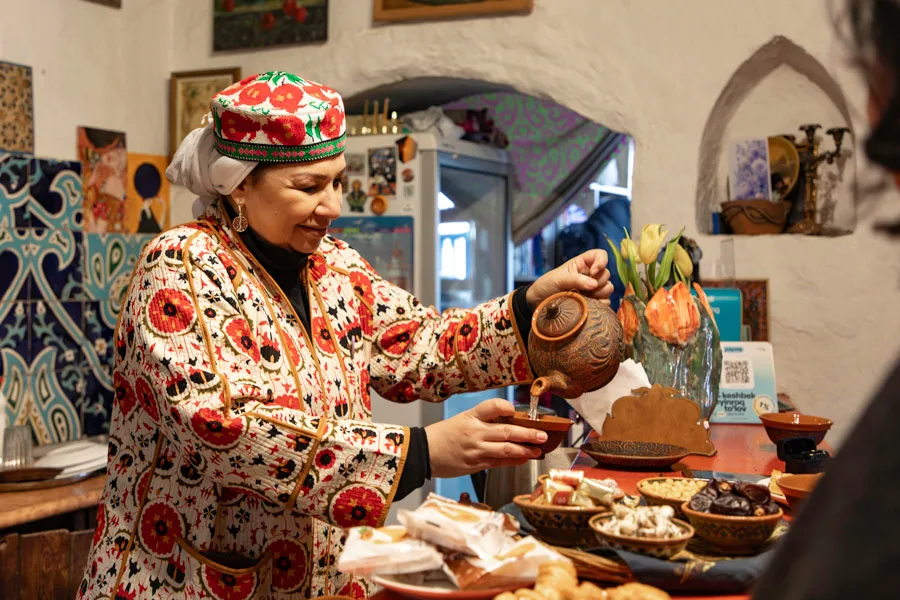
Чай, обычно зелёный кок чой, — это сердце узбекского гостеприимства. В том, как его наливают, есть своя прелестная логика: хозяин наполняет пиалу лишь наполовину, а самый почётный гость часто получает меньше всех. Это вовсе не скупость, а приглашение: чем чаще вы просите долить, тем больше у хозяина возможностей вам услужить, а служение — в этом весь смысл. Принимайте пиалу правой рукой и не удивляйтесь, что её будут доливать снова и снова на протяжении всего визита.
Плов, праздники и большие события
Никакой разговор об узбекском гостеприимстве не обходится без плова. ЮНЕСКО признаёт культуру палова частью нематериального наследия человечества, и не зря. Огромный казан плова готовят, чтобы отметить рождение, свадьбу, возвращение домой и память об ушедших близких. Если вам посчастливится получить приглашение на такой пир — возможно, рядом с самаркандским Регистаном в свадебный сезон, — вы станете свидетелем того, как сама общность выражается через еду. Принесите небольшой подарок хозяину, оденьтесь скромно и следуйте примеру окружающих.
Возьмите это с собой
Узбекские традиции гостеприимства вознаграждают внимательного путешественника. Снимайте обувь, почитайте старших, бережно относитесь к хлебу и принимайте вторую (и третью) пиалу чая. Эти традиции, объяснённые просто, сводятся к одной мысли: гость драгоценен. Подходите к каждому приглашению со смирением и теплотой — и вы обнаружите, что Узбекистан открывает свои двери шире, чем вы могли себе представить.
Если вы хотите испытать это гостеприимство на себе, маленькие групповые путешествия и ремесленные мастер-классы CraftnCulture построены именно вокруг таких моментов — разделить дастархан с гончаром из Риштана, выпить чаю с ткачом шёлка из Маргилана или научиться готовить плов во дворе семейного дома. Откройте для себя наши туры и ремесленные впечатления, чтобы вас принимали как гостя, а не просто туриста.
Источники
About the author
CraftnCulture
The CraftnCulture editorial team — Tashkent-based cultural tourism specialists covering Uzbekistan travel, artisan crafts, and Silk Road heritage.