There are cities that impress you and cities that stop you cold. Samarkand does the latter. The moment you step into Registan Square and look up at three soaring, tile-encrusted madrasas glowing blue and gold in the morning light, something shifts. It is one of the most extraordinary public spaces on earth — and it is just the opening act.
Samarkand has been doing this for 2,700 years. It was the prize of Alexander the Great, the capital of Timur's vast empire, and one of the great intellectual centres of the medieval Islamic world. Today it is Uzbekistan's most-visited city, a UNESCO World Heritage Site, and the destination that anchors nearly every Silk Road itinerary. Here is everything you need to make the most of your visit.
The Big Three: Samarkand's Must-See Monuments
The Registan
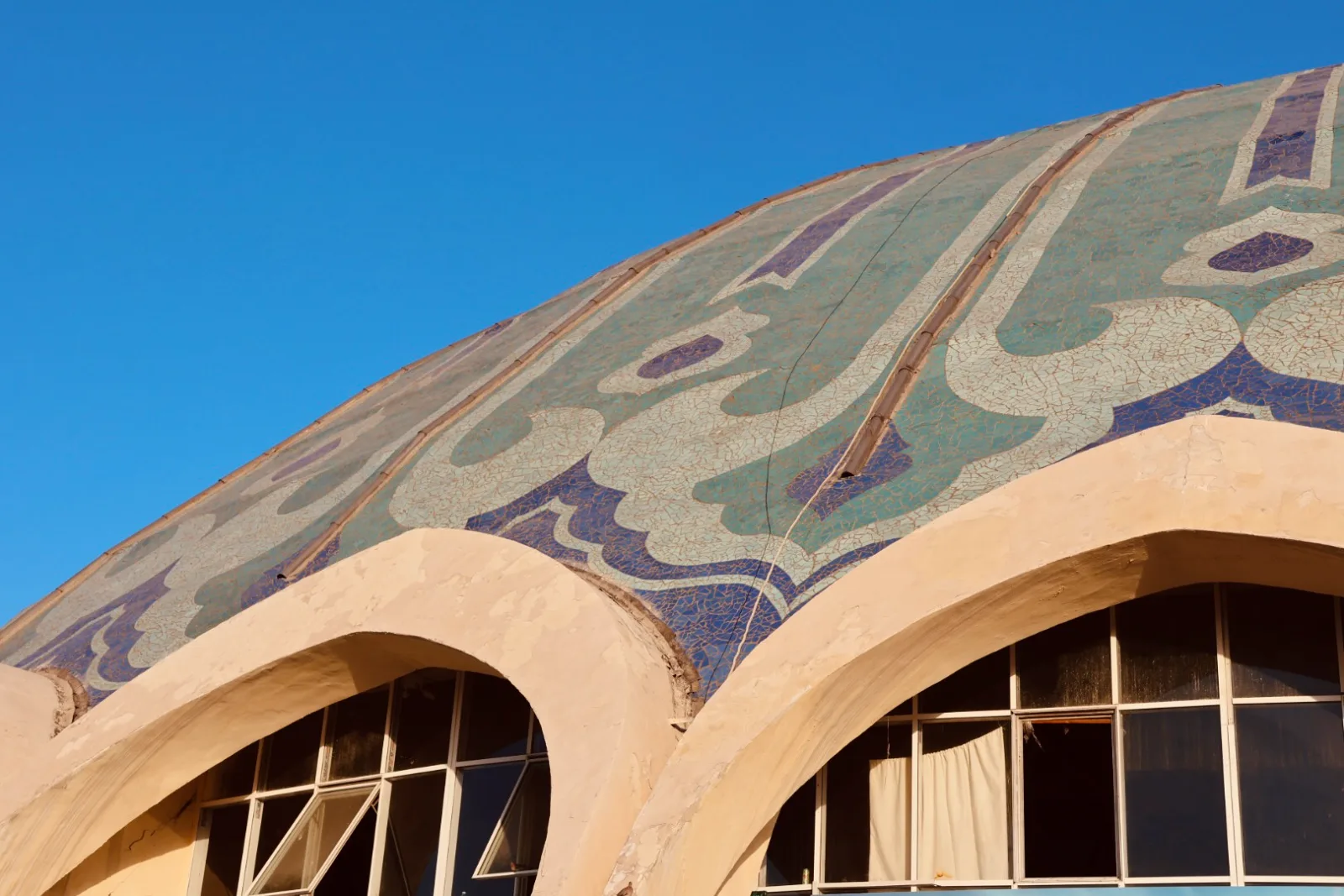
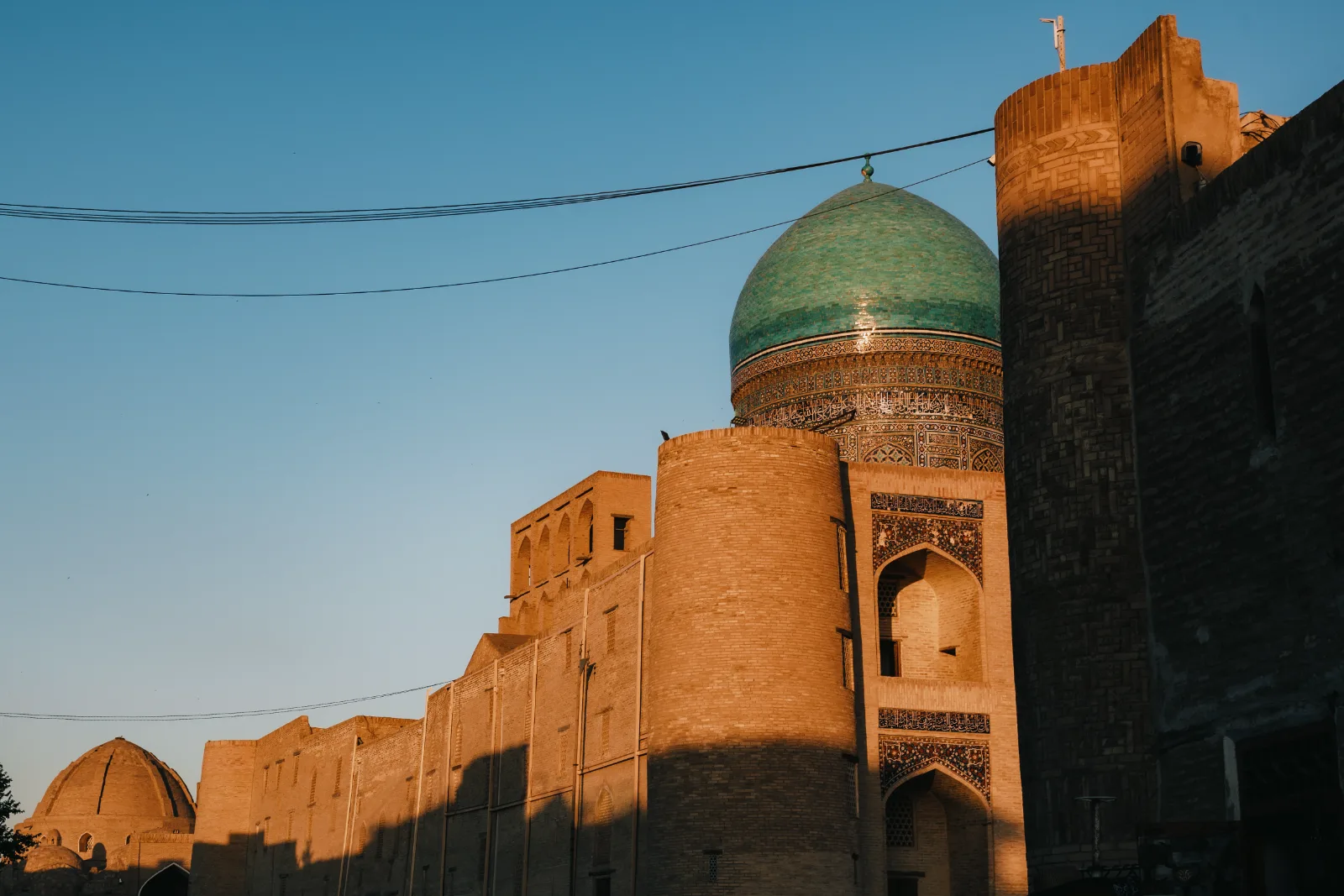
No photograph prepares you for the Registan. The square — whose name means 'sandy place' in Persian, a nod to its origins as a public market — is flanked by three monumental madrasas built across three centuries: the Ulugh Beg (1420), Sher-Dor (1636), and Tilla-Kori (1660). Each facade is covered in intricate tilework in shades of cobalt, turquoise, and gold, with soaring iwans and minarets framing each entrance.
Come at opening time (8 am) to have the square largely to yourself. Come again at dusk when the last light turns the tiles amber. The Registan is best experienced both ways.
Practical note: A combined ticket covers all three madrasas and allows you to climb inside some of them. The Tilla-Kori's gilded interior ceiling — genuinely covered in gold leaf — is a highlight that most visitors overlook.
Shah-i-Zinda
Samarkand's most atmospheric site is not its most famous. Shah-i-Zinda ('Tomb of the Living King') is a necropolis stretching along a hillside northeast of the city — a long avenue of mausoleums built for Timurid royalty between the 11th and 15th centuries. The tilework here is arguably more intricate and better-preserved than at the Registan: each tomb facade is unique, a masterclass in Timurid decorative art.
The street is still actively used as a cemetery by local families. It is a place of genuine spiritual significance, not just a tourist attraction — dress modestly and move quietly. The approach up a flight of ancient steps, with mausoleums unfolding on either side, is one of the most memorable walks in Central Asia.
Gur-e-Amir Mausoleum
Built in 1404 as the tomb of Timur (Tamerlane) himself, Gur-e-Amir is smaller than you expect and more beautiful. Its ribbed azure dome — 34 metres high, covered in geometric patterned tiles — became the architectural prototype for later Mughal mausoleums, including the Taj Mahal. Inside, Timur's actual tomb is a simple block of dark green jade, one of the largest jade slabs ever cut.
According to legend, opening Timur's tomb brings catastrophe. Soviet archaeologists opened it in June 1941. Germany invaded the USSR two days later. The tomb was resealed.
Beyond the Icons: What Most Visitors Miss
Ulugh Beg Observatory
A 15-minute taxi or bus ride north of the city centre, the remains of Timur's astronomer grandson Ulugh Beg's 15th-century observatory reward the detour. The main instrument — a colossal marble sextant built into the hillside — allowed Ulugh Beg's team to calculate the length of the year to within 58 seconds of modern measurements. A small museum explains the science; the views over the city are excellent.
Siab Bazaar
Samarkand's main market, adjacent to the Bibi-Khanym Mosque, is one of the most authentic bazaars in Uzbekistan. Unlike Tashkent's Chorsu Bazaar, it caters primarily to locals rather than tourists. The bread section alone is worth the visit: Samarkand's non flatbreads, stamped with distinctive patterns and baked in clay tandoor ovens, are famous across the country. Buy one warm from the baker.
The Afrosiyab Museum
Built on the site of Samarkand's pre-Mongol predecessor city (which Genghis Khan destroyed in 1220), the Afrosiyab Museum houses a remarkable 7th-century fresco cycle discovered in the 1960s. The paintings — depicting ambassadors from across the known world arriving at the court of the Sogdian king — are extraordinarily vivid and provide a window into the city at the height of the Silk Road era.
Practical Information
Getting There
The Afrosiyob high-speed train from Tashkent takes just over 2 hours and is the most comfortable and scenic option. Trains run multiple times daily; book through the Uzbekistan Railways website at least a week ahead in peak season. From Bukhara, the journey is under 2 hours. The train station sits about 3 km from the city centre — taxis are cheap and plentiful.
How Long to Spend
Two full days covers the main sights comfortably. Three days allows you to slow down, visit the observatory and Afrosiyab Museum, explore Siab Bazaar properly, and take a half-day workshop with a local artisan. Samarkand's craftspeople — particularly paper-makers using the ancient Sogdian technique at the Meros paper workshop — offer experiences that genuinely cannot be found elsewhere.
When Is the Best Time to Visit Samarkand?
April–May and September–October are ideal: mild temperatures (20–28°C), clear skies, and lower crowds than peak summer. July and August are hot (35–40°C) but manageable with early starts. March can be chilly but the blossom season makes it photogenic.
Where to Stay
The area around the Registan and the old city has a strong selection of boutique guesthouses in traditional courtyard houses (hovli). Staying within walking distance of the main monuments means you can visit at sunrise and sunset — the two times when the tilework is at its most luminous — without a taxi.
Tips for Getting the Most Out of Samarkand
- Visit the Registan at multiple times of day. Morning light, midday heat, golden hour, and the occasional sound-and-light show at night each reveal it differently.
- Hire a local guide for Shah-i-Zinda. The history of each mausoleum and its occupant transforms the experience from beautiful to genuinely moving.
- Try Samarkand bread before you leave. The city's non is different from Tashkent's or Bukhara's — flatter, slightly crisp, often sprinkled with sesame or nigella seeds. Buy it at Siab Bazaar.
- Walk between the Registan and Gur-e-Amir. The 10-minute route passes through the old city's backstreets, which are far more interesting than the main road.
- Book artisan workshops in advance. The Meros paper workshop and local silk-embroidery masters take small groups and fill up in spring and autumn.
Final Word
Samarkand earns every superlative it receives. It is one of those places where the reality exceeds even well-prepared expectations — where the scale, the colour, and the weight of history are simply overwhelming in the best possible way. Whether you spend two days or four, you will leave with a strong urge to return. Plan accordingly.
About the author
Yusufbek Mukhiddinov
Uzbek entrepreneur and cultural tourism specialist. Originally from Uzbekistan, spent 4 years in Poland before returning to co-found CraftnCulture in 2024.