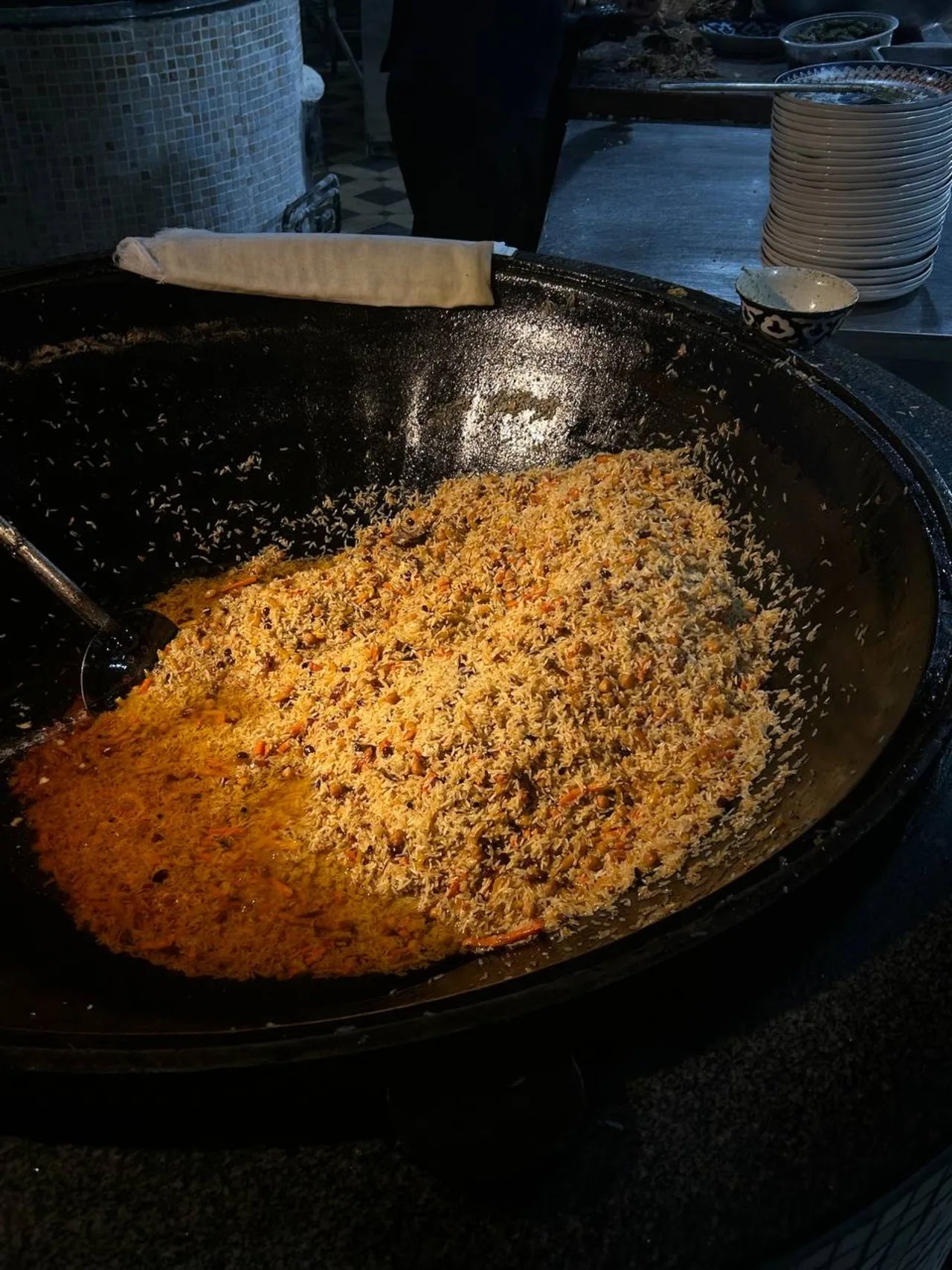
The train from Tashkent enters the Fergana Valley through a pass in the mountains, and suddenly the landscape changes. Lush. Green. Cultivated in ways that feel ancient. Mulberry trees line the roads—fed to silkworms for centuries.
This is the Fergana Valley, Uzbekistan's eastern enclave, squeezed between mountain borders with Kyrgyzstan and Tajikistan. It's the most densely populated region in Central Asia. It's been continuously cultivated for over 2,000 years.
And it's home to more living craft traditions than anywhere else on the Silk Road.
Why the Fergana Valley?
Geography matters. The valley's fertility supported dense populations. Dense populations supported specialized craftspeople. Specialized craftspeople developed distinctive traditions.
Climate matters too. This was always silk country—the mulberry trees grow easily, the silkworms thrive, the conditions for dyeing and weaving are ideal. Crafts developed here that couldn't have developed elsewhere.
And history matters. The Fergana Valley sat at the intersection of multiple Silk Road branches. Trade brought techniques, materials, and influences from China, Persia, India, and beyond. Local craftspeople absorbed and adapted these influences, creating distinctly Fergana styles.
Margilan: The Silk Capital of Central Asia
No city in Central Asia produces more traditional silk than Margilan. The town has been weaving since at least the 2nd century BC. At its peak in 1910, nearly a thousand workshops operated here.
Today, Margilan is the best place to witness the complete silk cycle. You can visit workshops that raise silkworms, others that reel the silk from cocoons, dye houses where natural colors are prepared, and weaving studios where the famous ikat patterns finally emerge.
Yodgorlik Silk Factory
The Yodgorlik Silk Factory offers comprehensive tours—not a tourist performance, but actual production. Watch women at wooden looms working patterns their grandmothers taught them. See the massive dye vats where threads are colored with indigo, pomegranate, and walnut.
The factory produces khan-atlas, the distinctive silk with its cloud-like ikat patterns. The technique is called abrbandi—literally "cloud binding"—because the tied-and-dyed threads create patterns that shift and blur like clouds moving across the sky.
Marikat Cooperative
At smaller operations like Marikat cooperative, the atmosphere is more intimate. Artisans work in what feels like a family home. The pace is slower, the conversation easier, the connections more personal.
Here you can see every step of the process: women sorting cocoons by quality, the delicate reeling of silk threads, the meticulous tying of patterns before dyeing, the final weaving on handlooms.
Rishtan: The Pottery Capital
An hour from Margilan, Rishtan holds different treasure: the most distinctive ceramics in Central Asia.
The Famous Blue Glaze
Rishtan pottery is immediately recognizable—that particular turquoise blue, the intricate geometric patterns, the way light seems to glow from within the glaze. The technique dates back over a millennium. The specific clay comes from local deposits. The distinctive ishkor glaze is made from plants that grow in these specific mountains.
The process is labor-intensive: clay is aged for months, shaped by hand or on kick-wheels, dried slowly, painted with mineral pigments, glazed with ishkor, and fired in traditional kilns. A single piece might take weeks to complete.
Master Potters of Rishtan
Today, over 100 master potters work in Rishtan. The most renowned include Rustam Usmanov and Alisher Nazirov, whose work appears in museum collections worldwide.
You can visit their workshops, watch the throwing and decorating process, and buy directly. Prices are lower than Tashkent or Samarkand—and you know exactly where your purchase originated.
Kokand: The Forgotten Capital
Once, Kokand was as important as Bukhara. The Khanate of Kokand controlled vast territories in the 18th and 19th centuries. The palace complex here—114 rooms of tilework and carved wood—rivals anything in the more famous cities.
Khudayar Khan's Palace
Built in 1871-1873, the palace represents the pinnacle of Kokand's power—constructed just three years before Russian conquest ended the khanate forever. The irony is poignant: all that grandeur, built on the eve of oblivion.
The throne room's tilework is extraordinary. The harem section features intricate carved ghanch (plasterwork). The inner courtyards provide peaceful spaces to absorb the history.
Why Most Tourists Miss Kokand
Kokand rarely appears on tourist itineraries. The palace often sits empty of visitors. The attached museum has extraordinary collections nobody sees.
For craft enthusiasts, this obscurity is an advantage. Local artisans aren't performing for tourists—they're working. Prices aren't inflated. Interactions feel genuine.
Andijan and Beyond
The valley extends to Andijan, to Fergana city itself, to smaller towns few foreigners ever visit. Each has its own traditions. Each offers opportunities to see work that isn't packaged for consumption.
Traditional Knife-Making
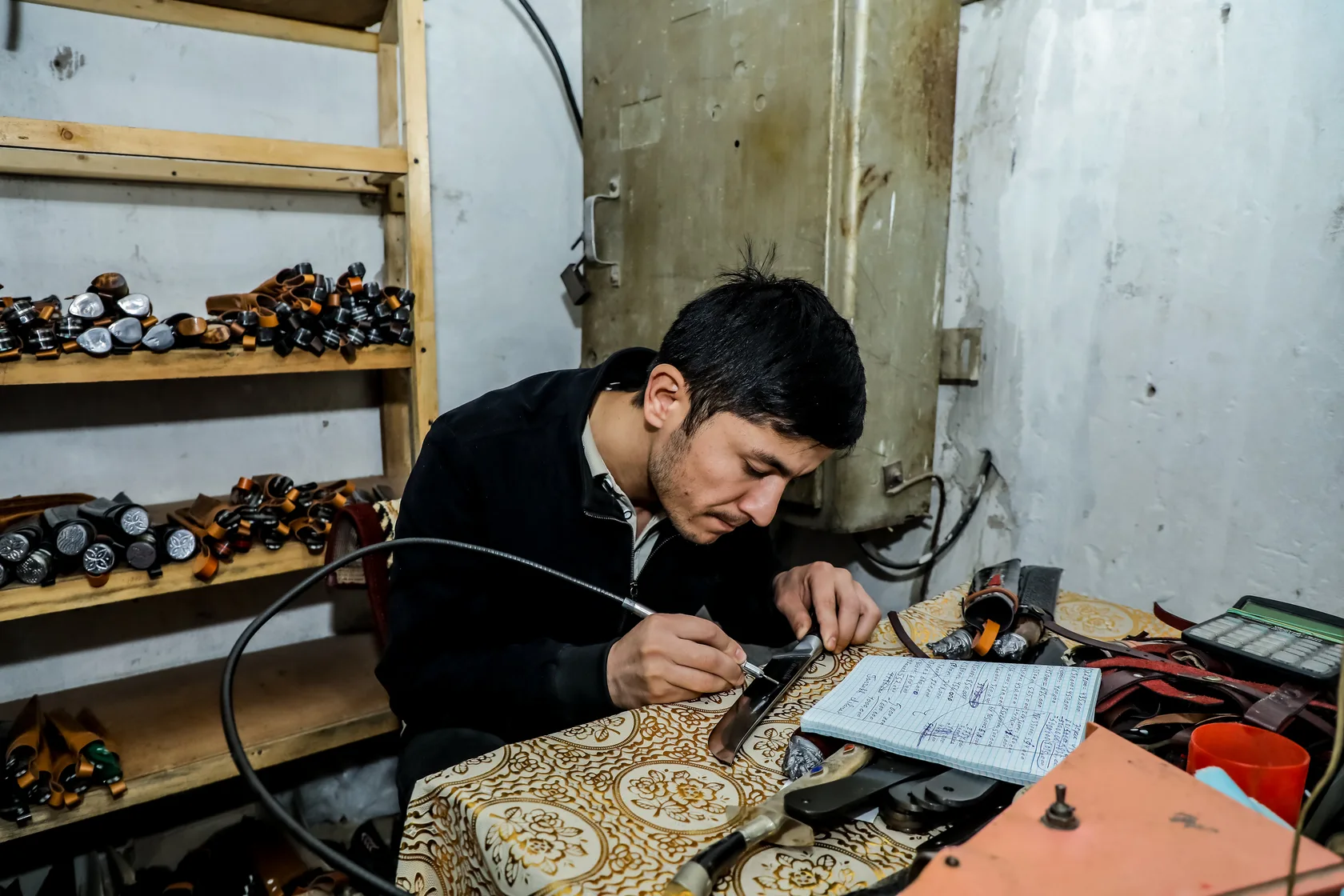
In Fergana city, knife-makers continue traditions that predate the Russian conquest. The pichok (Uzbek knife) is both a practical tool and an art form—handles carved from horn or bone, blades forged and tempered by hand.
Village Embroidery
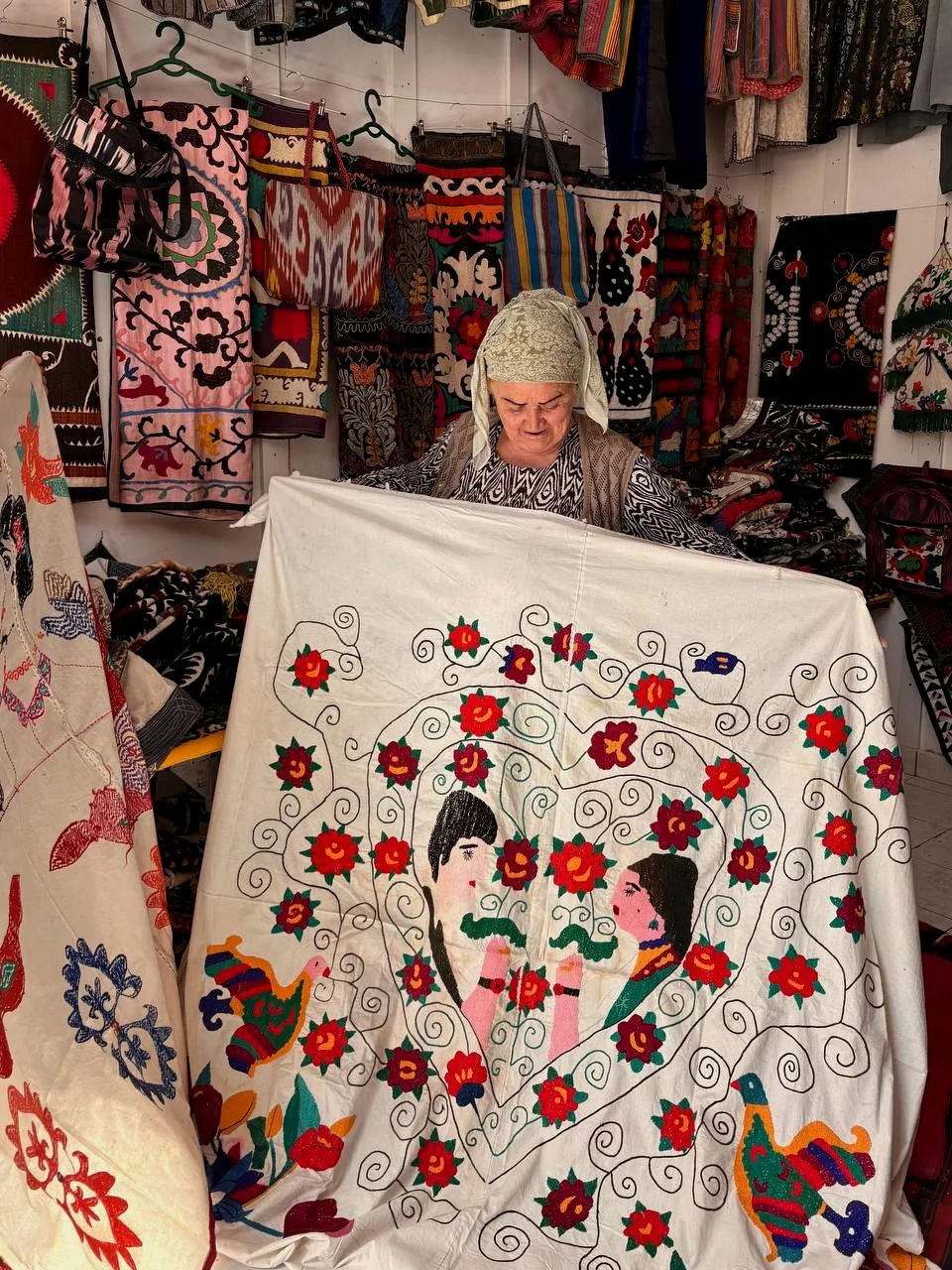
In smaller villages, families still produce traditional suzani embroidery using techniques passed down through generations. These aren't the elaborate pieces made for export—they're simpler pieces for daily use, made with techniques that few outsiders ever see.
Weekly Bazaars
At weekly bazaars throughout the region, you might find practical crafts—everyday ceramics, working textiles—that never make it to tourist markets. These are the authentic remnants of pre-industrial craft economies.
Planning Your Fergana Valley Visit
Getting There
By Train: The scenic route from Tashkent takes 4-5 hours through the mountains. Windows reveal dramatic landscapes.
By Air: Flights to Fergana city take about an hour. Less romantic, but practical if time is short.
By Car: Shared taxis run constantly from Tashkent. The journey takes 4-5 hours and costs $10-15.
Where to Stay
Margilan and Fergana city have decent hotels. Kokand has fewer options but charming B&Bs. For authentic experiences, ask about homestays in smaller villages.
How Long to Spend
A minimum of three days allows you to see Margilan, Rishtan, and Kokand without rushing. A week lets you explore smaller towns and develop relationships with craftspeople.
Why It Matters
The Fergana Valley represents something increasingly rare: living craft traditions that haven't been entirely transformed by tourism or industrialization. The artisans here still make things the way their grandparents did—not because tourists want authenticity, but because this is how they've always worked.
Every visitor who comes here, who supports these craftspeople directly, who carries stories home, helps ensure these traditions survive another generation.
That's worth the journey. For more on Uzbekistan's cultural heritage, the official tourism portal offers a comprehensive overview.
About the author
CraftnCulture
The CraftnCulture editorial team — Tashkent-based cultural tourism specialists covering Uzbekistan travel, artisan crafts, and Silk Road heritage.