Tucked between the deserts of central Uzbekistan and the foothills that climb toward the Tian Shan, the Nuratau Mountains are one of Central Asia's most quietly rewarding escapes. While most travelers chase the tiled domes of Samarkand and Bukhara, a growing number are heading north to these rolling, sun-baked ranges for something slower and more grounded. Here, yurt camping in Uzbekistan is not a staged photo opportunity but a living tradition, and the region has quietly become a model for eco-tourism in Central Asia that keeps mountain communities at the center.
Where the Nuratau Mountains Sit on the Map
The Nuratau range stretches east of the town of Nurata, roughly a four-hour drive from Samarkand. To the south lies the Kyzylkum Desert and the famous yurt camps near Lake Aydarkul; to the north, the protected slopes of the Nuratau-Kyzylkum Biosphere Reserve. This meeting of desert and mountain creates a striking landscape of walnut groves, spring-fed villages, and ridgelines dotted with grazing sheep. It is also home to the rare Severtzov's wild sheep, one reason the reserve has drawn conservation attention for decades.
Most visitors base themselves in villages such as Hayat, Sentyab, or Asraf, where family-run guesthouses have replaced anonymous hotels. The rhythm is unhurried: morning tea on a shaded platform, a walk to a hillside spring, an afternoon of bread baking with your hosts.
Yurt Camping and Mountain Retreats Done Right
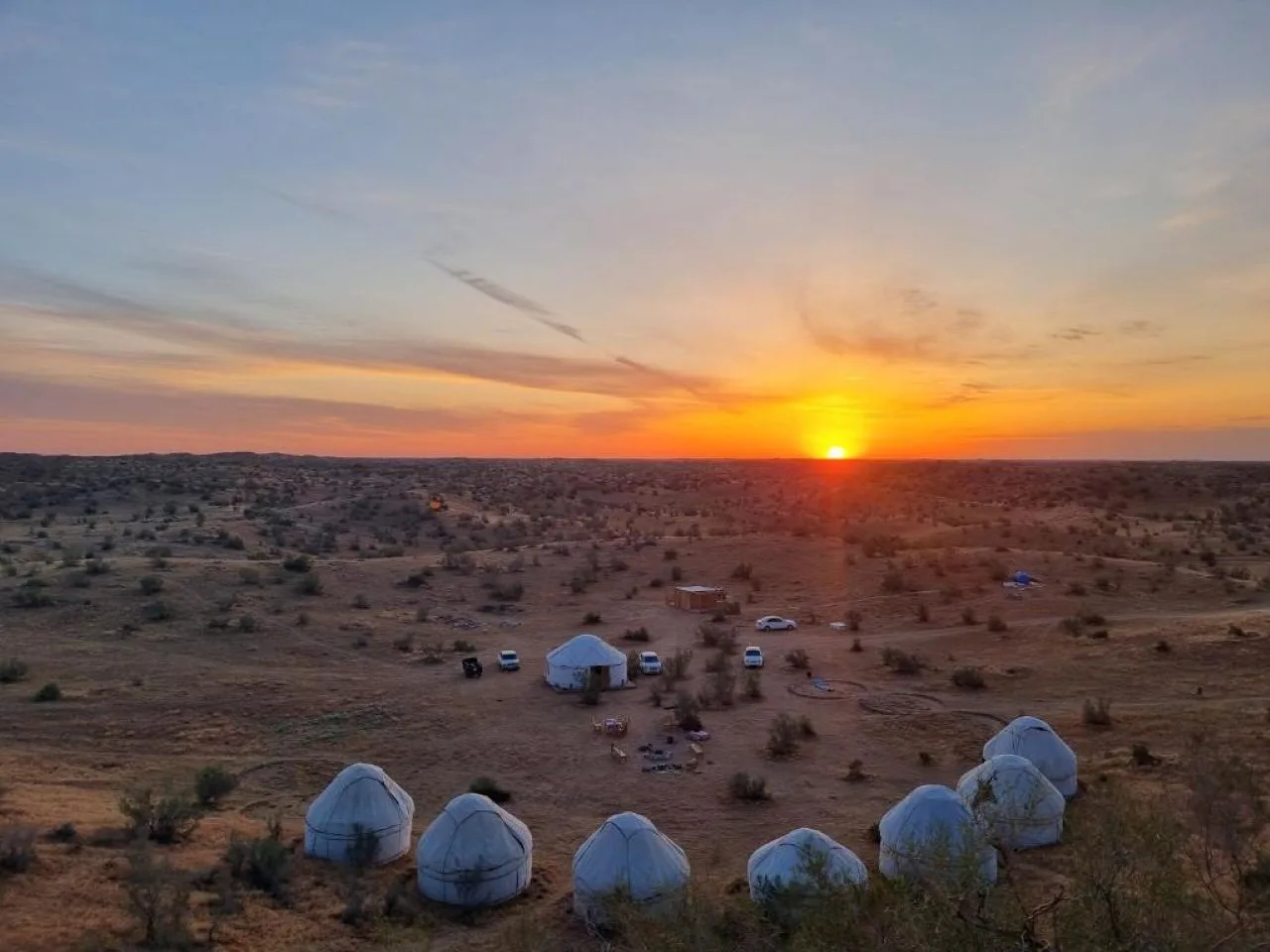
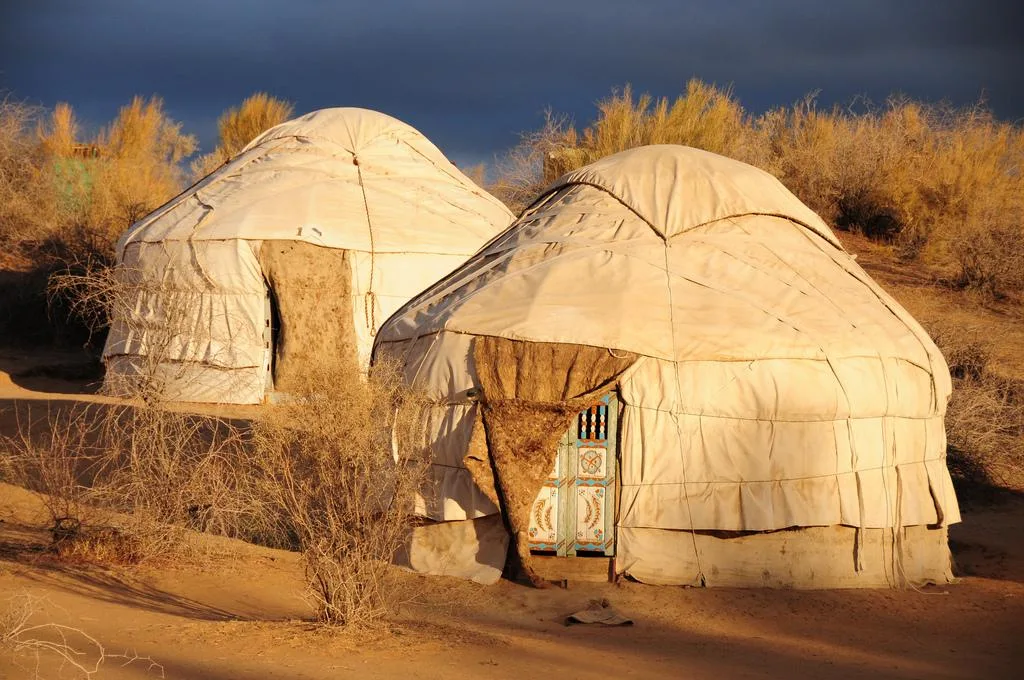
There are two distinct experiences travelers often combine. The desert yurt camps near Aydarkul offer the classic round-felt-tent stay under enormous skies, often paired with a camel ride and an evening of folk music around the fire. Up in the mountains, the emphasis shifts to homestay-style mountain retreats, where you sleep in a village home and eat what the family grows.
What makes these stays meaningful is the model behind them. Income flows directly to the households hosting you, and a community-based tourism network coordinates bookings so that no single family is overwhelmed. That structure keeps the experience authentic and the benefits firmly local.
A typical Nuratau itinerary might include:
- A night in a desert yurt beside Lake Aydarkul with open-sky stargazing
- A guided ridge hike through walnut and juniper groves
- Lunch of homemade plov and fresh tandir bread with a host family
- A visit to the Chashma spring complex in Nurata, tied to local legend
- An afternoon learning suzani embroidery or traditional felt-making
Why This Region Defines Eco-Tourism in Central Asia
Sustainable travel can be a vague marketing word, but in the Nuratau foothills it carries concrete meaning. The biosphere reserve limits development, guesthouses use local materials and seasonal food, and visitor numbers stay low enough that villages keep their character. Choosing a homestay over a resort means your money supports water projects, school supplies, and the upkeep of trails rather than distant shareholders who never set foot in the valley.
Travel Tips for a Low-Impact Visit
Pack reusable water bottles, since plastic waste is hard to manage in remote villages. Dress modestly out of respect for conservative rural hosts, learn a few words of Uzbek, and always ask before photographing people. Spring (April to May) and autumn (September to October) bring the most comfortable temperatures, while summer days can be punishing on the exposed slopes. Booking through a recognized community-tourism operator ensures your visit actually reaches the families who open their homes to you.
Pairing Nuratau With the Classic Silk Road Route
Because Nurata sits between Samarkand and Bukhara, the mountains slot neatly into a wider Uzbekistan itinerary. Many travelers spend two or three days among the yurts and villages as a restorative pause between the architectural overload of the Registan and the labyrinthine old lanes of Bukhara. The contrast is the point: from the grandeur of imperial monuments to the simple generosity of a mountain kitchen, all within a few hours' drive of one another.
If the idea of swapping a hotel lobby for a starlit yurt and a shared pot of plov appeals to you, the Nuratau Mountains reward the detour. At CraftnCulture we love connecting curious travelers with the community hosts and artisans who make experiences like this possible, so you can explore the region's eco-tourism and living crafts in a way that gives back as much as it gives you.
References
About the author
CraftnCulture
The CraftnCulture editorial team — Tashkent-based cultural tourism specialists covering Uzbekistan travel, artisan crafts, and Silk Road heritage.