Plov is not one dish — it is dozens. Every valley, every city, every family guards its own ratio of fat to rice, its own sequence of onion and carrot, its own method of burying whole garlic heads in the grain. If you have already explored why plov takes four hours to perfect or attended a cooking class in Tashkent, you know the ritual. What you may not know is how dramatically the dish changes the moment you cross a regional border.
Why Uzbek Plov Varies by Region
Uzbekistan's geography explains much of the variation. The Fergana Valley, enclosed by mountains, developed a meat-heavy, fat-rich style suited to hard agricultural labour. Samarkand, a city built on ceremony, evolved a more refined, layered plov reserved for weddings. Bukhara and Khorezm, shaped by distinct trade histories, brought their own spice philosophies to the kazan.
Then there is the rice. Uzbek cooks are deeply opinionated about grain. Devzira from the Fergana Valley is the prestige choice — pink-husked, dense, and absorbent — while lazur and chungara appear in other regions. The rice alone signals where a cook learned their craft.
Fergana Valley Plov: The Original
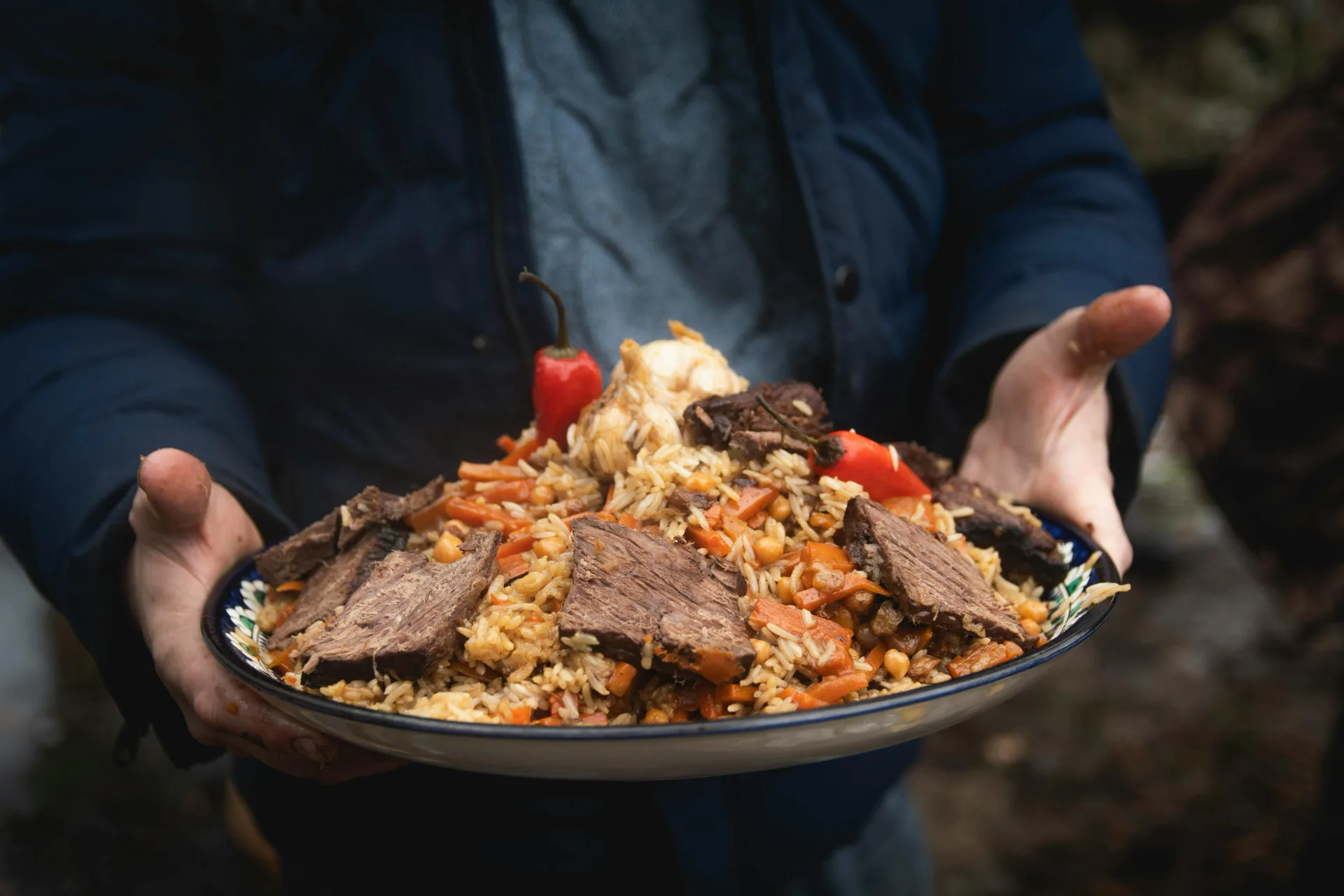
The Fergana Valley is widely considered the spiritual home of plov. The local version — sometimes called andijonskoye plov — is characterised by:
- Lamb (shoulder or ribs) cut in large, bone-in pieces
- Yellow carrots, not orange, for a sweeter, less astringent base
- Devzira rice, soaked overnight before cooking
- Cottonseed oil or rendered lamb fat, used generously
- Whole heads of garlic softened but intact, buried inside the rice
The zirvak (the meat-and-vegetable base) cooks slowly — up to two hours — before rice is added. The result is a deep amber, richly fatty plov that locals eat in the morning, standing at communal tables, scooping with flatbread. Most Fergana-style plov centres in Andijan and Namangan sell out before noon.
Where to Try Fergana Plov
Look for plov centres open early morning — most are packed between 8am and 11am and sell out long before lunch.
Tashkent-Style Plov: The Capital Blend
The capital has absorbed influences from across the country, producing a more moderate version. Tashkent plov uses orange carrots, a lighter hand with oil, and sometimes includes chickpeas and raisins — concessions to urban palates and wider ingredient availability.
Ceremonial Tashkent plov, cooked for to'y (wedding feasts), can feed 500 guests from a single enormous kazan. The scale changes the technique: open wood-fire heat demands constant monitoring and a designated oshpaz (plov master) who takes sole responsibility for the batch. Watching one of these outdoor preparations is itself a spectacle worth planning around.
Samarkand Plov: The Layered Version
Samarkand's version surprises first-time visitors. Unlike the mixed pilaf of Fergana, Samarkand plov is served layered — rice on top, meat and vegetables beneath. The rice steams over the zirvak rather than cooking in fat, resulting in a lighter, more delicate dish with a distinct texture.
It is traditionally accompanied by nishallo (whipped egg whites with sugar and soap root), a sweet condiment unique to this region that balances the savoury richness of the plov.
Khorezm Plov: Fruit and Spice
Far to the northwest, the ancient region of Khorezm (home to Khiva) brings dried fruits into the equation more liberally than anywhere else. Barberries, dried apricots, and occasionally plums appear in festive variations, lending a tartness that cuts through the fat.
Khorezm also produces shavlya — a plov-adjacent dish cooked with tomatoes and a looser consistency, sitting somewhere between pilaf and stew. Purists debate whether it qualifies as a true traditional pilau, but it is deeply embedded in local food culture.
Bukhara's Bahsh: The Green Plov
Bukhara offers one of the most striking departures: bahsh, a green plov made with offal, rice, and a generous bundle of fresh herbs — coriander, spring onion, and dill. It is an acquired taste, intensely herbal and rich, traditionally eaten during Navruz celebrations and male gathering feasts.
Bahsh illustrates that the word plov is less a recipe and more a framework: a method of cooking rice with fat and protein that communities have adapted for centuries based on local agriculture and ritual need.
Cooking Traditional Pilau at Home
For those attempting an Uzbek plov recipe outside Uzbekistan, the Fergana version is the most beginner-friendly and internationally documented. The key ratio is simple: equal weights of rice, meat, and carrot, with fat adjusted to taste.
A heavy Dutch oven substitutes for a kazan on a home stovetop. The smoke of an open wood fire is irreplaceable, but the technique and flavour profile translate remarkably well over medium heat.
Taste Your Way Across Uzbekistan
Regional plov is one of the country's most compelling food tourism draws. A route built around tastings — Fergana in the morning, Samarkand at a ceremonial lunch, a Bukhara bahsh at Navruz — is entirely achievable and deeply rewarding. Local culinary tours now structure itineraries specifically around this dish, pairing tastings with market visits and live cooking demonstrations.
Plov is not a meal to check off a list. It is a lens through which to understand Uzbekistan's geography, hospitality, and history — one ladle at a time.
About the author
CraftnCulture
The CraftnCulture editorial team — Tashkent-based cultural tourism specialists covering Uzbekistan travel, artisan crafts, and Silk Road heritage.