Uzbek Bread Mastery: What Tandir Baking Actually Teaches You About Tradition
The dough was sticky in a way no recipe had warned me about. Every video I'd watched beforehand showed hands moving cleanly, stamping a chekich into smooth rounds without a trace of mess. Mine stuck to my palms, my fingers, the edge of the wooden tray, and I understood within about ninety seconds that this workshop was not going to be the tidy craft-fair experience I'd half-expected.
How I Got Here
I signed up for CraftNCulture's Bake Uzbek Bread and Chorsu Bazaar Exploration in Tashkent mostly because I wanted an excuse to walk through Chorsu before it got hot. Bread wasn't the draw — I assumed I'd watch someone else do the interesting part and eat the result. That assumption lasted until the group of seven of us were handed our own dough balls and told to start rolling.
This is the kind of cultural craft tour Uzbekistan small group format that changes what you expect from a "workshop." There's no stage, no audience seating, no demonstration table set six feet back from the tourists. You're standing at the same counter as the baker, using the same chekich stamp, and if your bread comes out lopsided, everyone in the room including you can see it happen in real time.
The Craft Itself
Tandir bread — non, as it's called locally — isn't baked in an oven in the Western sense. The tandir is a clay pit, waist-high, heated from coals at the bottom until the inner walls are hot enough to blister the dough on contact. The baker showed us how she slaps the flattened round directly against the vertical clay wall, pressing it flat with a cushioned pad so it sticks there instead of sliding down into the coals. It stays stuck by adhesion alone until it's cooked enough to peel itself loose and drop, which the baker times almost entirely by smell and the sound the crust makes when she taps it.
What separates this from a generic "bread baking class" is the layering of two skills most visitors don't expect to need simultaneously: dough handling that has to survive contact with 400-degree clay, and pattern-stamping with a chekich — a spiked wooden or metal stamp — that presses a decorative ring into the center before baking so the crust doesn't puff up into one uneven dome. Get the stamping wrong and your bread balloons unevenly. Get the slap-and-stick wrong and your bread ends up in the coals instead of on the wall.
The workshop also touches something most tourist material about Uzbek bread skips: non isn't neutral. Different regions bake it differently — Samarkand's version is notably thicker and denser than Tashkent's, and there's a reason CraftNCulture also runs a separate Traditional Samarkand Bread Baking Workshop rather than treating "Uzbek bread" as one recipe. The baker in Tashkent was blunt about it: she wouldn't try to sell a Samarkand loaf as authentic to her own oven, and vice versa.
What It Actually Felt Like
My first stamp print came out crooked, dragging one edge of the chekich instead of pressing it flat. My second round split slightly at the crimped edge, which the baker caught before I did — she reached over, pinched the split closed with two fingers, and kept moving without commentary. It wasn't a lesson delivered in words. It was a correction delivered in a gesture, the kind you only notice if you're standing close enough to see it happen.
The slap against the tandir wall was the part that actually scared me a little. You're pressing dough against something dangerously hot, at an angle, fast enough that hesitation means the dough folds instead of flattening. My hand was maybe four inches from the coals for each attempt. Nobody made a show of the danger — it's just how the oven works — but it recalibrated what I thought "hands-on" meant in a two-hour tourist activity.
There's a repetitive, almost meditative quality to the stamping once you've done it four or five times — press, rotate the chekich a quarter turn, press again, checking that the spikes have gone all the way through the dough rather than skating across the top. It's not hard in the way a physically demanding task is hard. It's hard in the way that anything requiring exact, repeated pressure is hard: your hand knows the motion is wrong before your eyes confirm it, and by the time you've corrected twice, the third loaf finally comes out right — evenly stamped, the crimped edge holding, the color even across the top once it's pulled from the wall.
Why the Small Group Mattered
With seven of us at one tandir, the baker corrected almost every loaf individually before it went in. In a larger group — the kind you'd get on a bus-tour add-on — that's not physically possible; the oven only holds so many rounds at once, and someone has to be watching each one closely enough to catch the moment it's ready to peel off the wall. With eight or more participants stamping simultaneously, most loaves would go in uncorrected and come out however they came out. Ours didn't, because there was time to catch the split edge, the crooked stamp, the underworked dough before it ever touched the coals.
What You Leave With
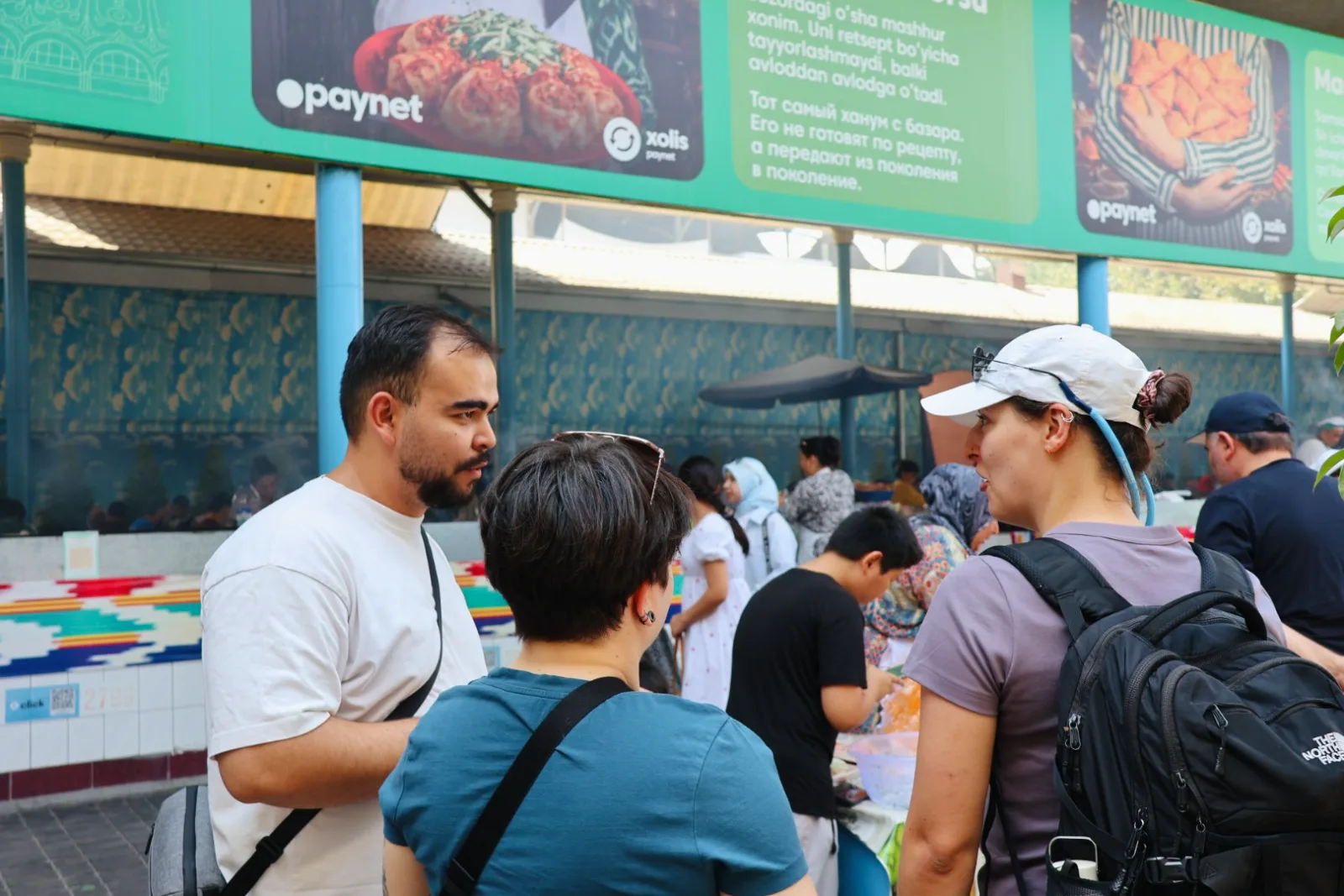
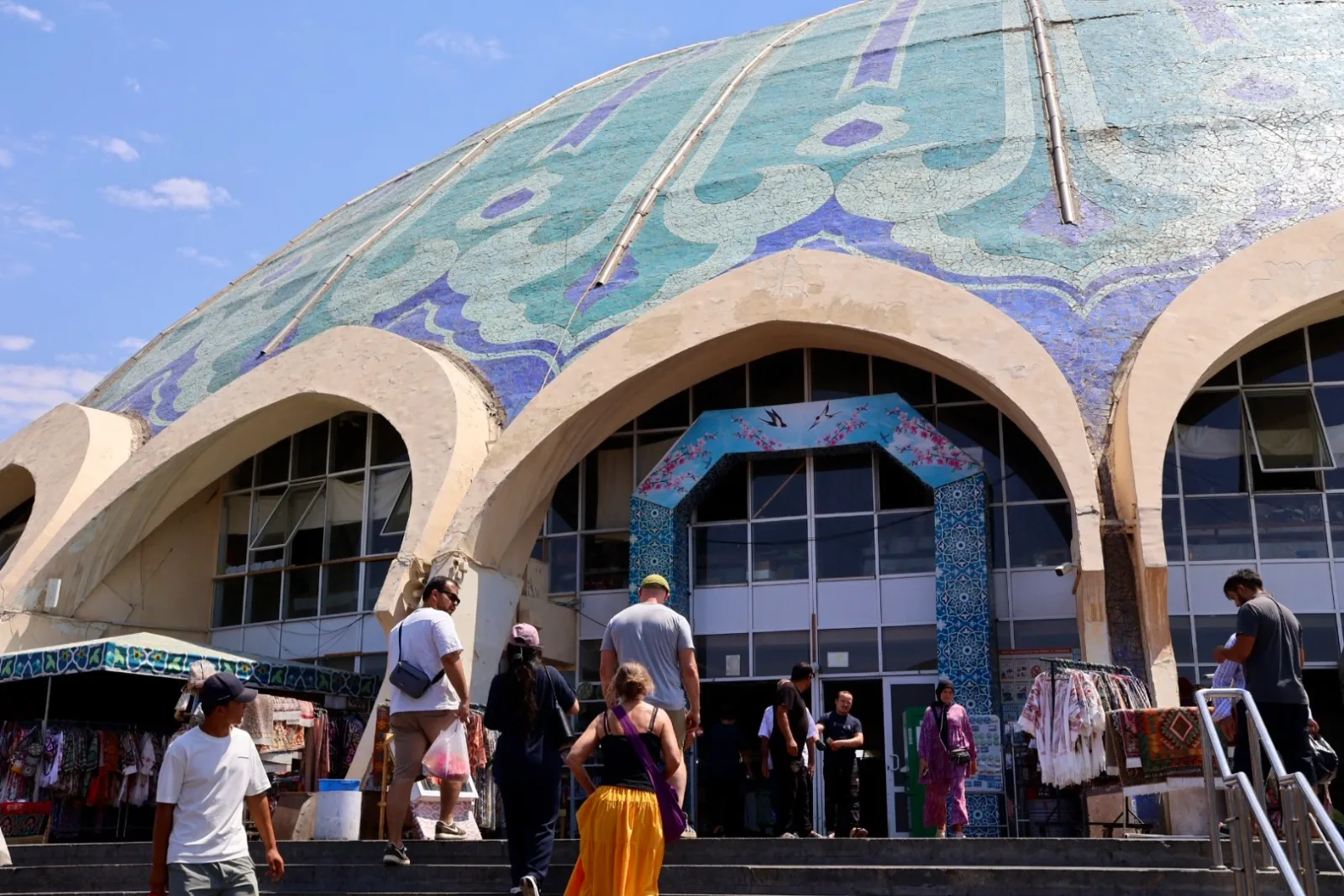
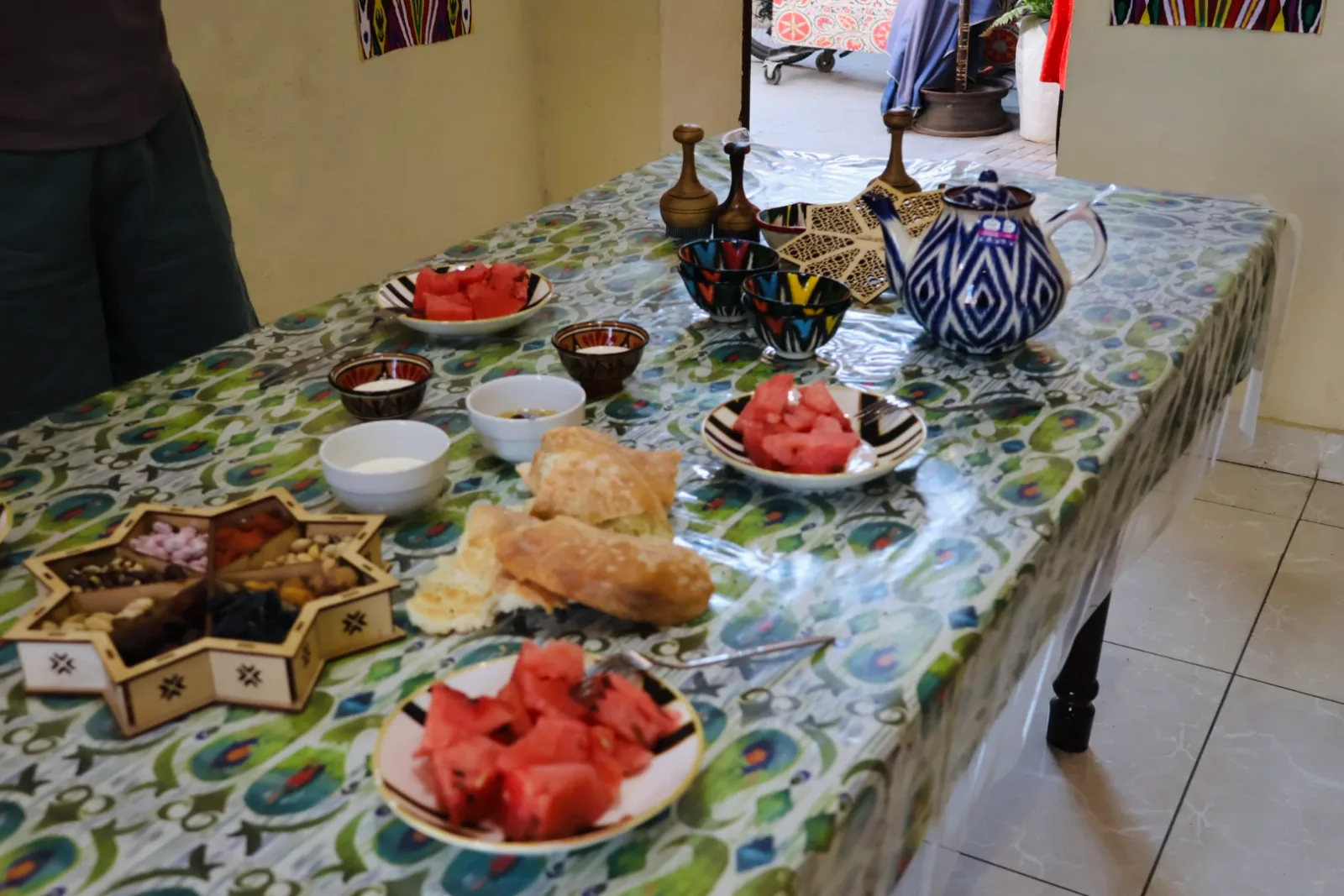
You leave with actual bread — warm, unevenly stamped in places, genuinely edible, and noticeably different from the loaf the person next to you produced, because nobody's hands press with the same pressure twice. You also leave with a specific, minor callus point on your palm from the pad used to slap dough against clay, and it's still there two days later, which is a strange, small souvenir compared to a photo. The Chorsu Bazaar walk afterward — past sacks of dried apricots, mountains of spices, and vendors selling their own version of non stacked in towers — reframes the bread you just made: you can suddenly tell, by sight, which loaves were stamped carefully and which ones were rushed.
CraftNCulture runs the Bake Uzbek Bread and Chorsu Bazaar Exploration in Tashkent (2 hours, small groups) and a separate Traditional Samarkand Bread Baking Workshop for travelers who want to compare the regional technique directly. Both keep group sizes small enough that the baker corrects your loaf before it goes into the tandir — not after you've already eaten a mistake.
CraftNCulture: Bake Uzbek Bread and Chorsu Bazaar Exploration — Tashkent, 2 hours, small groups, $60.
About the author
CraftnCulture
The CraftnCulture editorial team — Tashkent-based cultural tourism specialists covering Uzbekistan travel, artisan crafts, and Silk Road heritage.