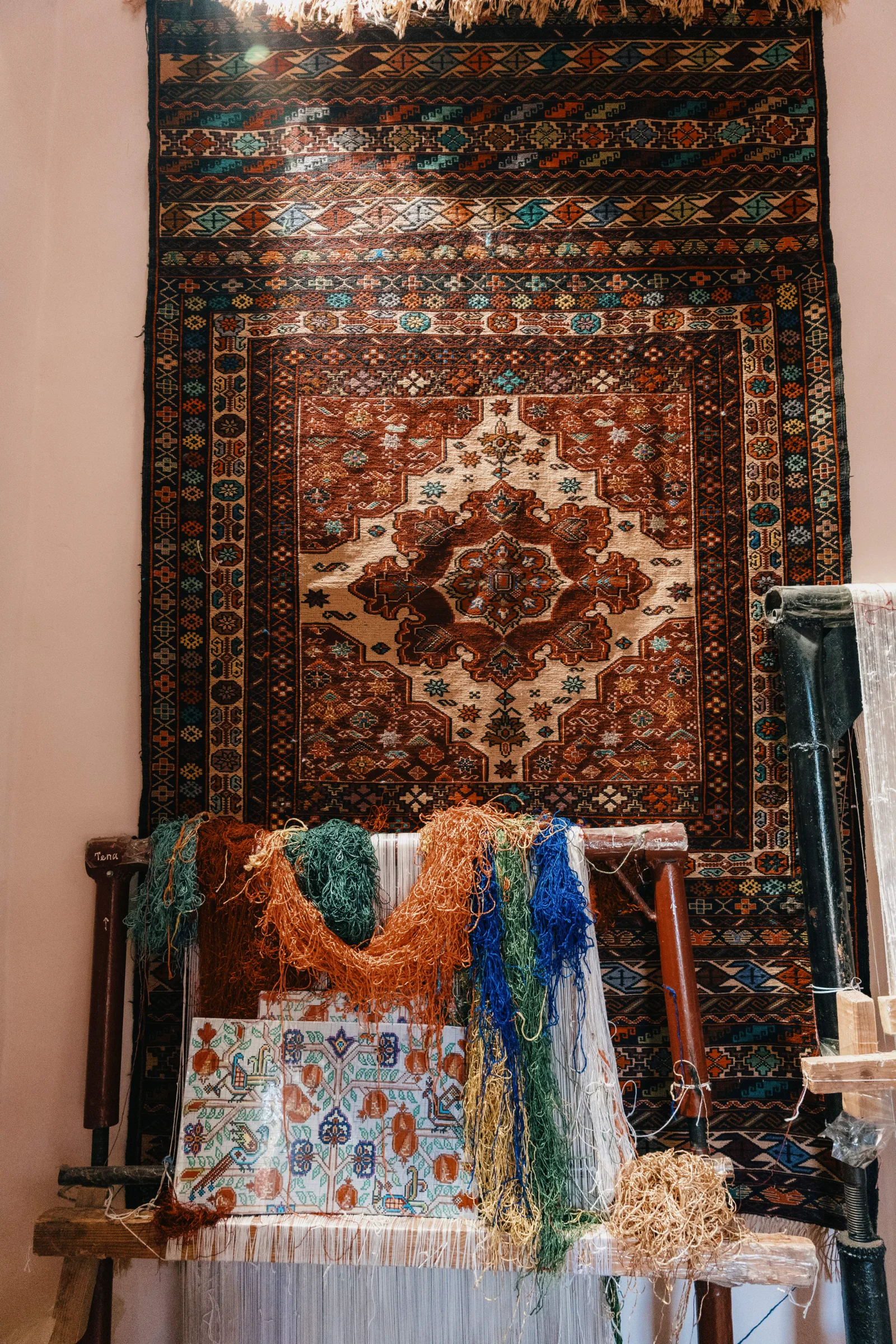
The loom was strung tighter than I expected, warp threads pulled taut enough to hum faintly when I brushed a knuckle across them by accident. I'd assumed carpet weaving would feel soft — wool, after all, is a soft material. It isn't. The frame fights back.
How I got here
I'd booked CraftNCulture's Immersive Old City Walk & Carpet Making Workshop in Bukhara mostly out of guilt. Three days into a small-group cultural craft tour of Uzbekistan, I'd already sat through a suzani embroidery session and an afternoon of gold thread work, and both times I'd left with something delicate and pretty that I was privately embarrassed to have made — lopsided, over-tight, the kind of souvenir you photograph once and never touch again. Carpet weaving, our guide warned before we even reached the workshop door, would not be delicate. It would be repetitive, physical, and the piece we'd start would not be finished in the two hours allotted. I appreciated the warning more than I expected to.
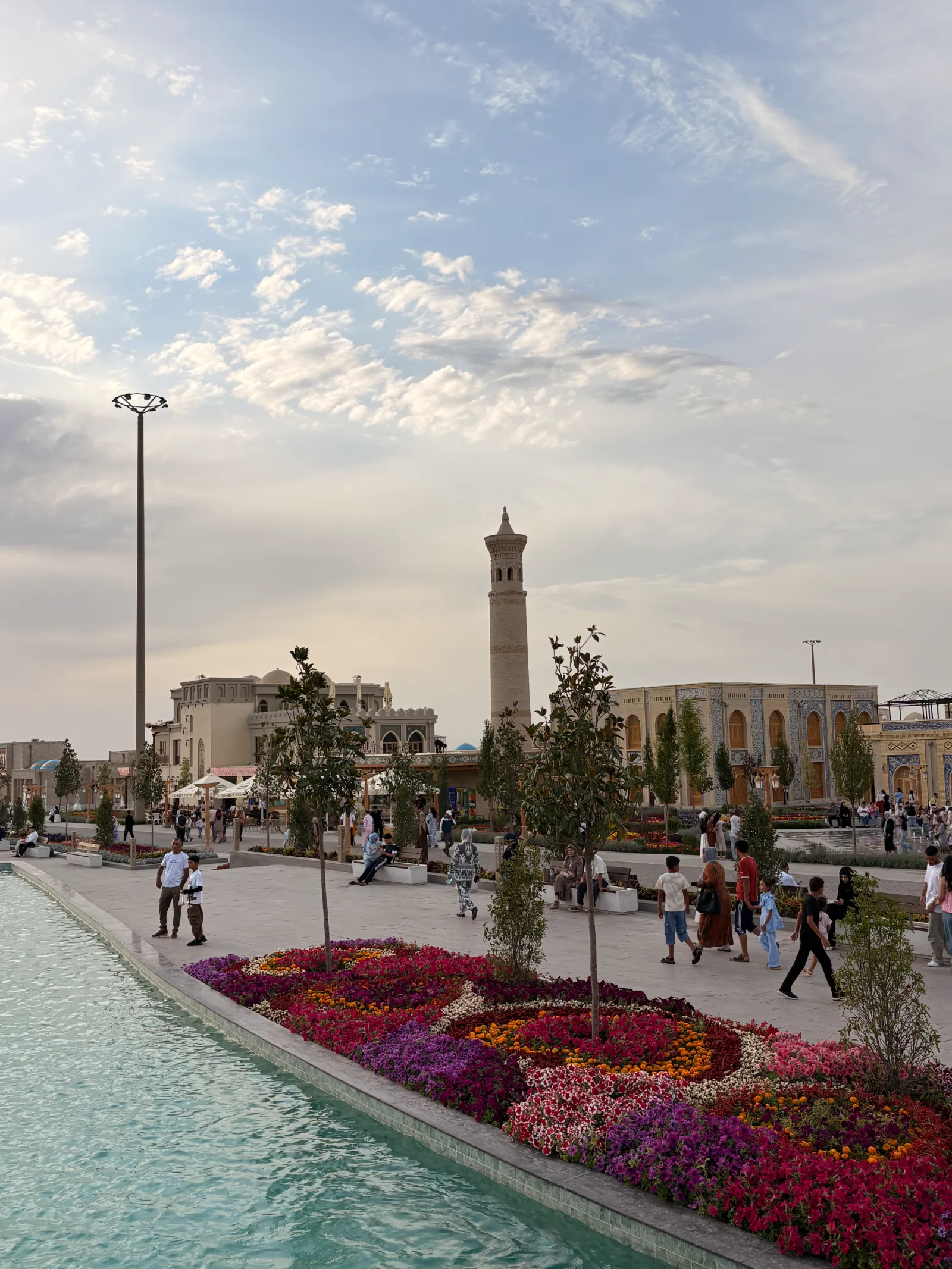
The group was six of us, walking in from the old city's narrow lanes where a bazaar was still packing up for the evening. Small enough that we weren't waiting in line for a turn at the loom.
The craft itself
Bukhara's carpet tradition is a knotting tradition, not a printing or machine-loom one — every square inch of a hand-knotted rug is built from individual knots tied around pairs of warp threads, then trimmed level with a curved blade before the next row starts. A single carpet the size of a doormat can run to tens of thousands of knots. The density is the whole argument for the craft: more knots per square inch means finer detail and a longer-wearing rug, and you can feel the difference in your fingers before you can see it in the pattern.
What distinguishes this from the suzani or ikat work more commonly offered around the region is the physical rhythm. Suzani is needle and thread on cloth already stretched flat — deliberate, seated, close to the body. Carpet knotting is standing work, or half-standing, leaning into the frame, and it's cyclical: knot, knot, knot, then a full pass of the weft thread beaten down hard with a metal comb to lock the row in place. The beating is louder than I expected — a flat, percussive thud that the whole room falls into rhythm with once four or five people are working at once.
The workshop's lead weaver walked the group through the Bukhara knot — a variant tied slightly differently from the Persian knot used further south — by doing it slow, twice, on a spare length of warp, before handing each of us a section of the loom.
What it actually felt like
My first ten knots were wrong. Not badly wrong — the carpet wouldn't have fallen apart — but loose enough that when she ran a finger down my row, she could feel the give that shouldn't be there. She corrected it not by explaining more but by putting her hand over mine and pulling the loop through at the tension it needed, twice, then stepping back. The third time I did it myself, it held. Nobody said anything about it. That was the lesson.
An hour in, my forearms ached in a specific place — the outside of the wrist, from holding tension against the pull of the yarn — and my fingertips had gone slightly numb from the wool fiber, which is coarser than the merino most of us are used to touching. The lanolin still in the raw wool left a faint waxy residue on my hands that I could still smell two washes later. Nobody in the group finished a pattern. We finished, at most, a strip four or five centimeters deep across our section — a fraction of a fraction of a real carpet, which takes a working weaver months.
That's the honest math of it: you will not walk out with a rug. You will walk out with a few centimeters of genuinely correct knotting, and the specific, stubborn knowledge in your hands of what a Bukhara knot resists and what it forgives.
Why the small group mattered
In a larger workshop — and I've seen the tourist-bus version of this in other cities, twenty or thirty people cycling through a demonstration loom for photos — the weaver performs the knot once and everyone claps. There's no correction, because there's no time for correction. With six of us at one frame, she moved along the row checking tension knot by knot, and when someone's grip was off, she caught it before the row was finished, not after. That's not a small difference. It's the entire difference between watching a craft and being taught one.
What you leave with
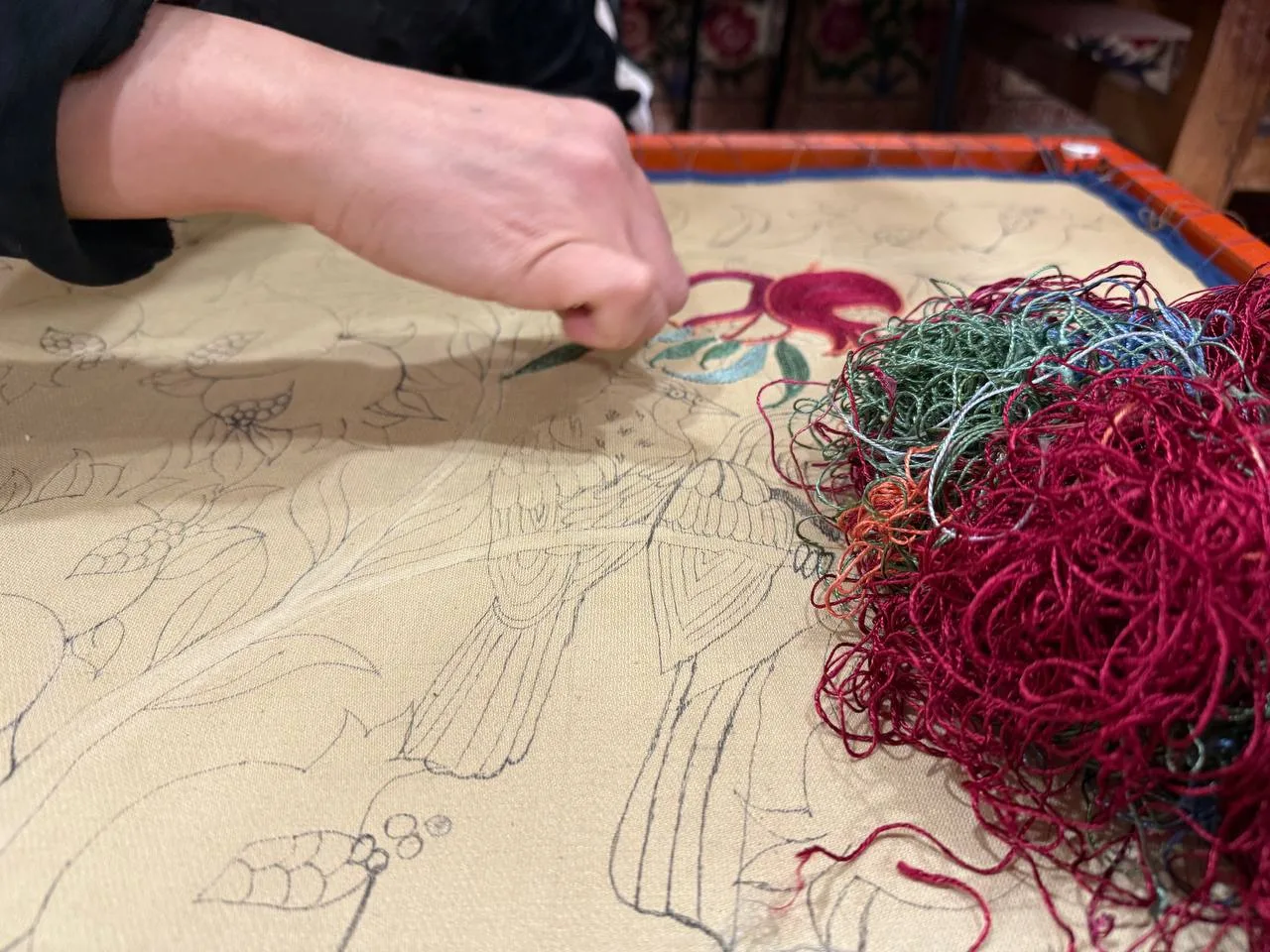
I left with a strip of carpet I'll probably never finish, a photo of the weaver's hands that's sharper than any I took of the pattern, and the specific memory of what wool feels like under real tension — not the tourist-shop version, sold soft and pre-washed, but wool the way it comes off a working loom. I've gone back to touch a carpet in a shop since, out of habit, checking the knot density with my thumb the way she taught us, and it's changed how I look at every rug I've seen since. That's not something a two-hour class should reasonably deliver, and it did anyway — not because the class was long enough to make me good at it, but because it was honest about not trying to.
If you want to try it yourself: CraftNCulture runs the Immersive Old City Walk & Carpet Making Workshop in Bukhara, $75 per person, roughly three hours including the old-city walk, in small groups by design.
About the author
CraftnCulture
The CraftnCulture editorial team — Tashkent-based cultural tourism specialists covering Uzbekistan travel, artisan crafts, and Silk Road heritage.